A driveway in the Coastal Bend has to handle more than parked vehicles. It deals with intense sun, sudden downpours, humid salt air, shifting soils, and the occasional heavy truck. That is why the best surfaces for driveways are not always the cheapest materials upfront. The right choice is the one that fits the property, carries the expected load, drains correctly, and is installed on a properly prepared base.
For many South Texas homes and commercial properties, reinforced concrete is the practical long-term answer. But asphalt, pavers, gravel, and decorative concrete can each make sense under the right conditions. The key is understanding what each surface does well and where it can fall short.
What Makes a Driveway Surface Last?
The surface matters, but the work below it matters just as much. A driveway can crack, settle, hold water, or deteriorate early when the subgrade is weak, the base is poorly compacted, or drainage was treated as an afterthought.
Coastal Texas soils can move with moisture changes. Water that sits beside or under a driveway may soften the soil, erode supporting material, and create uneven areas. A durable installation starts with excavation to the required depth, grading for runoff, proper compaction, and a surface thickness suited to the vehicles that will use it.
A homeowner with two passenger vehicles has different needs than a business with delivery vans, trailers, dumpsters, or regular customer traffic. Before selecting a material, consider traffic weight, available budget, desired appearance, maintenance expectations, and how water moves across the site.
Best Surfaces for Driveways: A Practical Comparison
Reinforced Concrete
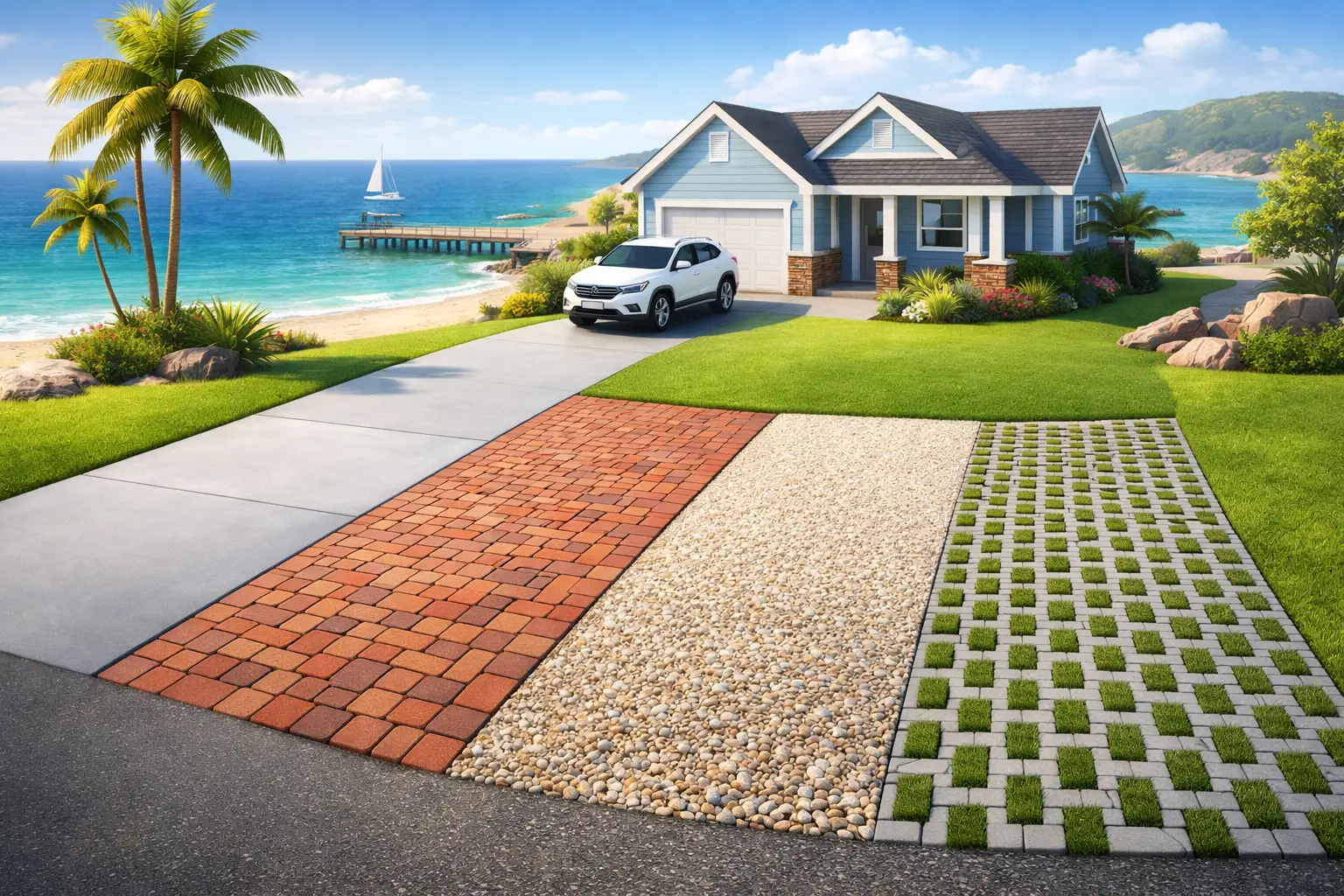
Concrete remains one of the best driveway surfaces for homeowners and commercial property owners who want strength, clean appearance, and long service life. When installed with a properly compacted base, correct thickness, reinforcement, control joints, and drainage, a concrete driveway can stand up to daily use for decades.
It is especially well suited for properties that may see heavier vehicles. Standard residential driveways often need a different design than approaches used by work trucks, RVs, boats, or commercial service vehicles. Thickness and reinforcement should be planned around the actual load, not guessed after the concrete arrives.
Concrete also gives owners more finish options. A traditional broom finish provides dependable traction and a straightforward appearance. Stamped, stained, or exposed-aggregate finishes can improve curb appeal while keeping the durability of a concrete slab. Decorative work costs more than a basic finish, but it can make sense for front-entry driveways, high-visibility homes, and properties where appearance matters.
The trade-off is that concrete is not maintenance-free and it is not immune to cracking. Concrete naturally develops cracks over time, particularly when soil movement or water issues are present. Proper joint placement, reinforcement, base preparation, and drainage help manage that risk. Repairing a neglected or badly settled slab can also be more involved than patching asphalt.
Asphalt
Asphalt is a common choice for long driveways and larger paved areas because it typically has a lower upfront cost than concrete. Its dark color and smooth finish create a clean, traditional look, and asphalt can be installed efficiently over a correctly prepared base.
It also has some flexibility, which can help it tolerate minor movement better than a rigid slab. That does not mean it can overcome poor site preparation. Weak edges, standing water, and inadequate base material will shorten the life of an asphalt driveway just as quickly as they will damage other surfaces.
In the Corpus Christi area, heat is a major consideration. High temperatures can soften asphalt, especially in areas that carry concentrated loads. Vehicle tires, trailer supports, and parked equipment can leave impressions in hot weather. Asphalt also needs periodic sealcoating and crack maintenance to keep water from working into the base.
Asphalt can be a good fit when initial cost and fast coverage are priorities. It may be less attractive for owners who want a lower-maintenance driveway or a surface that will regularly support heavy stationary loads.
Interlocking Pavers
Pavers offer a high-end appearance and flexibility that appeals to many homeowners. They are available in multiple colors, patterns, and shapes, making them useful for driveways that need to complement landscaping, masonry, or an upscale exterior design.
A well-built paver driveway can perform well because individual units can move slightly without creating the large visible cracks associated with a rigid slab. If a localized section settles or becomes damaged, specific pavers may be lifted and reset instead of replacing the full driveway.
The limitation is that pavers depend heavily on the base and edge restraints. If the foundation below them is not excavated, graded, and compacted correctly, pavers can shift, dip, or separate. Weeds can also appear in joints if the driveway is not maintained. The installation cost is generally higher than standard concrete or asphalt, particularly for detailed layouts and larger driveways.
Pavers are often best for residential properties where curb appeal is a major goal and the owner is willing to invest in a premium surface and proper installation.
Gravel and Crushed Stone
Gravel is the lowest-cost option for many rural properties, long private drives, temporary access routes, and areas where a fully paved surface is not necessary. It is quick to install, handles drainage well when designed properly, and can be refreshed as needed.
However, gravel is not simply a load of stone spread over dirt. Without separation fabric, a stable base, proper crown or slope, and containment at the edges, stone can sink into the soil, migrate into the yard, or wash out during heavy rain. Potholes and ruts are common when traffic is frequent or heavy.
Gravel can be a sensible solution for low-traffic properties, construction access, or long driveways where paving the full distance is outside the budget. It is less suitable for owners who want a clean, smooth entrance, easy snow-free rolling for bins and carts, or minimal ongoing maintenance.
Permeable Driveway Systems
Permeable pavers and porous concrete systems are designed to allow water to move through the surface into a prepared stone base below. They can reduce runoff and help manage drainage on properties where water control is a concern.
These systems are specialized. They require careful design, compatible base materials, and regular attention to prevent sediment from clogging the surface. They are not the default choice for every Coastal Bend property, but they may be worth considering when drainage requirements, lot layout, or local site conditions call for a more intentional stormwater approach.
Concrete Is Often the Best All-Around Choice
For most homes and businesses in South Texas, a professionally installed concrete driveway offers the strongest balance of durability, appearance, and value over time. It handles routine traffic well, creates a clean finished look, and works for everything from a basic residential approach to a reinforced commercial access lane.
That recommendation comes with conditions. A light-duty driveway should not be designed like a loading area, and a decorative finish should not be selected without considering traction and maintenance. The driveway should be sloped to move water away from buildings and avoid draining toward neighboring property. Existing cracks, low spots, tree roots, culverts, and access constraints should be addressed before work begins.
Replacing only the visible concrete without correcting the cause of failure often leads to the same problems returning. If the old driveway settled because of poor drainage or unstable soil, the new installation needs more than fresh concrete. It needs the right site preparation.
How to Choose the Right Driveway Surface
Start by looking at how the driveway will actually be used. Passenger cars, pickups, trailers, RVs, delivery vehicles, and commercial equipment place very different demands on a surface. Next, consider the property itself: soil conditions, drainage paths, slope, existing structures, and the amount of usable space for excavation and construction.
Then weigh upfront cost against long-term maintenance. Gravel may cost less at the start but need frequent reshaping. Asphalt can be economical but requires sealing and repair. Pavers offer design flexibility at a premium price. Reinforced concrete often costs more initially than asphalt or gravel, but it can provide dependable service and lower routine upkeep when built correctly.
A site review is the best way to avoid making a material decision based on appearance alone. An experienced contractor can identify whether the project needs demolition, excavation, base work, drainage improvements, reinforcement, or a heavier-duty design before the first load of material arrives.
A driveway is part of the property’s working infrastructure, not just a place to park. Choose a surface that fits the real conditions, insist on proper grading and preparation, and build it for the traffic it will carry. That approach gives you a driveway that looks right on day one and performs when South Texas weather puts it to work.