
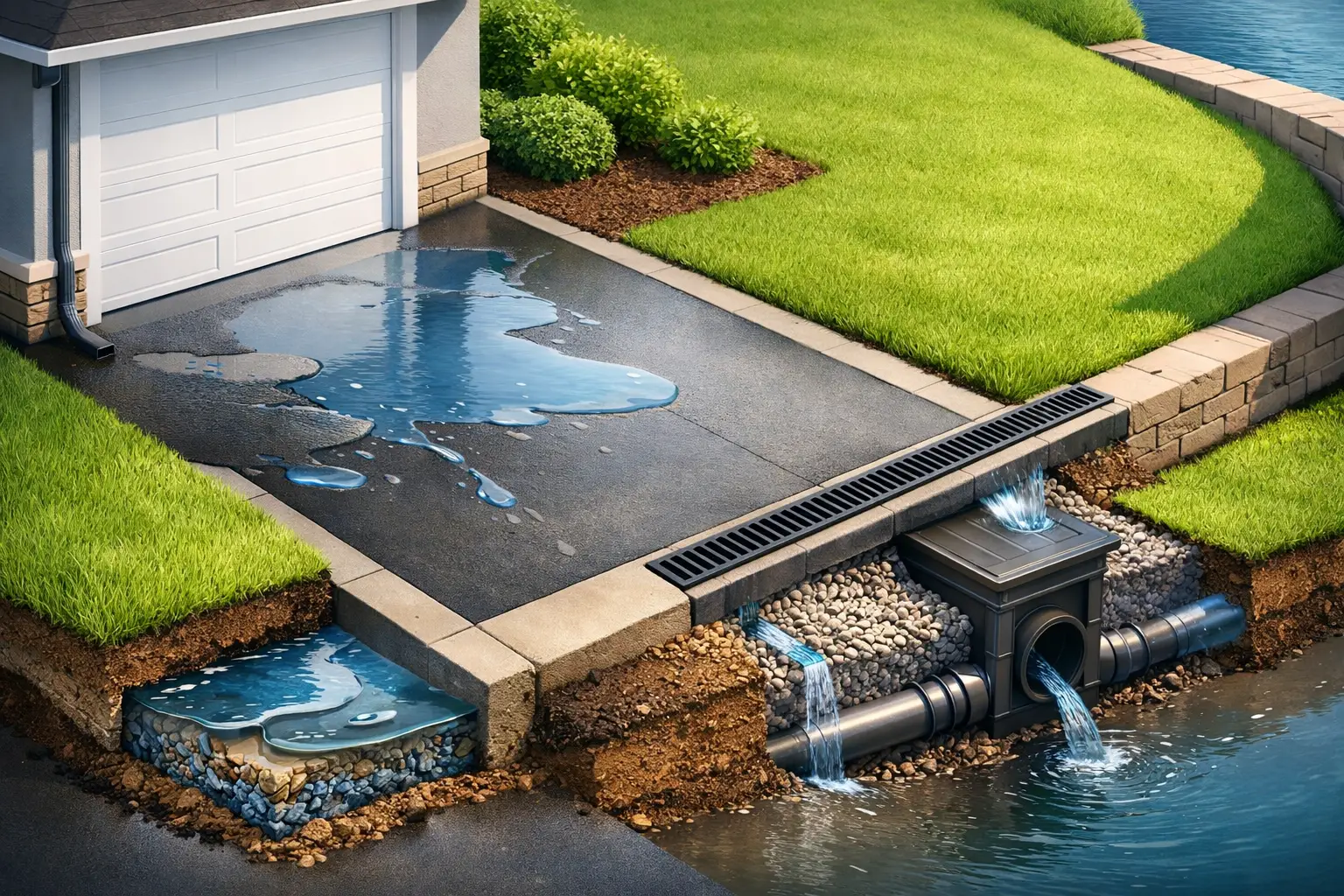
Water sitting on a driveway is not a cosmetic issue. It usually means the surface, base, or surrounding grade is pushing runoff to the wrong place. If you are figuring out how to fix driveway drainage, the goal is not just to move water off the slab. The goal is to move it away from your home, garage, landscaping, and foundation without creating a new problem somewhere else.
That matters even more in coastal and heavy-rain areas, where short storms can dump a lot of water fast. A driveway that holds water today can turn into cracking, edge failure, soil washout, or garage seepage later. The right fix depends on why the water is collecting in the first place.
How to Fix Driveway Drainage Starts With the Cause
Most drainage problems come from one of four issues. The driveway may be pitched the wrong way, the surrounding yard may be sloping toward it, the concrete or asphalt may have settled, or the runoff has nowhere to go once it reaches the bottom.
A lot of property owners focus on the puddle because that is what they can see. The puddle is only the symptom. If you patch low spots without correcting the grade or giving the water a proper outlet, the problem usually comes back.
Start by watching the driveway during a normal rain. If that is not practical, use a hose and work from the high side down. Pay attention to where water starts, where it slows down, and where it finally pools. Also look at nearby downspouts, planter beds, garage aprons, sidewalks, and curbs. In many cases, the driveway is only part of the drainage path.
Common Signs Your Drainage Problem Is Getting Worse
Standing water for more than a day is one warning sign, but it is not the only one. You may also see dark moisture stains, algae growth, erosion along the driveway edge, spalling at the surface, or cracks that keep widening after storms. If water is backing up near the garage, that moves the issue from nuisance to property risk.
Commercial properties often show different symptoms. You might notice tire depressions in soft areas near the pavement edge, sediment washing across parking surfaces, or water running toward pedestrian access points. Those are signs the drainage problem is affecting both safety and long-term pavement performance.
Surface Fixes for Minor Driveway Drainage Problems
If the driveway is generally sound and the issue is limited to shallow low spots, a surface correction may work. For concrete, that can mean grinding a small high area that blocks runoff or applying a resurfacing product designed to improve slope over a localized section. For asphalt, a professional patch may help if the low area is isolated and the base is still stable.
This is the least invasive option, but it has limits. Surface fixes work best when the grade issue is minor and the water already has a clear path to drain once the obstruction is removed. They do not solve widespread settling or a driveway that was poured with the wrong pitch from the start.
A quick patch is also not the same as a lasting repair. If the base underneath has been compromised, the low spot often returns.
When Regrading Around the Driveway Is the Better Answer
Sometimes the driveway itself is fine. The real problem is that surrounding soil, beds, or hardscape are funneling water onto it. In that case, regrading the adjacent area may solve the issue with less disruption than tearing out concrete.
This can involve reshaping the lawn shoulder, lowering built-up soil along the edges, or correcting landscape features that trap runoff. Downspouts may also need to be extended so roof water does not dump directly onto the drive.
This approach works well when runoff is entering from the side or top of the driveway. It is less effective when the slab has settled or when the driveway drains toward the structure. If water is moving toward your garage or foundation, the fix has to be more deliberate.
Installing a Trench Drain or Channel Drain
If water naturally flows down the driveway but collects near a garage, carport, or building entrance, a trench drain is often the right solution. This is a grated drain installed across the width of the driveway to intercept runoff before it reaches the structure. Water enters the channel and is piped to a proper discharge point.
For many homes and commercial buildings, this is one of the most reliable ways to control runoff at a critical point. It is especially useful where the driveway cannot be re-pitched easily or where the surrounding elevations limit other options.
The key is outlet planning. A trench drain only works if it ties into a system that carries water away effectively. If the pipe discharges into a bad location, you have just moved the problem. In some cases, local codes or site conditions will affect where that water can go.
French Drains and Other Subsurface Options
A French drain can help when the issue is not just surface runoff but also saturated soil along the driveway edge. These systems use perforated pipe surrounded by gravel to collect and redirect water below grade. They are often useful beside driveways where the shoulder stays wet, the soil is washing out, or the base is taking on too much moisture.
French drains are helpful, but they are not a cure-all. They do not replace proper surface slope, and they can fail if installed too shallow, with poor fabric protection, or without enough pitch. In heavy clay or coastal soil conditions, design matters. A poorly installed drain may clog or move water too slowly to keep up with storms.
Lifting or Replacing Sunken Concrete
If one section of a concrete driveway has dropped and created a bowl where water sits, slab lifting may be an option. This process raises settled concrete by pumping material underneath it. It can restore drainage without full replacement if the slab is still structurally sound.
The advantage is speed and lower cost compared with a new driveway. The trade-off is that it only makes sense when the existing concrete is in decent condition and the settlement is limited. If the slab is badly cracked, the subgrade has failed, or multiple sections are moving, replacement is usually the better investment.
Full replacement gives you the chance to correct slope, strengthen the base, and rebuild for long-term performance. That matters when drainage problems are tied to weak preparation, not just surface wear.
How to Fix Driveway Drainage Without Creating New Problems
The biggest mistake in drainage work is moving water quickly without thinking about where it ends up. Water should not be directed onto a neighbor’s property, against a foundation, under a fence line, or into an area that will erode. Good drainage is controlled drainage.
That is why the best solution is usually site-specific. A steep driveway may need a drain at the bottom. A flat driveway may need adjusted pitch and a discharge route. A commercial lot may need a combination of grading, inlets, and pavement repair. One-size-fits-all advice does not hold up well in the field.
This is also where local experience matters. In South Texas, intense rains, shifting soils, and coastal exposure can all affect how a drainage fix performs over time. What looks like a simple puddle can trace back to base instability, runoff concentration, or poor original grading.
When to Call a Contractor
If water is entering the garage, undermining the driveway edges, cracking the slab, or affecting nearby structures, it is time to bring in a contractor. The same goes for drainage issues tied to settlement, large low areas, or repeat repair failures.
A qualified contractor should look at more than the surface. They should evaluate slope, runoff direction, adjacent grades, discharge points, and the condition of the driveway itself. If replacement is needed, the discussion should include reinforcement, base prep, and finish elevations, not just square footage and price.
Haylo Construction handles this kind of work with a practical approach. The job is to fix the drainage issue in a way that protects the pavement and the property, not to sell a repair that only lasts until the next heavy storm.
What Property Owners Can Do Right Now
Before a permanent repair is scheduled, keep drains and curb openings clear, extend any downspouts that dump onto the drive, and remove soil or mulch that is blocking runoff along the edges. Those steps will not correct a bad slab pitch, but they can reduce water buildup and help you see the pattern more clearly.
Avoid temporary fixes that trap moisture against the concrete or force water into another weak spot. If you are spending money, spend it on the actual cause.
A good driveway should shed water by design, not by luck. If yours is holding water, washing out, or pushing runoff where it does not belong, the right fix is the one that addresses grade, drainage path, and long-term durability together. That is how you keep a simple drainage issue from turning into a bigger repair.