A driveway can look solid on the day it is poured and still start taking damage long before it reaches the end of its service life. Sun, standing water, vehicle fluids, salt air, and everyday traffic all work on the surface. The best concrete sealers for driveways help slow that damage, but the right choice depends on the concrete’s condition, the desired finish, and how the driveway is used.
For Corpus Christi and the Coastal Bend, sealing is not just about making concrete look darker or shinier. It is about limiting moisture intrusion, reducing stains, and protecting a properly installed driveway from harsh weather exposure. A sealer will not correct poor drainage, major cracking, or weak concrete, but it can be a worthwhile part of long-term maintenance.
The Best Concrete Sealers for Driveways by Type
There is no single sealer that is best for every driveway. Some products are designed to soak into the concrete without changing its appearance. Others leave a visible film that adds color enhancement, gloss, or stronger stain resistance. Knowing the difference prevents a common mistake: choosing a product for appearance when the driveway really needs practical water protection.
Penetrating Sealers: Best for Natural-Looking Protection
Penetrating sealers are often the strongest all-around choice for exterior concrete driveways. These products absorb below the surface and create a water-repellent barrier while allowing moisture vapor to move out of the slab. That matters in humid coastal conditions, where trapped moisture can contribute to whitening, peeling, or surface problems with film-forming products.
Silane, siloxane, and silane-siloxane blends are common penetrating sealer types. They are especially useful on plain broom-finished concrete because they preserve the natural texture and typically do not make the surface slippery. They also offer good protection against rain, moisture, and salt exposure without producing a glossy finish.
The trade-off is appearance. A penetrating sealer generally will not make an older driveway look new, hide discoloration, or create a wet-look finish. Its value is protection, not cosmetics. For homeowners who want a low-maintenance, natural-looking driveway, that is usually the right trade.
Acrylic Sealers: Best for Color Enhancement and Appearance
Acrylic sealers sit closer to the surface and can provide a noticeable color boost. They are commonly used on decorative concrete, stamped concrete, and driveways where the owner wants a darker, richer appearance. Available in water-based and solvent-based formulas, acrylic sealers can range from a subtle satin finish to a higher gloss.
For a stained or stamped driveway, acrylic can be a practical choice because it helps highlight the color and pattern work. It can also provide reasonable water resistance and simplify routine cleaning. However, acrylic films are generally less durable than high-quality penetrating sealers under constant vehicle traffic and direct South Texas sun.
Gloss also requires caution. A shiny sealer on a smooth or lightly textured driveway can become slick when wet. If appearance is the priority, choose a product rated for vehicular traffic and consider a non-slip additive where appropriate. More shine is not always better, especially at a sloped entry or near a garage.
Epoxy and Polyurethane Coatings: Best for Covered Areas, Not Most Driveways
Epoxy and polyurethane products can deliver strong resistance to oil, chemicals, and abrasion. They are more common on garage floors, workshops, and covered concrete than on open driveways. When installed correctly, these coatings can create a clean, finished look with high stain resistance.
The problem is exposure. Many epoxies do not tolerate direct ultraviolet light well and can yellow or degrade in full sun. Polyurethane topcoats offer better UV performance, but coating systems still demand careful preparation and can be difficult to repair if they peel. On an open residential driveway, a penetrating sealer is often the safer long-term decision.
Use epoxy or polyurethane systems when the concrete is covered, the preparation can be controlled, and a coating-style finish is the actual goal. They are not a shortcut for a deteriorated driveway surface.
Densifiers: Best for New or Polished Concrete Conditions
Concrete densifiers react with the material to strengthen and harden the surface. They are useful in specific commercial and industrial applications, particularly for polished concrete or slabs that need improved dust resistance. They are not usually the first choice for a typical exterior driveway because they do not offer the same water repellency as a dedicated penetrating sealer.
A densifier may have a role in a specialized concrete system, but it should not be confused with a complete driveway sealer. If water, staining, and weather exposure are the main concerns, look for a product made specifically for exterior protection.
What Matters Before Choosing a Driveway Sealer
The age and condition of the concrete should guide the decision. Fresh concrete needs adequate curing time before most sealers can be applied. Applying sealer too soon can interfere with moisture release and lead to uneven results. Always follow the product’s cure-time requirements rather than sealing on a fixed calendar date.
Surface preparation matters just as much as the product. Dirt, tire marks, grease, curing compounds, old failing sealer, and mildew can prevent proper adhesion or penetration. A driveway should be cleaned thoroughly and allowed to dry before application. Areas with oil contamination may need a dedicated degreaser and more than one cleaning cycle.
Drainage is another deciding factor. A sealer helps reduce absorption, but it will not solve water that consistently ponds against the garage, along an expansion joint, or over a low area in the slab. Standing water is a site and grading issue first. Addressing the drainage problem protects the driveway far more effectively than adding extra coats of sealer.
Cracks need honest evaluation as well. Hairline shrinkage cracks are common and may be sealed as part of a maintenance plan. Wider cracks, active movement, settlement, and spalling can point to deeper base, drainage, or structural concerns. Sealer is not a repair material. Applying it over damage without correcting the cause often delays the work rather than avoiding it.
How Often Should a Concrete Driveway Be Sealed?
Most driveways benefit from resealing every two to five years, depending on the product, sun exposure, traffic, cleaning methods, and concrete condition. Penetrating sealers often last longer because they are absorbed into the concrete rather than wearing away as a surface film. Acrylic sealers may need more frequent attention, particularly on drive lanes and areas exposed to strong sun.
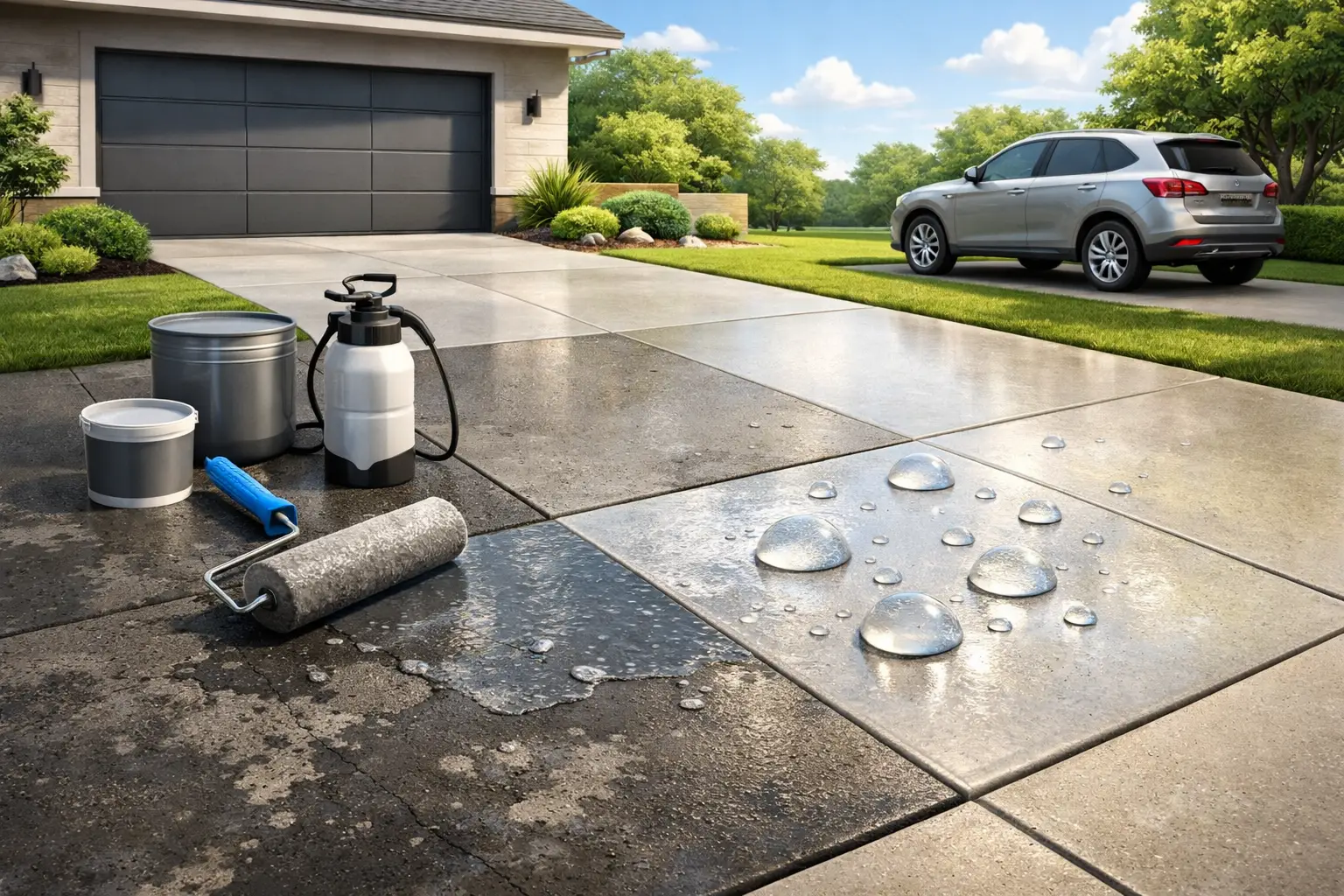
Do not rely only on a calendar. Watch how the concrete handles water. If rain no longer beads on the surface and darkens the slab quickly, the protective effect may be fading. New staining, increased dusting, or a dull, patchy surface can also signal that maintenance is due.
Avoid applying sealer during rain, on a damp slab, or when temperatures are outside the product’s recommended range. Apply thin, even coats. Overapplication is one of the main reasons sealers turn cloudy, sticky, or uneven. A driveway sealer should protect the concrete, not leave behind a thick plastic-looking layer.
When Sealing Is Not Enough
A good sealer extends the life of sound concrete. It cannot restore a driveway with significant settlement, widespread surface scaling, poor slope, or failing edges. When damage is advanced, repair, replacement, or drainage correction may provide a better return than repeated surface treatments.
For property owners dealing with cracking, surface failure, or water problems, Haylo Construction can assess the driveway as a complete system – concrete, base, drainage, and access – instead of treating the visible surface as the only issue. The right sealer is a solid maintenance tool, but a properly built and properly graded driveway is what carries the load for years.