A driveway finish does more than change the look of your property. It affects traction after rain, how easily the surface hides tire marks, how much maintenance it needs, and how well it holds up under South Texas sun and coastal moisture. The best concrete driveway finishes balance appearance with the practical demands of daily vehicle traffic, drainage, and long-term durability.
For most properties, the finish should be chosen after the driveway is properly designed. A beautiful decorative surface cannot make up for poor base preparation, weak concrete, inadequate reinforcement, or grading that sends water toward the garage. The concrete work underneath has to be right first. Then the finish can do its job.
What Makes a Driveway Finish Work in South Texas?
Corpus Christi and surrounding Coastal Bend communities put concrete through a different set of conditions than inland markets. High heat, humidity, heavy rain events, wind-driven debris, and coastal air all matter. Soil movement and standing water can also create problems when a driveway is not built and sloped correctly.
A good finish needs enough texture for safe footing without being so rough that it is difficult to sweep, pressure wash, or walk on comfortably. It also needs to fit the property. A working driveway for trucks, trailers, and frequent parking has different needs than a front-entry driveway meant to improve curb appeal.
Color is another consideration. Darker decorative colors can look sharp, but they absorb more heat. Lighter tones generally stay more comfortable underfoot and show less fading over time. If the driveway gets full afternoon sun, that trade-off is worth discussing before work begins.
Best Concrete Driveway Finishes for Performance and Appearance
Broom Finish: The Reliable Standard
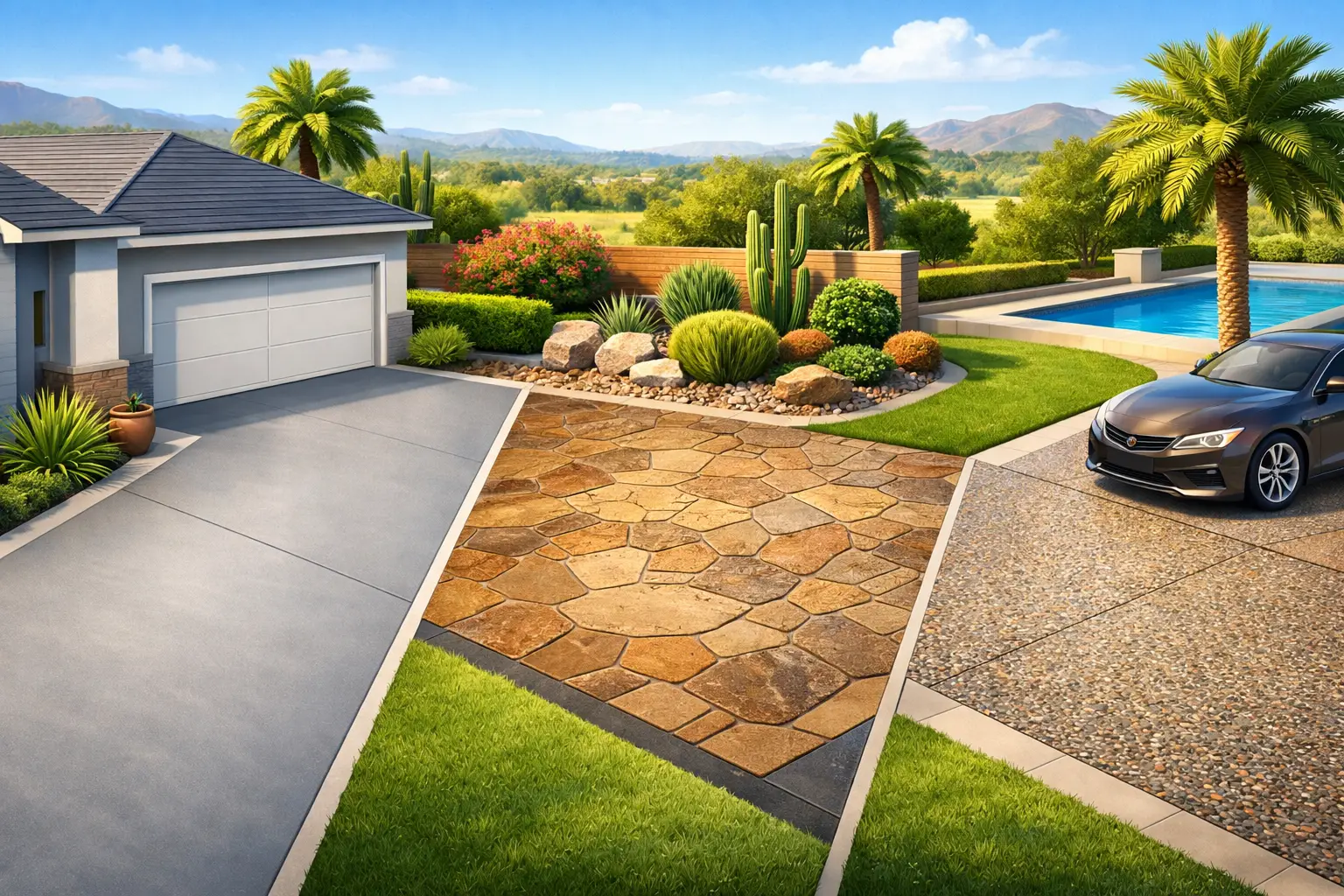
A broom finish is created by pulling a specialized broom across fresh concrete to leave fine, consistent texture. It is the most common driveway finish for good reason. It provides dependable traction, suits nearly every type of home, and does not require the additional maintenance associated with many decorative finishes.
For homeowners who want a clean, hardworking driveway without added cost or visual complexity, broom-finished concrete is usually the right call. The surface can be installed in a traditional gray tone or paired with integral color for a more customized appearance.
The main trade-off is that a broom finish is straightforward rather than dramatic. It will not mimic stone, brick, or tile. Still, clean control joints, proper edging, and a well-planned driveway layout can make a standard broom finish look sharp and professional.
Exposed Aggregate: Texture With a Natural Look
Exposed aggregate reveals decorative stone within the concrete surface. The result is a textured finish with more visual character than a broom finish. It works well for homeowners who want a natural, higher-end appearance without the patterned look of stamped concrete.
This finish provides strong slip resistance, which is helpful around sloped driveways, walkways, and areas exposed to rain. Because the aggregate is part of the slab, it is not a separate layer that can peel away like some surface-applied products.
However, exposed aggregate needs careful installation and curing. The timing of the surface treatment matters, and poor workmanship can leave an uneven or weak-looking result. It can also be less comfortable for bare feet and harder to shovel or sweep than a smoother finish. For driveways, choosing an aggregate size and color blend that complements the home is more important than going with the most aggressive texture available.
Stamped Concrete: High Curb Appeal With More Upkeep
Stamped concrete is designed to resemble materials such as natural stone, pavers, slate, brick, or wood. It can turn a driveway into a major exterior feature, especially on homes with defined landscaping, decorative entryways, or upscale architectural details.
A stamped finish is best when appearance is a priority and the owner is prepared to maintain it. The surface typically benefits from periodic resealing to protect color, reduce staining, and maintain a consistent appearance. On a driveway, the sealer must be selected carefully. A glossy sealer may look appealing at first, but it can become slick when wet if the proper traction additive is not used.
Stamped concrete also requires disciplined joint planning. Concrete will crack if it cannot move as designed, and control joints need to be located where they protect the slab while fitting the pattern as cleanly as possible. This is not a finish to treat as an afterthought. It needs to be planned alongside the driveway thickness, reinforcement, drainage, and layout.
Stained Concrete: Color Without Heavy Patterning
Stained concrete adds color variation and a more customized look while keeping the surface profile relatively simple. It can be used to create earth tones, warmer brown shades, charcoal accents, or subtle color movement that works well with many South Texas homes.
For driveways, a stain is often most effective when paired with a broom or light texture. This gives the surface traction while avoiding the busy appearance of a stamped pattern. Stained concrete can be a strong option for homeowners who want something more distinctive than gray concrete but do not want a full decorative stamp system.
The limitation is that color can change over time, particularly under direct sun and with regular exposure to vehicle fluids or harsh cleaners. Sealing and routine cleaning help preserve the look. Expectations should be realistic: decorative concrete has variation by nature, and a hand-finished slab will not look identical to a factory-made tile.
Smooth Trowel Finish: Usually Better for Covered Areas
A smooth trowel finish creates a clean, refined surface, but it is rarely the best choice for an exposed driveway. When rain, humidity, or algae are involved, a very smooth surface can become slippery. It may work for a covered vehicle pad, enclosed garage approach, or a low-traffic decorative area, but it should be evaluated carefully for outdoor driving and walking surfaces.
For most open driveways, adding light texture is the safer long-term decision. A finish should serve the property in wet weather, not just look good on the day it is poured.
Finish Is Only One Part of a Durable Driveway
The finish receives the attention because it is what people see. The structural details are what determine whether the driveway stays functional. Before selecting decorative options, make sure the project accounts for these jobsite realities:
- Proper excavation and a stable, compacted base
- Appropriate concrete thickness for passenger vehicles, trucks, or trailers
- Reinforcement suited to the driveway design and soil conditions
- Correct slope and drainage away from structures
- Well-placed control joints to manage normal concrete movement
- Adequate curing time before vehicles use the new surface
Skipping these steps to save money can lead to settlement, standing water, cracking, and early surface damage. No finish can correct those failures after the concrete is in place.
How to Choose the Right Finish for Your Property
Start with how the driveway will be used. A family home with two daily vehicles may need a different solution than a commercial entrance, rental property, or home with an RV, boat, or work truck. Heavier loads may require a stronger slab design regardless of the finish selected.
Next, look at maintenance expectations. Broom-finished concrete is the lowest-maintenance choice for most owners. Exposed aggregate is durable but benefits from occasional cleaning. Stamped and stained finishes need more attention to sealers, cleaning products, and color preservation.
Finally, consider the home as a whole. If the exterior already includes stone, pavers, or detailed landscaping, stamped or exposed aggregate can tie the driveway into the property. If the goal is a clean, long-lasting surface with dependable traction, a broom finish with crisp edges and properly cut joints often delivers the best value.
Protecting a New Concrete Driveway Finish
Concrete gains strength over time, and the first weeks matter. Follow the contractor’s guidance on when to walk, park, and place heavy vehicles on the new driveway. Avoid dragging sharp metal items across the surface, and clean vehicle oil, fertilizer, and chemical spills promptly.
Pressure washing can be useful, but excessive pressure can damage aging sealers and force water into vulnerable areas. For decorative surfaces, use cleaning products that are compatible with the sealer and avoid aggressive de-icers or acidic cleaners. In coastal areas, regular rinsing can also help remove salt residue and grime.
The right choice is not always the most decorative option. It is the finish that matches your traffic, drainage, maintenance plan, and property style while sitting on a properly built concrete slab. For a driveway that needs to perform through South Texas weather, choose workmanship and preparation first, then select the finish that gives the property the look you want for years to come.