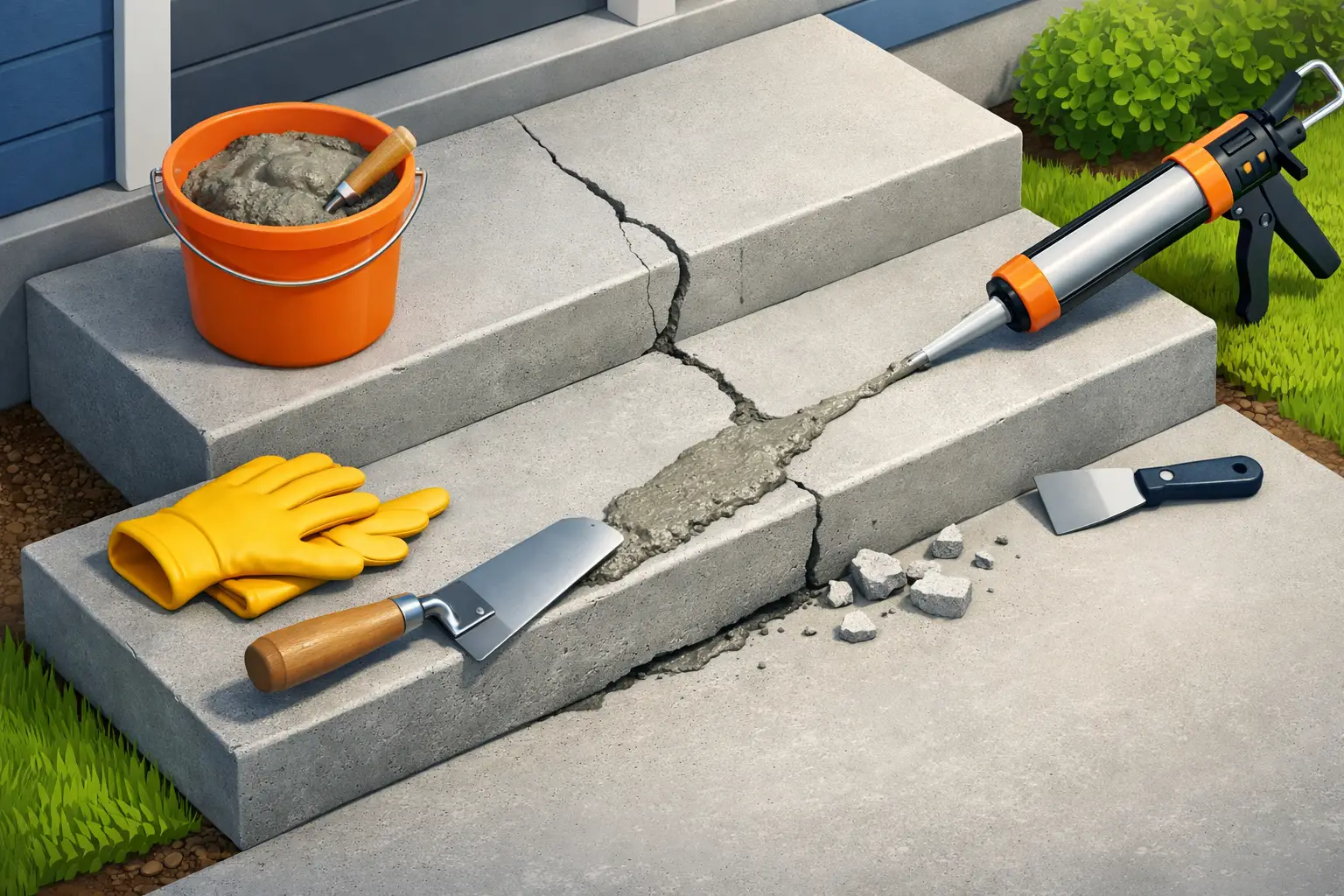
A crack across a concrete step is more than an appearance problem when it catches a shoe, holds water, or leaves one section sitting lower than the next. To repair cracked concrete steps correctly, start by finding out why the concrete cracked. A patch can restore a small surface defect, but it will not stop movement from poor drainage, settling soil, rusting reinforcement, or a failing step base.
For homes and commercial properties in the Coastal Bend, that distinction matters. Heavy rain, wet coastal air, shifting soils, and exposure to salt can all shorten the life of a repair that is applied over an unresolved problem. The right fix is the one that makes the steps safe now and holds up over time.
First, Decide Whether the Steps Can Be Repaired
Not every crack requires replacement. Hairline cracks that are narrow, stable, and limited to the surface are often good candidates for repair. A small chip on a step edge, minor spalling, or a crack that does not create a height difference can usually be restored with the right concrete repair material and proper surface preparation.
The job changes when the crack signals movement. If one side of the step has dropped, the crack is widening, the steps pull away from the house, or water consistently drains beneath them, a cosmetic patch will likely fail. The concrete may be sound enough to save, but the base or support condition needs attention first.
A practical rule is to look at vertical displacement. When one side of a crack sits noticeably higher than the other, it creates a trip hazard and usually points to settlement or movement. That is a situation worth having a concrete contractor assess before applying filler.
Warning Signs That Call for a Professional Inspection
Arrange an inspection when the steps are rocking, loose, or visibly separating from the structure. Also take a closer look if cracks extend into an attached porch, walkway, foundation area, or retaining wall. Those conditions can indicate broader drainage or soil issues instead of a simple step repair.
Exposed steel, crumbling concrete, or rust stains are also warning signs. Reinforcing steel expands as it rusts, pushing surrounding concrete apart. Removing only the loose material and covering the area without treating the steel leaves the cause of the damage in place.
What Causes Concrete Steps to Crack?
Concrete is durable, but it is not flexible. It can crack from normal shrinkage as it cures, from repeated temperature changes, or from a direct impact at a vulnerable edge. Those cracks may stay minor for years if the step is properly supported and water moves away from it.
The more expensive problems usually start below the concrete. Poor compaction, erosion, drainage that sends roof runoff under the steps, and expanding or contracting soils can cause sections to settle. In South Texas, prolonged dry periods followed by heavy rain can make soil movement more noticeable around exterior flatwork and entry steps.
Age and installation quality matter too. Steps with thin edges, inadequate reinforcement, weak concrete, or no stable base are more likely to crack or break at the corners. A repair should address the specific failure, not just cover the visible line.
Choosing the Right Repair for Cracked Concrete Steps
Small, stable cracks can often be filled with a flexible concrete crack sealant or a two-part epoxy product, depending on the crack and the expected movement. Flexible sealants work best where minor movement is possible. Epoxy can provide a strong bond for dry, stable cracks, but it is less forgiving if the concrete continues to shift.
For chipped corners and shallow surface deterioration, a polymer-modified repair mortar is often the better choice. It is designed to bond to existing concrete and can be shaped to rebuild tread edges and risers. Standard bagged concrete is usually not the best material for a thin patch because it can shrink, crack, or break away from the old surface.
When a step is settled but otherwise intact, leveling or lifting may be an option. That depends on the construction of the steps, access below the slab, the amount of movement, and the condition of the supporting soil. If the concrete is badly cracked, hollow underneath, or structurally compromised, removal and replacement is often the more dependable long-term answer.
How to Repair Cracked Concrete Steps for Minor Damage
A sound repair begins with preparation. Skipping this work is one of the main reasons patches fail.
1. Clean Out the Crack and Remove Weak Concrete
Use a hammer and chisel, grinder, or crack-chasing tool to remove loose material from the crack. For a repair mortar patch, slightly undercutting the edges can help create a mechanical bond. Do not widen a hairline crack aggressively just to make it look larger. The goal is to remove weak material and create a clean repair area.
Brush out all dust and debris, then rinse the surface if needed. Let the area dry according to the repair product instructions. Concrete repair materials will not bond well to dirt, chalky residue, standing water, or loose concrete.
2. Check for Drainage Problems Before Patching
Watch where water goes during rain or after washing the entry. Downspouts, roof valleys, leaking irrigation, and negative grading can direct water beneath the steps. Correcting drainage may involve extending a downspout, adjusting surrounding grade, or repairing a nearby leak.
This step is easy to overlook, but it protects the repair. Water washing out the supporting soil can turn a minor crack into a sinking step over time.
3. Use a Repair Material Made for the Damage
Fill narrow cracks with the appropriate sealant or epoxy system. For deeper cracks or missing concrete, apply a bonding agent if the product requires one, then pack repair mortar firmly into the prepared area. Build the material in manageable layers when the repair is deep rather than trying to place a thick patch all at once.
Shape the repair so the tread remains level and the step edge is clean. Match the existing texture as closely as possible. A slick patch on an exterior entry step can become hazardous when wet, so a light broom finish is often a better choice than a smooth finish.
4. Cure the Repair and Keep Traffic Off It
Curing time is not optional. Protect the area from foot traffic, rain, direct sun, and premature washing for the period specified by the material manufacturer. Drying fast is not the same as gaining strength.
In hot, humid coastal conditions, timing matters. A contractor may schedule the work around heat, rain, and surface moisture to give the repair the best chance of bonding and curing properly.
When Replacing Concrete Steps Is the Better Investment
Replacement makes sense when the steps are severely settled, extensively spalled, structurally cracked, or repeatedly patched. It is also the safer choice when the height and depth of the steps are inconsistent enough to create a fall risk. Trying to save failing concrete can cost more when repairs have to be repeated every season.
A proper replacement involves removing damaged concrete, evaluating the base, correcting drainage concerns, compacting the subgrade, and installing reinforced concrete at the right thickness. The finished steps should drain away from the building and provide consistent, safe treads and risers.
This is where experienced local work matters. Haylo Construction evaluates the surrounding concrete, drainage, and site conditions so the repair plan fits the actual cause of the damage, not just the crack that is visible from the driveway.
Do Not Wait Until a Small Crack Becomes a Safety Issue
Concrete steps handle daily foot traffic, deliveries, guests, and changing weather. A narrow stable crack can often be repaired before it becomes a larger project. But if the steps are moving, separating, or creating an uneven walking surface, get a qualified concrete professional involved before someone gets hurt.
The best next step is simple: address the water, support, and concrete condition together. A repair that starts with the cause gives your entry a better chance of staying safe, clean, and solid for years to come.