A new driveway can look level, clean, and solid on installation day, then start holding water at the garage, cracking at the edges, or washing out along the sides after a few heavy rains. The concrete may not be the real problem. In many cases, the issue started below it. What is site grading? It is the process of shaping and leveling land so water drains where it should and the ground can properly support the work built on top of it.
For a home, business, or development site in the Coastal Bend, grading is not a cosmetic step. It affects drainage, slab performance, erosion control, access, and the long-term condition of the property. A properly graded site gives concrete, foundations, parking areas, and landscaping a stable base. A poorly graded one can create expensive problems that are difficult to fix after construction is complete.
What Is Site Grading?
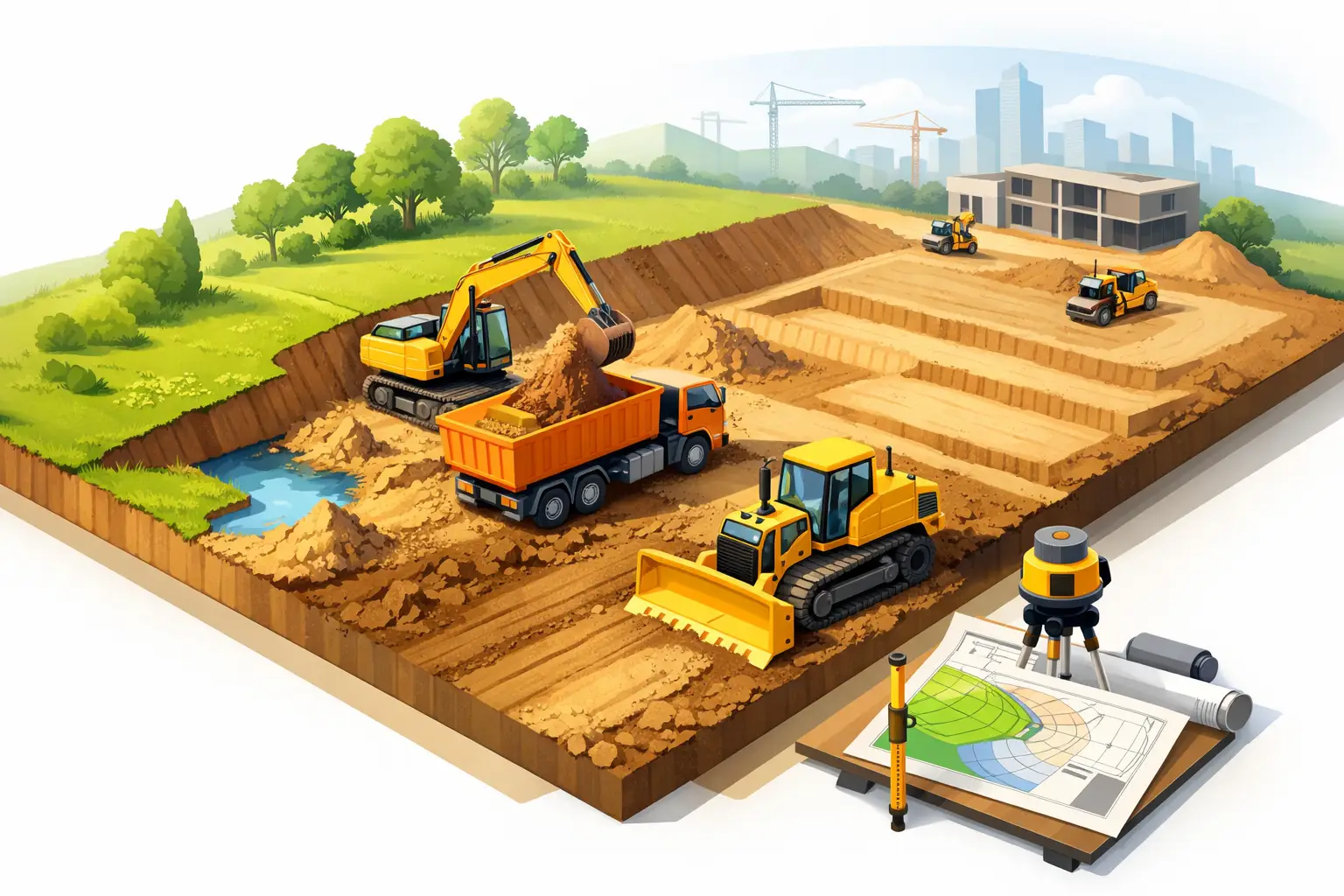
Site grading changes the elevation and slope of a property to create a planned surface. That may involve cutting down high areas, filling low areas, compacting soil, shaping swales, and preparing a base for concrete or pavement. The goal is not simply to make the land flat. The goal is to make it drain correctly while providing stable support for the intended use.
A driveway, for example, should generally direct water away from the home and toward a controlled drainage route. A commercial parking lot needs slopes that move water toward inlets or drainage structures without creating standing water or unsafe grades for vehicles and pedestrians. A building pad needs an elevation that helps protect the structure from runoff and ponding.
The right grade depends on the site. Soil type, existing elevations, nearby structures, property lines, drainage paths, local requirements, and the proposed improvement all matter. That is why grading should be planned before concrete is poured or demolition debris is removed, not treated as an afterthought.
Why Proper Site Grading Matters in South Texas
Corpus Christi and surrounding South Texas communities deal with intense rain, coastal weather, flat terrain in many areas, and soils that can shift or lose strength when water is not controlled. These conditions put more pressure on drainage planning.
When water collects against a slab or foundation, it can soften supporting soil and create uneven moisture conditions. Over time, that can contribute to settlement, movement, cracking, and drainage stains. Water flowing across an unprotected slope can also carry away topsoil or base material, leaving voids near concrete edges, fences, retaining walls, and pavement.
Good grading does not eliminate every risk from major storms or saturated ground. It does, however, give normal rainfall a controlled path and reduces the chance that water stays where it can cause damage. For property owners, that means less standing water, fewer erosion issues, and better protection for the investment in site work and concrete.
The Main Parts of a Site Grading Plan
A grading plan can range from a simple layout for a residential patio to a detailed engineered plan for a commercial site. The scope should match the project, but the same basic decisions apply.
Establishing Finished Elevations
Finished elevations identify how high or low key areas should sit once the work is complete. This includes building pads, driveway approaches, sidewalks, parking areas, drainage points, and adjacent ground.
These elevations must work together. Raising a driveway without considering the garage threshold can direct water toward the house. Adding fill near a fence line can push runoff onto a neighboring property. On commercial work, small elevation mistakes can affect curb flow, accessibility, and drainage performance across the entire lot.
Creating Positive Drainage
Positive drainage means water has a consistent path away from buildings and surfaces where it could pool. Contractors create this through controlled slopes, swales, gutters, drains, curbs, and other drainage features when needed.
The slope must be enough to move water but not so aggressive that it causes erosion, creates an uncomfortable walking surface, or makes vehicle access difficult. There is no one slope that works for every project. A backyard patio, a warehouse pad, and a large parking lot have different drainage needs and different tolerances.
Preparing and Compacting the Soil
Grading is not complete when the dirt looks smooth. Loose fill, organic material, soft spots, and poorly compacted soil can settle after a slab, driveway, or pavement is installed. That settlement may lead to low spots, cracks, broken drainage flow, and uneven surfaces.
Proper site preparation often includes removing unsuitable material, placing fill in manageable lifts, adding select base where appropriate, and compacting the material to support the planned load. A decorative patio may require less structural preparation than a commercial truck-access area, but both still need a stable base and planned drainage.
Protecting Drainage Paths
Water needs somewhere to go after it leaves the slab or pavement. Depending on the property, that may be a swale, drainage ditch, inlet, approved storm system, or a properly designed low point. Blocking an existing drainage path with fill, a retaining wall, or new concrete can shift water toward a building or neighboring parcel.
Before work begins, the contractor should evaluate existing runoff patterns and identify where new work could interfere with them. This is especially important on flat sites, where even a minor change in elevation can cause water to settle in the wrong area.
How Site Grading Fits Into Construction Work
Site grading is often the first step that makes later work possible. On a new concrete driveway, it establishes the base elevation, controls runoff, and helps prevent water from undermining the edges. For a foundation or slab, it prepares a stable pad and helps keep surface water away from the structure.
For demolition projects, grading may be needed after debris removal to restore the site, eliminate unsafe holes, and prepare the area for new construction. On commercial properties, it can be part of parking lot replacement, building expansion, drainage correction, or general site redevelopment.
Retaining walls and bulkheads also rely on grading. These structures manage changes in elevation, but they are not a substitute for drainage. Water pressure behind a wall can cause serious damage if the backfill, drains, and surface grades are not handled correctly.
Signs Your Property May Need Grading Work
Some grading problems are obvious after a storm. Others show up slowly through concrete damage or recurring maintenance issues. Property owners should pay attention to standing water that remains long after rainfall, soil washing away near slabs or pavement, water collecting at doorways, and low spots developing in a yard or parking area.
Other warning signs include exposed concrete edges, recurring mud around walkways, runoff flowing toward a building, and cracks that worsen where soil has been washing out. These conditions do not automatically mean the entire property needs major excavation. Sometimes a targeted regrade, swale, drain improvement, or concrete replacement with corrected elevations is the right solution.
The key is finding the source of the water problem before repairing the visible damage. Pouring new concrete over a bad grade may improve the appearance for a while, but it does not correct the conditions that caused the trouble.
Residential and Commercial Grading Are Not the Same
Residential grading commonly focuses on protecting the home, improving yard drainage, preparing for a driveway or patio, and managing runoff around fences, walls, and landscaping. Access is usually tighter, and the work must tie carefully into existing improvements.
Commercial grading often involves larger drainage areas, heavier traffic loads, utility conflicts, curb lines, accessible routes, and stricter coordination with plans and permitting. A parking lot needs more than a smooth-looking surface. It needs controlled drainage, durable subgrade, and elevations that work with entrances, sidewalks, and surrounding buildings.
In either setting, the right approach depends on the actual site conditions. A contractor should inspect the property, discuss how water currently moves, and consider the planned use before recommending excavation, fill, concrete, or drainage improvements.
Get the Grade Right Before the Concrete Goes Down
Site grading is one of the least visible parts of a project, but it has a direct effect on the parts everyone sees and uses every day. Correct elevations, firm soil, and controlled drainage give concrete and site improvements the support they need to last.
If water is pooling around your home, washing out a driveway, or creating problems on a commercial property, address the grade before the damage spreads. Haylo Construction can evaluate site conditions and provide practical grading, concrete, demolition, and drainage-related solutions built for South Texas property conditions. A clear plan at the start can prevent a much larger repair later.