A patio or driveway can look great on day one and still become a problem two summers later if the base, drainage, and material choice were wrong. That is why stamped concrete vs pavers is not just a style decision. It is a durability, maintenance, and cost decision that affects how your surface performs under traffic, heat, rain, and shifting ground.
For property owners in South Texas, that choice deserves a hard look. Coastal weather, moisture, drainage demands, and soil movement can expose weak installation fast. The better option depends on how you use the space, how much maintenance you want, and whether you care more about lower upfront cost or easier long-term repair.
Stamped concrete vs pavers at a glance
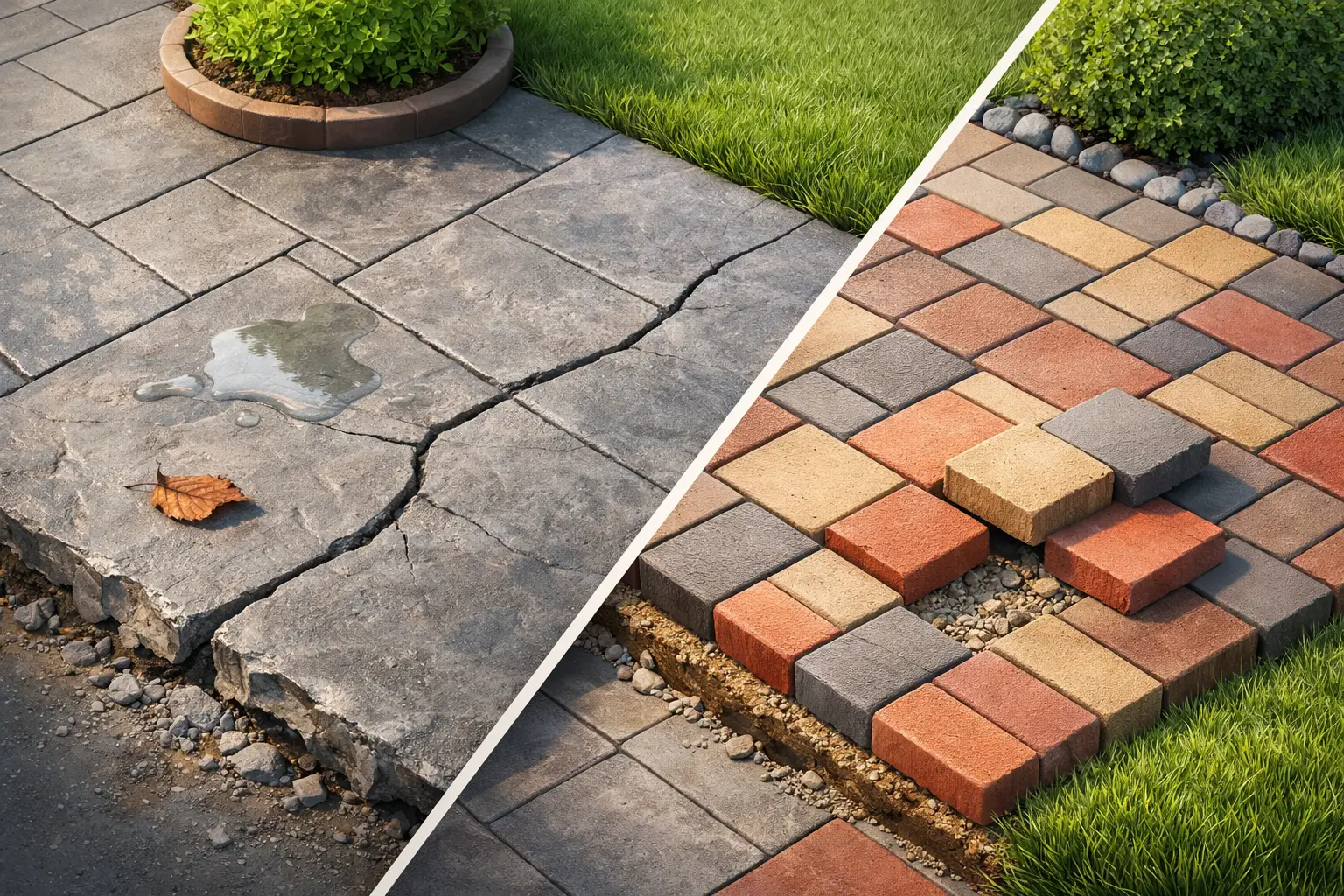
Stamped concrete is a poured slab that is textured and colored to resemble stone, brick, tile, or other patterns. It gives you a decorative look with the strength and clean finish of concrete. When installed correctly with proper reinforcement, grading, and joint placement, it can be a solid choice for patios, pool decks, walkways, and even some driveways.
Pavers are individual units, usually concrete or brick, laid over a compacted base with sand joints between them. They create a segmented surface rather than one continuous slab. That difference changes how the surface handles movement, drainage, repairs, and installation cost.
If you want a fast answer, stamped concrete usually wins on upfront price and a more uniform finished appearance. Pavers usually win on repairability and flexibility when the ground shifts. Neither is automatically better in every situation.
Cost is usually the first deciding factor
Stamped concrete often comes in at a lower initial price than pavers, especially for larger areas. You are pouring one slab, adding pattern and color, and finishing the surface in place. That can make it attractive for homeowners and commercial owners trying to improve curb appeal without pushing the budget too far.
Pavers usually cost more because the installation is more labor intensive. The base has to be carefully prepared, each unit has to be placed, edge restraints installed, and the joints finished properly. Material cost can also climb depending on the paver style and thickness.
That said, the cheaper price on day one does not always mean the lower lifetime cost. If a stamped concrete slab cracks badly, settles, or drains poorly, repairs can be more visible and sometimes more expensive to correct. With pavers, isolated problem areas can often be lifted and reset without replacing the entire section.
Appearance comes down to the look you want
Stamped concrete has a cleaner, more continuous appearance. If you want the look of stone or brick without separate joints throughout the surface, it is a strong option. It also works well when you want broad decorative areas with curves, borders, and a custom color scheme.
Pavers have a more traditional segmented look. Some owners prefer that because it feels higher end or more architectural. Pavers also offer a wide range of shapes, colors, and laying patterns, which gives you design flexibility.
There is also a practical side to appearance. Stamped concrete can fade over time if it is not sealed and maintained. Pavers can also weather, but color wear tends to be less obvious because the surface is made up of many individual pieces rather than one large decorative finish.
Durability depends heavily on installation
This is where contractor quality matters more than marketing language. A well-built stamped concrete surface needs proper subgrade preparation, reinforcement where needed, planned control joints, and drainage that moves water away from the slab. Skip any of that, and you raise the chance of cracking, ponding, and premature wear.
Pavers also depend on the base being done right. If the base is thin, poorly compacted, or not graded correctly, pavers can shift, settle, or develop uneven spots. The difference is that pavers are built to move a bit more without showing the same kind of visible cracking you see in a monolithic slab.
For driveways, load matters. Heavy vehicles, delivery traffic, and repeated turning movements put more stress on the surface. In some cases, reinforced concrete is the better structural solution. In others, thicker pavers with a properly engineered base can perform well. The right answer depends on the expected traffic, soil conditions, and whether the area is residential or commercial.
Repairs are where pavers usually have the advantage
Concrete can crack. Good installation reduces the risk, but no contractor can honestly promise a crack-free slab forever. Some cracks stay minor and cosmetic. Others widen, settle, or allow water intrusion that leads to bigger problems.
When stamped concrete needs repair, matching the original pattern and color is not always easy. Even when the repair is structurally sound, it may still be visible. That is one of the biggest trade-offs with decorative concrete.
Pavers are easier to repair in sections. If one area settles or gets damaged, the affected pavers can often be removed, the base corrected, and the same pieces or matching replacements put back in place. For owners worried about future access to utilities below the surface, that can be a major advantage.
Maintenance is different, not nonexistent
Neither option is truly maintenance free. Stamped concrete needs periodic cleaning and resealing to help protect the color and surface from moisture, stains, and wear. If the sealer is ignored too long, the finish can lose depth and become more vulnerable to damage.
Pavers need maintenance too. Joint sand can wash out or break down over time, weeds can appear if maintenance slips, and ant activity can disturb the joints in some areas. Pavers may need joint sand replenishment and occasional resetting where movement occurs.
If you want the least amount of visual upkeep, stamped concrete can feel simpler at first because the surface is continuous. If you want easier spot repairs and less concern about one visible crack running across the slab, pavers may be easier to live with long term.
Drainage and ground movement matter in coastal Texas
In the Coastal Bend, drainage is not a side issue. It is part of whether the surface lasts. Poor runoff can lead to standing water, erosion around the edges, base failure, and surface deterioration. Any patio, driveway, or walkway should be designed to direct water where it needs to go.
Pavers can offer a slight advantage in how they handle minor movement because the system is made of individual units. Stamped concrete is more rigid. If the underlying soil expands, contracts, or settles unevenly, the slab can show that stress through cracking.
That does not mean stamped concrete is a bad fit in this region. It means site prep, grading, and reinforcement need to be handled correctly from the start. For many projects, that is the real deciding factor.
When stamped concrete makes more sense
Stamped concrete is often the right choice when you want decorative impact at a lower upfront cost, especially for patios, pool decks, and walkways. It also makes sense when you want a more uniform surface that is easier to sweep, wash down, and keep visually clean.
It can be a strong fit for homeowners upgrading outdoor living space or businesses improving appearance around an entry or seating area. If the site is stable, drainage is planned correctly, and the slab is installed with care, stamped concrete can deliver good long-term value.
When pavers are worth the extra investment
Pavers usually make more sense when repair flexibility is a priority, when the ground is more prone to movement, or when you want a premium segmented look. They can also be the better option for owners who want easier access to underground utilities later on.
For some driveways and high-visibility hardscape areas, the added installation cost may be justified by the ability to reset sections instead of dealing with slab replacement. That is especially true when long-term serviceability matters more than the lowest initial number.
The better question is not which is best
The better question is which material fits your site, traffic, budget, and maintenance expectations. Stamped concrete vs pavers is not a beauty contest. It is a jobsite decision. The wrong material over a poor base will fail either way. The right material, installed correctly, will give you years of service and a better-looking property.
If you are comparing options for a patio, driveway, walkway, or commercial surface, get the site evaluated before you decide. A good contractor should talk plainly about drainage, reinforcement, subgrade conditions, and long-term upkeep instead of just showing pattern samples. That kind of conversation saves money later. If you want a surface that holds up and looks right for the property, start with the conditions under it, not just the finish on top.