A demolition crew cannot safely start work on a site that still has active utilities, unclear property lines, unstable structures, or unknown hazardous materials. To prepare a lot for demolition, the work begins well before equipment arrives. Proper planning protects people, neighboring properties, and the schedule for whatever comes next – whether that is a new home, commercial buildout, parking lot, concrete slab, or drainage improvement.
For property owners in Corpus Christi and across the Coastal Bend, preparation also has to account for wind, heavy rain, soft ground, and drainage conditions. A clean demolition starts with a clear plan for the entire site.
Start With the Site Plan and Scope of Work
Before clearing the property, define exactly what is being removed and what must remain. That may sound basic, but many demolition problems begin with assumptions. A detached garage may need to come down while a fence, mature tree, utility pole, retaining wall, or portion of the existing driveway stays in place.
Walk the property with the contractor and identify the demolition boundaries. Confirm the building footprint, concrete areas to be removed, sheds, debris piles, old fencing, buried tanks, and any visible structures that could affect the work. If the property will be rebuilt, discuss the proposed construction plan early. The demolition approach should support the next phase rather than create unnecessary rework.
For example, a lot planned for a new concrete foundation may need careful removal of old slabs and unsuitable material, followed by grading and compaction. A commercial site may require demolition work that preserves access routes or keeps an adjoining business operational. The right scope depends on the property and its next use.
Confirm Permits and Local Requirements
Demolition often requires permits, inspections, or notifications before work begins. Requirements vary by city, county, building type, and the size of the project. A small accessory structure may have a simpler process than a commercial building or a structure located near public utilities.
Do not assume that ownership gives you automatic clearance to demolish. Local authorities may require a demolition permit, proof of utility disconnects, a site plan, or documentation related to asbestos and other regulated materials. Properties within flood-prone areas or near coastal waterways can also have additional site and drainage considerations.
An experienced demolition contractor can help identify what needs to be addressed, but property owners should make sure permits are in place before equipment is scheduled. Waiting until the crew arrives to resolve paperwork can create unnecessary downtime and cost.
Check Property Lines and Easements
Know where your property ends before fences, trees, slabs, or structures are removed. This is especially important on older residential lots and commercial properties with shared drives, drainage routes, or utility easements.
If boundaries are uncertain, a current survey may be worth the investment. Removing a neighbor’s fence, damaging an easement area, or blocking access to a utility line can turn a straightforward demolition into a dispute. Marking protected areas and discussing access with neighbors ahead of time helps prevent avoidable problems.
Disconnect and Mark Every Utility
Utility safety is one of the most critical steps to prepare a lot for demolition. Electricity, gas, water, sewer, telecommunications, cable, and irrigation lines may all be present. Some are visible. Others run underground or through structures that appear unused.
Utilities must be properly disconnected by the appropriate provider or qualified professional. Turning off a breaker inside a building is not the same as confirming an electrical service has been disconnected. The same applies to gas and water service. Written confirmation of disconnects is often required for permits and provides a clear record before demolition begins.
Underground lines should also be located and marked before digging, slab removal, or heavy equipment movement. Older lots can contain abandoned lines, septic components, irrigation piping, or private utility runs that are not obvious from the street. Treat every unknown line as active until it has been verified.
Identify Hazardous Materials Before Disturbing the Structure
Older homes and commercial buildings may contain materials that require special handling. Common concerns include asbestos-containing materials, lead-based paint, mold, fuel tanks, chemical containers, fluorescent light ballasts, and refrigerants in old HVAC equipment.
A professional assessment may be needed before demolition, especially for older structures or commercial properties. If regulated material is found, it must be removed and disposed of through the correct process before general demolition starts. Trying to save time by tearing through suspect material can expose workers and neighbors to hazards, delay the project, and lead to significant cleanup costs.
This step is not only about compliance. It is about protecting everyone on and around the property. A responsible contractor will not treat hazardous-material concerns as an afterthought.
Clear the Lot and Protect What Stays
Remove personal belongings, movable equipment, vehicles, stored materials, and anything the owner intends to keep. It is much easier to separate salvageable items before demolition than to recover them from a debris pile.
Next, protect the items that remain. That can include trees, sidewalks, curbs, nearby structures, utility poles, gates, landscape features, and neighboring improvements. In tight residential areas, the crew may need to use controlled methods instead of relying entirely on large equipment. In open commercial areas, equipment access may be easier, but traffic flow and public safety may require more extensive controls.
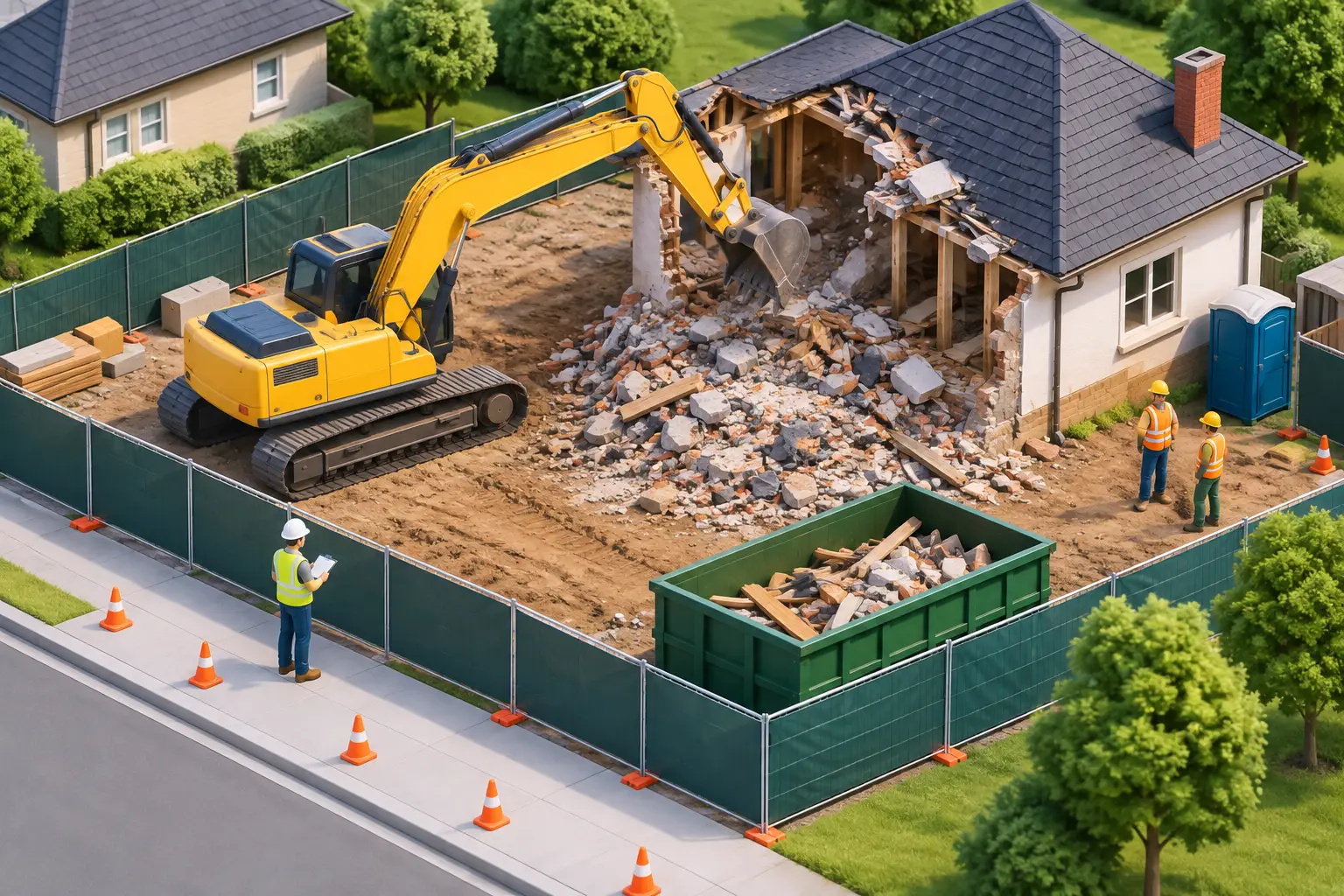
A site should also be secured before work starts. Temporary fencing, warning signage, and restricted access keep children, visitors, and unauthorized vehicles away from an active demolition zone. If the property is vacant, securing it early can prevent dumping and trespassing before the project begins.
Plan Equipment Access, Debris Removal, and Dust Control
Demolition is not just about bringing equipment in. It also requires a safe route for hauling material out. Walk the access path and consider gate widths, overhead lines, soft ground, mature trees, existing pavement, and neighboring driveways. Heavy trucks can damage weak pavement or become stuck after rain if access has not been evaluated properly.
Debris removal should be part of the original scope, not a last-minute decision. Concrete, masonry, wood, metal, roofing, and general debris may need to be separated based on disposal requirements and recycling opportunities. A clean haul-off plan keeps the site safer and prevents piles from interfering with the next stage of work.
Dust control matters, particularly in dry and windy South Texas conditions. Water application, controlled demolition methods, covered loads, and regular site cleanup help limit airborne debris. The goal is to keep the work contained without creating runoff problems or muddy access routes.
Address Drainage and Ground Conditions Early
After a structure and old concrete are removed, the lot may reveal low spots, poor drainage, buried debris, unstable soil, or areas that have settled over time. These conditions should be addressed before new construction begins.
Demolition contractors should avoid leaving a rough site with broken concrete, loose fill, and unplanned drainage paths. Depending on the project, the next steps may include debris removal, rough grading, soil compaction, base preparation, or excavation for a new foundation, driveway, or parking area.
This is where a full-service contractor can make a real difference. Haylo Construction can coordinate demolition with site preparation and concrete work so the property moves forward with fewer handoffs and less confusion between phases. The best approach is not always the fastest teardown. It is the one that leaves the lot ready for durable work to follow.
Keep Neighbors and Occupants Informed
Demolition creates noise, truck traffic, vibration, and temporary disruptions. A quick conversation with neighboring property owners or tenants can reduce frustration and prevent access issues. Let them know the expected work window, where trucks will enter, and whether driveways or streets may be briefly affected.
For commercial properties, communication should also include employees, customers, delivery drivers, and tenants. Clear work-zone boundaries and a plan for pedestrian access are essential when a business remains open nearby.
A prepared lot gives the demolition crew room to work safely and gives the owner a cleaner path to the next project. Before scheduling the first machine, make sure the property has permits, verified utility disconnects, hazard checks, protected boundaries, and a plan for debris and drainage. That preparation is what keeps a demolition project controlled from the first load out to the final grade.