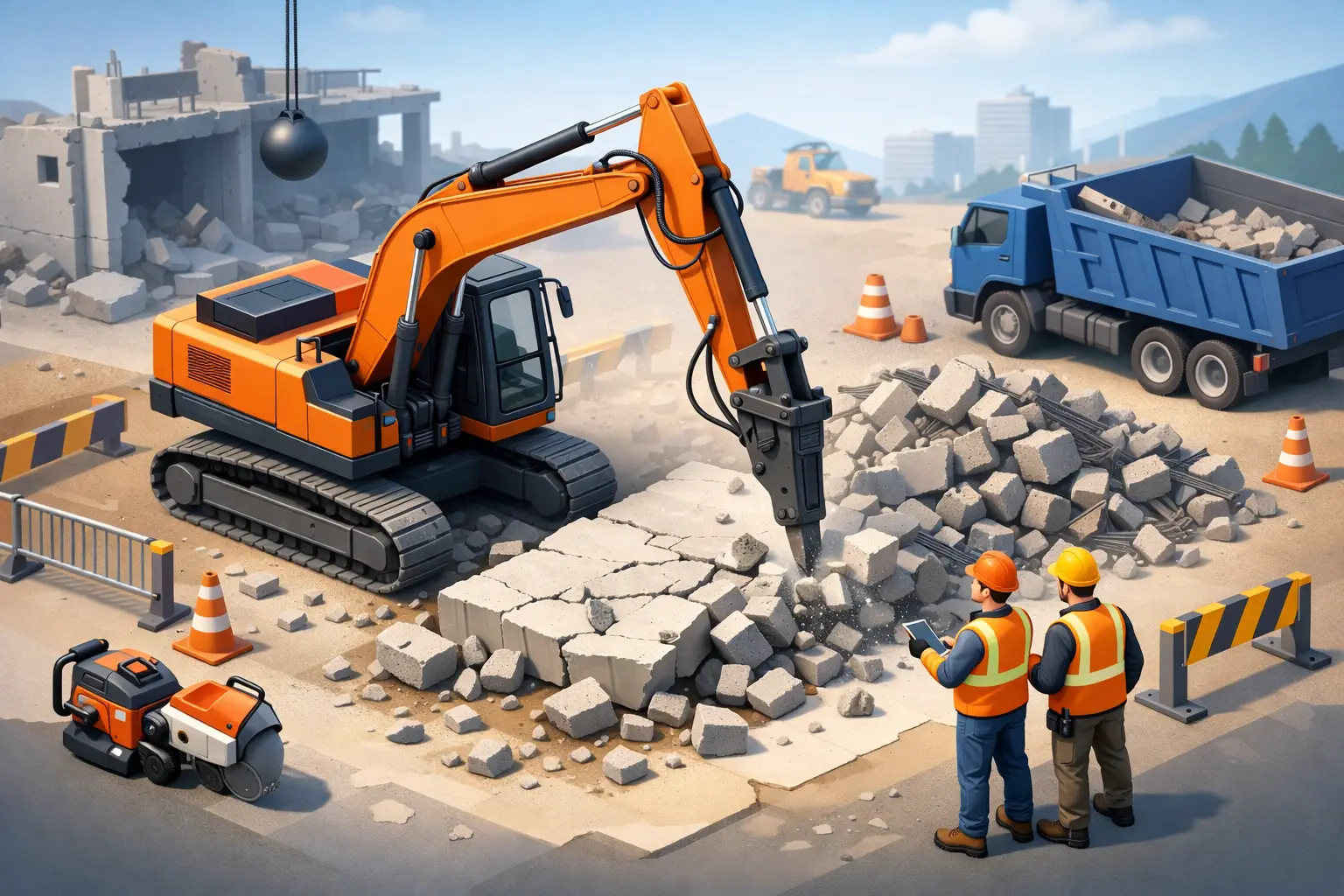
A cracked driveway is one thing. A failing slab near a foundation, a broken parking lot section, or an old concrete pad blocking new construction is a different job entirely. Concrete demolition sounds simple from a distance, but doing it right takes planning, equipment, and a crew that knows how to protect the rest of the property while keeping the project moving.
For homeowners, property managers, and business owners, the real question usually is not whether the concrete has to go. It is how to remove it without creating bigger problems with drainage, underground utilities, access, or the next phase of work. That is where a professional approach matters.
What concrete demolition really involves
Concrete demolition is not just breaking up concrete and hauling it away. The work starts with understanding what is being removed, what is staying in place, and what comes next. A thin patio slab is a very different job than a reinforced foundation section, loading area, retaining structure, or commercial pavement.
Thickness, steel reinforcement, site access, nearby structures, and disposal requirements all affect the plan. On some projects, the goal is selective demolition, where one area is removed while adjacent concrete, landscaping, fencing, or building elements remain untouched. On others, speed is the priority because a new slab, foundation, or paved surface needs to go in right after removal.
That is why experienced contractors do not price or schedule demolition by guesswork. They look at the full site conditions first.
Why the method matters
The wrong demolition method can cause damage that costs more than the removal itself. Heavy equipment used in a tight area can crack nearby surfaces, disturb grading, or hit buried utility lines. Aggressive removal near a structure can affect footings, plumbing, or soil stability. Even debris handling matters, because loose concrete and exposed rebar create safety risks fast.
In coastal Texas, those concerns get more specific. Soil movement, drainage patterns, and weather exposure all matter when a slab or paved area comes out. If the subgrade is already weak or water has been collecting under the surface, demolition can expose problems that need to be corrected before anything new is installed. Skipping that step is how replacement work starts failing early.
Good demolition clears the site for the next phase. Bad demolition leaves behind hidden issues.
Signs it is time for concrete demolition
Not every damaged surface needs full removal. Some concrete can be repaired, resurfaced, or partially replaced. But there are situations where demolition is the smarter investment.
Deep cracking that runs through the slab, major settling, severe heaving, crumbling edges, drainage failure, or repeated patch jobs that do not hold are all common signs. For commercial properties, liability also becomes part of the decision. Uneven walkways, damaged loading zones, and broken parking areas are not just ugly. They create trip hazards, vehicle damage, and exposure for the property owner.
Sometimes the concrete is structurally sound, but still needs to go. That happens when an owner is expanding a building, changing a site layout, replacing utilities, or making room for a new driveway, foundation, or parking configuration.
Concrete demolition for homes and businesses
Residential and commercial demolition share the same basic goal, but the priorities are often different.
For homeowners, the biggest concerns are usually property protection, cleanup, and how the demolition affects the next improvement. A driveway removal might need to preserve a sidewalk section or avoid damaging lawn and irrigation lines. A patio or slab demolition might be part of a larger backyard upgrade that includes grading, fencing, or a new pour.
For commercial sites, timing and access usually carry more weight. Business owners and property managers need demolition handled in a way that limits disruption, maintains safe traffic flow, and keeps the site ready for the next contractor or next phase. A parking lot section, equipment pad, or foundation removal often has to be coordinated around business operations.
That is why there is no one-size-fits-all approach. The right contractor adjusts the plan to the property, the use of the site, and the schedule.
What affects the cost of concrete demolition
Cost depends on more than square footage. Size matters, but so do thickness, reinforcement, access, and haul-off requirements. A small reinforced slab with poor equipment access can be more labor-intensive than a larger open-area removal.
If the concrete is tied into other structures, saw cutting may be needed to create clean separation lines. If there is rebar, mesh, or deep footings, removal takes more time and heavier equipment. If the site needs careful handwork around utilities or existing improvements, production slows down for a good reason.
Disposal also affects price. Broken concrete is heavy, and responsible hauling is part of the job. In some cases, recycling options help. In others, transport distance, dump fees, and debris volume have a direct impact on the final number.
The best estimates are built around actual site conditions, not rough guesses over the phone.
Safety is not optional in concrete demolition
This is one of the biggest differences between professional work and a rushed teardown. Concrete demolition creates flying debris, dust, noise, sharp metal exposure, unstable sections, and equipment hazards. If utilities are nearby, the risk goes up. If demolition is happening near a structure or occupied area, the need for control goes up again.
A proper crew plans for containment, personal protective equipment, machine operation, debris staging, and safe haul-off. They also pay attention to site-specific issues like pedestrian access, vehicle movement, and surface stability.
For owners, that matters for two reasons. First, it protects people and property. Second, it helps avoid delays and preventable damage. A demolition job should move the project forward, not create a mess that slows everyone down.
What happens after the concrete is removed
Removal is only part of the work. What happens next often determines whether the overall project succeeds.
Once the concrete is out, the exposed base needs to be evaluated. If there is soft soil, standing water, erosion, voids, or poor grading, those issues should be fixed before new concrete or pavement goes in. This is especially important on driveways, foundations, parking areas, and other surfaces that need long-term performance.
In some cases, the site just needs to be cleared and left ready for another trade. In others, demolition and replacement are best handled by the same contractor so the transition is tighter and accountability stays clear. That approach can save time and reduce finger-pointing if site conditions change once the old concrete is removed.
Choosing the right contractor for concrete demolition
The lowest number on paper is not always the best value. Owners should look for a contractor who understands demolition as part of the full site picture, not as a stand-alone smash-and-haul service.
That means asking practical questions. Will they protect nearby structures and finished surfaces? Have they handled reinforced slabs, parking areas, foundations, or selective removals before? Can they manage cleanup and disposal properly? Do they understand grading, drainage, and site prep for what comes next?
Communication matters too. A dependable contractor explains what will be removed, what will remain, how access will be handled, and what the site will look like when the work is done. That kind of clarity helps owners plan, budget, and keep the next phase on track.
For property owners in South Texas, local experience has real value. Coastal conditions, shifting soils, and drainage challenges are not side issues here. They affect demolition, prep, and replacement decisions from the start.
When fast work is not the same as good work
Most customers want demolition done quickly, and that makes sense. But speed without control can lead to damaged adjacent concrete, torn-up landscaping, disturbed utility areas, or a rough subgrade that needs extra correction later.
The better approach is efficient, not careless. A strong crew works with urgency, but still cuts clean edges where needed, removes debris consistently, and leaves the site ready for the next step. That balance matters on residential jobs and even more on active commercial properties.
Haylo Construction approaches demolition the same way it approaches concrete work overall – with a focus on safety, site conditions, and getting the job done right the first time.
If you are looking at cracked pavement, a failing slab, or an old concrete surface that is standing in the way of your next project, the best first step is simple: get the site looked at by a contractor who knows what to remove, what to protect, and what the ground needs before new work begins.