A driveway apron takes more abuse than most people realize. It handles the transition from street to driveway, deals with runoff, and gets hit with repeated vehicle traffic right where cracking and settlement usually start. If you plan to install concrete driveway apron correctly, the work has to start below the surface, not at the finish.
In South Texas, that matters even more. Coastal weather, shifting soils, and drainage problems can turn a small concrete placement into a recurring repair if the base, thickness, and slope are not handled the right way. A clean finish looks good on day one. Proper prep is what keeps it performing.
What a concrete driveway apron actually does
The apron is the section of concrete between the street and the main driveway, or in some cases the widened entrance portion that helps vehicles move on and off the property. It serves a practical purpose beyond appearance. It supports wheel loads at a stress point, helps direct water away from the drive, and creates a smoother transition over the curb cut or edge of pavement.
That means apron work is rarely just a matter of pouring a little concrete at the front of the lot. The dimensions, thickness, reinforcement, and drainage all need to match the site. On residential jobs, the apron often improves access and protects the driveway edge. On commercial sites, it may need to handle heavier traffic, wider turning movements, and tighter tolerance for settlement.
Before you install concrete driveway apron, check the basics
The first step is not mixing concrete. It is making sure the work is allowed, properly sized, and designed for the traffic it will carry. In many areas, the apron ties into public right of way requirements, curb cuts, or city standards. That can affect width, slope, thickness, and even the type of finish allowed near the street.
It also helps to look closely at the existing conditions. If the current apron failed, there is usually a reason. Maybe water has been running back toward the garage. Maybe the soil washed out under the edge. Maybe the slab was too thin or had no reinforcement. Repeating the same layout usually means repeating the same problem.
A good site review should answer a few direct questions. Where does water go now? How stable is the subgrade? What type of vehicles use the entrance? Is the apron tying into an existing driveway that is in good enough shape to keep? Those answers determine whether the project is a straightforward replacement or a larger repair with grading and base correction.
Site prep matters more than the pour
Most concrete apron problems start with poor preparation. If the ground underneath is soft, uneven, or not compacted well, the concrete can settle, crack, or break at the edges even if the mix itself is fine.
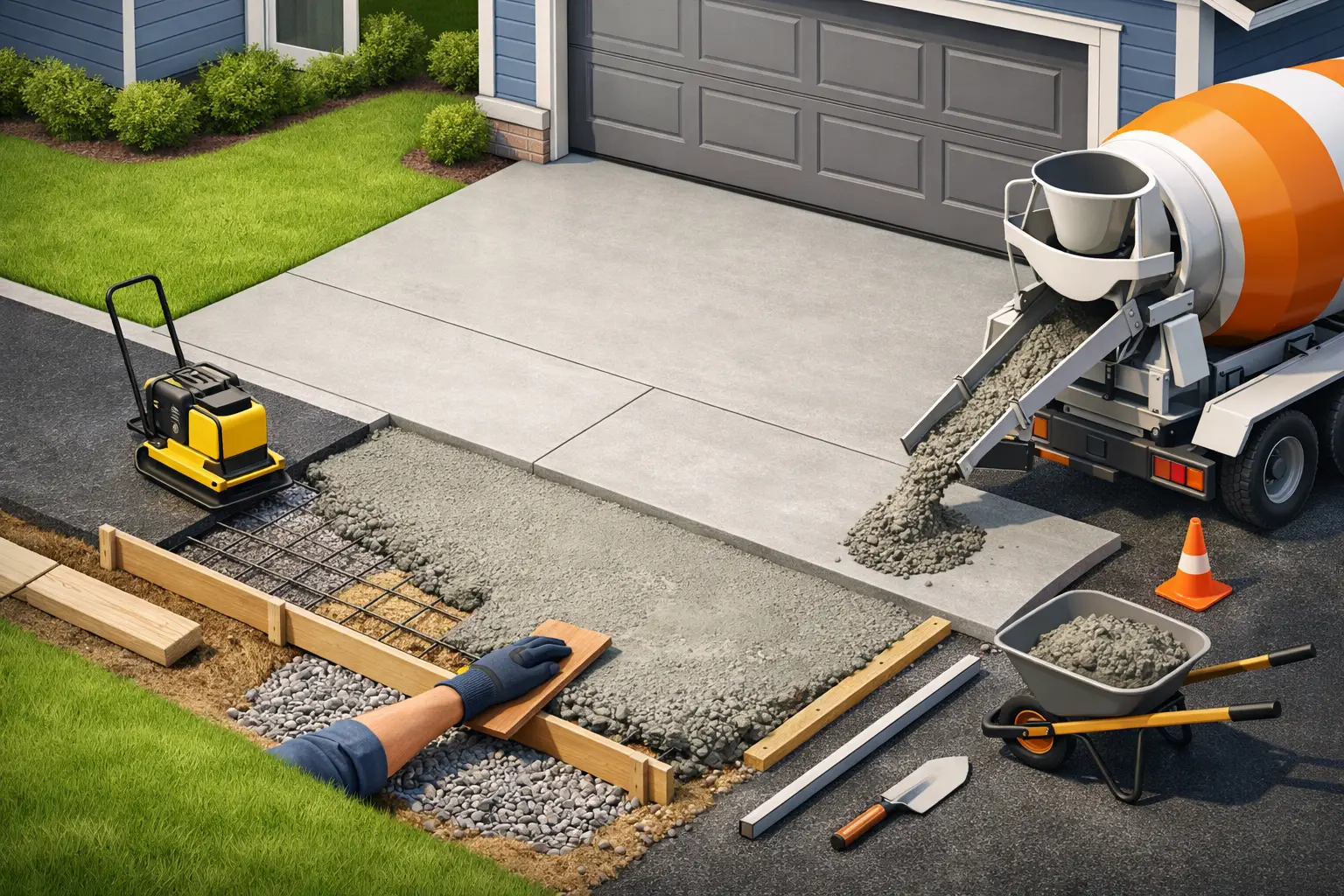
The old apron, damaged base, and any unstable material need to be removed first. After that, the subgrade should be shaped and compacted to create a firm, even foundation. If the native soil is weak or moisture-sensitive, a compacted aggregate base is often needed to improve support and drainage.
This is where experience shows up. Every site is a little different. Some properties need only minor correction. Others need more excavation, better base depth, or drainage adjustments before any forms are set. On coastal properties and lower-lying areas, that extra attention is often what keeps the slab from moving later.
Getting the grade and slope right
A driveway apron has to shed water without creating a rough transition for vehicles. That balance is not always simple. Too little slope and water sits on the surface or runs back toward the driveway. Too much slope and the entrance becomes awkward, especially for lower vehicles or trailers.
The apron should generally follow the surrounding grades while maintaining positive drainage away from structures and avoiding ponding near the street edge. It also has to tie cleanly into the existing driveway and curb cut. If those elevations are off, the finished product may look acceptable at first glance but still perform poorly.
This is one reason apron replacement is not always a DIY-friendly job. The concrete placement itself is only one piece of it. Layout and grade control are what determine whether the apron works through heavy rain and repeated traffic.
Formwork, thickness, and reinforcement
Once the base and grade are ready, forms are installed to hold the shape and maintain proper lines. Clean formwork matters because the apron is a highly visible part of the property. But appearance is only part of it. Forms also help keep thickness consistent and support the edges during placement.
Thickness depends on use. A standard residential apron may be designed differently than one serving larger trucks, work trailers, or commercial traffic. In general, concrete needs enough depth to handle repeated loading at the entrance without premature cracking or edge failure.
Reinforcement can also play an important role. Depending on the design, that may mean rebar, welded wire mesh, or both. Reinforcement does not stop concrete from cracking altogether. What it does is help control movement and hold the slab together if cracking occurs. That is especially valuable in areas with variable soil conditions.
Joint placement matters too. Control joints should be planned so shrinkage cracks are encouraged to form where they are less visible and less damaging. Skipping joints or placing them poorly is a common shortcut that shows up later.
Pouring and finishing the apron
When it is time to install concrete driveway apron, timing and crew coordination matter. The concrete needs to be placed, consolidated, screeded, floated, edged, and jointed in the right sequence. If the crew rushes the finish or works the surface too much, the slab can end up weaker or more prone to scaling and surface defects.
For most driveway aprons, the finish should provide traction without being overly rough. A broom finish is common because it gives a clean appearance and better slip resistance. Around the street connection, the finish also needs to be consistent enough to handle daily vehicle traffic without becoming slick when wet.
Weather conditions should not be ignored. Heat, wind, and direct sun can cause the surface to dry too fast, especially in warmer parts of Texas. That can lead to surface cracking or poor curing if the pour is not managed carefully. On the other hand, wet conditions can affect the base and throw off the schedule. Good concrete work means adjusting to the site and the forecast, not forcing the pour just to get it done.
Curing is part of the job
A lot of people think the work is over once the surface is finished. It is not. Concrete gains strength over time, and proper curing helps it develop durability. If curing is ignored, the slab can lose strength, dry too quickly, and become more vulnerable to surface issues.
Traffic should stay off the apron until it has cured enough for its intended use. Foot traffic may be allowed sooner than vehicles, but the exact timing depends on weather, mix design, and site conditions. This is another area where rushing causes avoidable damage.
Common mistakes that shorten apron life
Most failed aprons do not fail because concrete is a bad material. They fail because the installation was undersized, underprepared, or poorly drained.
A thin slab over weak soil is a problem. So is poor compaction, no reinforcement, or slope that traps water. Another common issue is tying new concrete into failing surrounding pavement without addressing the larger condition. If the old driveway is moving or breaking apart, a new apron can only do so much.
There is also the question of load. A residential entrance used by passenger vehicles has different needs than a property where service trucks, delivery vehicles, or equipment trailers come through regularly. Building for actual use, not best-case use, makes a difference.
When to bring in a contractor
If the apron touches the public right of way, needs demolition, has drainage concerns, or serves anything heavier than light residential traffic, professional installation is the smart move. The same goes for sites with visible settlement, washout, or repeated cracking at the driveway entrance.
A qualified contractor should be able to handle removal, grading, base prep, reinforcement, concrete placement, and cleanup as one scope of work. That keeps accountability clear and helps avoid the handoff problems that happen when multiple crews touch the same small project.
For property owners in the Coastal Bend, local experience is not a minor detail. Soil behavior, drainage patterns, and weather exposure all affect concrete performance. A contractor who understands those conditions is better positioned to build an apron that holds up instead of becoming another repair item.
If you are planning to replace or install a new apron, treat it like a structural entry point, not a cosmetic add-on. Good concrete at the front of a property starts with good ground, proper grade, and disciplined installation. Done right, it gives you a cleaner entrance, better drainage, and one less problem to chase down later.