A new paved surface can look finished on day one and still be headed for failure if the material below it is out of level, cracked, or holding water. Concrete leveling before paving is not a cosmetic extra. It is a site-preparation decision that affects drainage, pavement thickness, vehicle loads, and how long the finished surface will hold up.
For homeowners, that may mean a driveway that sheds water away from the garage instead of toward it. For commercial properties, it can mean avoiding low spots, trip hazards, and early pavement repairs in a parking or loading area. In Corpus Christi and across the Coastal Bend, coastal rain, sandy soils, and changing ground conditions make proper grade especially important.
What Concrete Leveling Before Paving Actually Means
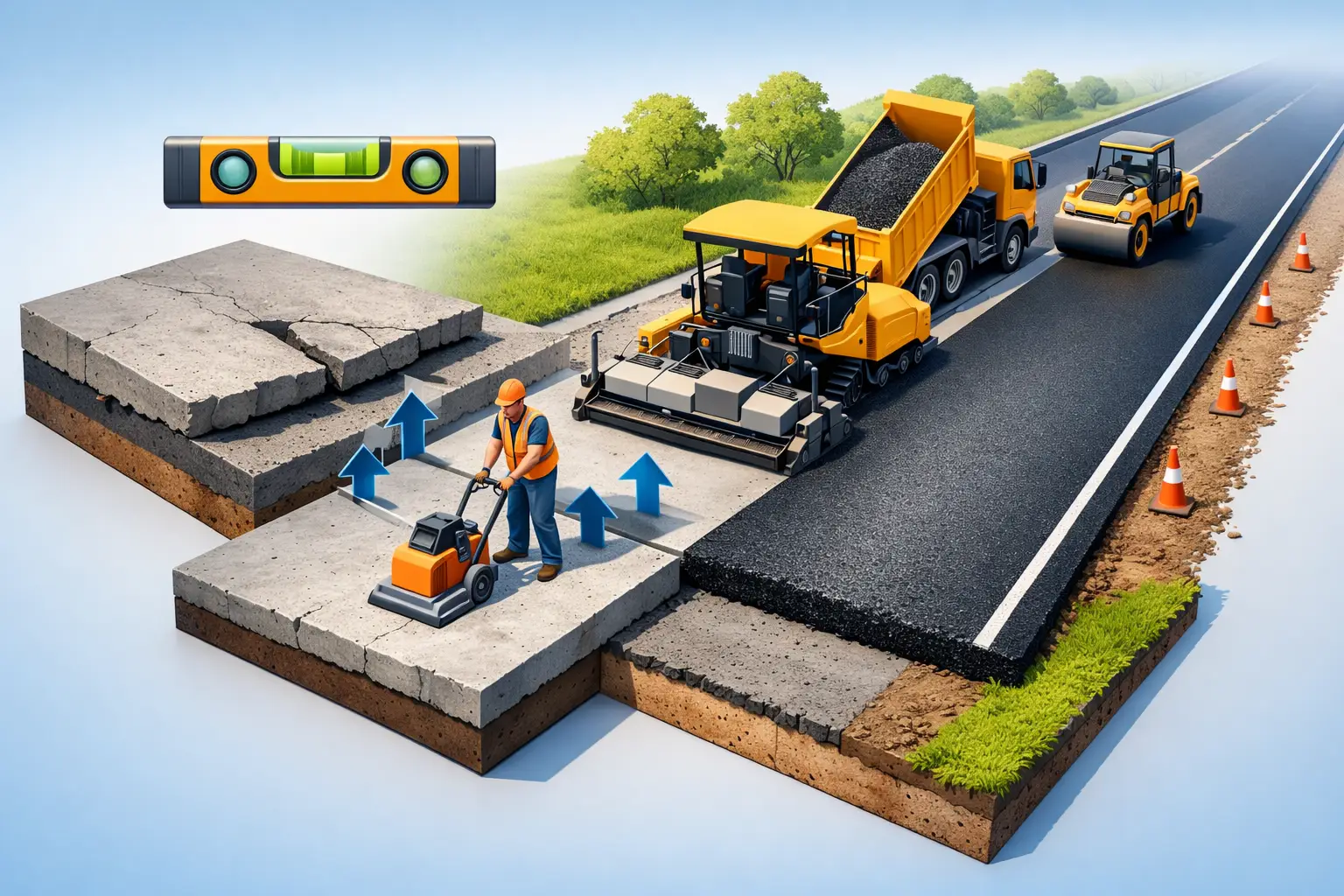
Concrete leveling is the process of correcting a slab or hard surface that has settled, tilted, or developed uneven elevations. Depending on the job, that can involve lifting stable concrete, removing damaged sections, rebuilding the subgrade, or placing a new properly compacted base before paving begins.
The right approach depends on what is being paved and what condition the existing concrete is in. A sound concrete slab with minor settlement may be a candidate for leveling. A slab that is badly cracked, moving independently in several areas, or sitting on failed soil may need removal and replacement instead. Paving over a problem without correcting it usually transfers that problem to the new surface.
Leveling also does not always mean making the surface perfectly flat. Most paved areas need intentional slope. The goal is a controlled grade that moves water to the right drainage path while keeping the surface safe, usable, and consistent with nearby doors, curbs, walkways, and site elevations.
Drainage Comes First
Water is one of the fastest ways to shorten the life of pavement. When concrete or a base is low in the wrong location, water collects beneath or beside the paved surface. That moisture can soften supporting soil, wash out fine material, and create voids. Over time, traffic loads turn those weak areas into cracks, depressions, and broken edges.
A driveway should not drain toward a house, garage, or foundation. A commercial lot should not send runoff toward building entrances, accessible routes, or neighboring property. The finished paving plan needs to account for gutters, swales, drains, curbs, and existing site grades before work starts.
This is where surface appearance can be misleading. A slab may look only slightly out of level, but even a small elevation change can create standing water after a South Texas storm. Checking grades before paving is more reliable than waiting for the first heavy rain to reveal the problem.
The Finished Surface Needs Room to Work
Paving material requires adequate thickness to perform as designed. If an existing concrete area is high in places and low in others, an overlay may end up too thin at high points and unnecessarily thick at low points. Thin areas are more likely to crack, break, or wear out early.
There are also transition points to consider. Raising a driveway or parking area without planning can create a steep lip at a garage, gate, sidewalk, curb, or street connection. Leveling allows the contractor to establish the correct elevations before those final paving decisions become expensive to change.
When Leveling Can Be a Good Option
Leveling can make sense when the existing concrete remains structurally sound and the settlement is limited. For example, a driveway panel may have dropped slightly because soil washed out near an edge or water was not draining correctly. If the slab is intact and the underlying issue can be corrected, lifting and stabilizing it may preserve usable material while restoring the needed grade.
It can also be useful before placing a new paved surface over a stable area where the main concern is slope or localized low spots. The contractor must verify that the existing concrete, base, and surrounding elevations can support the proposed system. An overlay is not automatically the cheapest long-term option just because the old slab is still present.
On commercial sites, leveling may help correct isolated areas near entrances, sidewalks, dumpster pads, or parking spaces where drainage and safe walking conditions matter. The work should be coordinated with traffic flow, accessibility requirements, and the loads the area will carry.
When Removal and Base Repair Are the Better Call
Some concrete should not be leveled and paved over. Widespread cracking, heaving, broken edges, severe spalling, and repeated settlement usually point to a deeper problem. If the slab is moving because of poor drainage, unstable fill, inadequate compaction, or undermining, lifting it alone may not deliver a dependable result.
Removal gives the contractor access to what is underneath. The subgrade can then be inspected, soft material can be removed, and the base can be rebuilt and compacted to the proper elevation. This adds work up front, but it is often the more responsible choice when the pavement will serve vehicles, equipment, or regular commercial traffic.
There is a trade-off. Removal and replacement take more time and cost more than correcting a minor low area. But covering failed concrete can create a surface that looks good briefly and then cracks along the same old fault lines. The right decision should be based on condition, drainage, expected loads, and the useful life you expect from the project.
Signs the Existing Surface Needs a Closer Look
A professional site review is warranted if water ponds after rain, cracks have grown wider over time, slab sections sit at different heights, or the surface has settled near building walls and drainage paths. Other warning signs include soft ground at pavement edges, exposed aggregate, broken corners, and doors or gates that no longer clear the surface properly.
For paved areas that will handle delivery trucks, trailers, dumpsters, or frequent customer traffic, the standard should be higher. Heavy loads expose weak base conditions quickly. A repair approach that works for a lightly used residential walkway may not be appropriate for a commercial drive lane or parking lot.
Proper Preparation Is More Than a Quick Patch
A durable paving project starts with evaluation. The contractor should identify the cause of settlement instead of treating the visible low spot as the entire issue. Drainage failures, leaking utilities, poor compaction, and erosion all need different solutions.
Once the work plan is set, the area should be brought to the correct grade, supported by suitable base material where needed, and compacted properly. Edges, transitions, and drainage routes should be checked before paving begins. Reinforcement, joint layout, and thickness also need to match the application when new concrete is part of the project.
Good preparation keeps the project efficient because it reduces mid-job changes. It also helps protect the investment after the crew leaves. A clean finish matters, but stable support and controlled water are what keep that finish performing.
Questions to Ask Before You Approve the Work
Before hiring a contractor, ask what caused the surface to become uneven and how that cause will be addressed. Ask where water will flow after the work is complete, whether the existing concrete is structurally suitable for leveling or overlaying, and what base preparation is included in the scope.
It is also reasonable to ask how the proposed elevation will affect garage entries, sidewalks, gates, curbs, and adjacent pavement. For commercial work, confirm that the plan considers the traffic type and any accessibility or site-drainage requirements. Clear answers before construction are better than change orders after materials are on site.
Haylo Construction approaches paving and concrete work with the full site in mind, not just the visible surface. A proper estimate should account for grade, drainage, soil conditions, and the use the area will receive.
If your driveway, parking area, or slab has low spots, pooling water, or visible settlement, address it before paving covers the evidence. Getting the grade right now gives the finished surface a fair chance to stay strong, drain properly, and serve the property for years.