
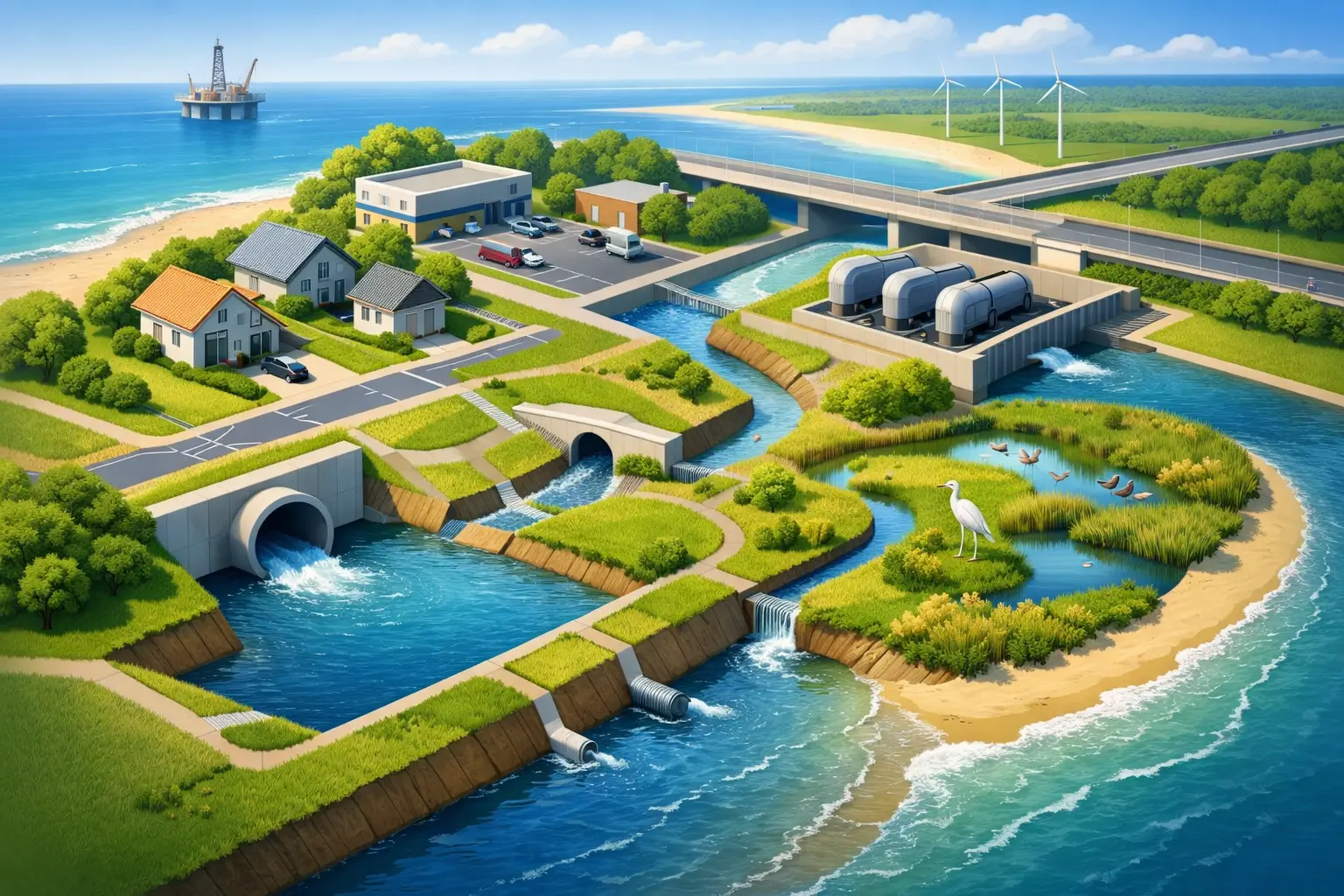
A driveway that holds water after a South Texas downpour is not just an inconvenience. Water can soften supporting soils, wash out base material, stain concrete, create trip hazards, and push runoff toward a slab or building entrance. This coastal drainage planning guide explains what property owners should evaluate before installing concrete, replacing a parking lot, building a pad, or starting site work near the coast.
Start With Where Water Goes Now
The first drainage question is simple: where does water go when it leaves the roof, driveway, parking area, or yard? On many coastal properties, the answer is not obvious. Flat lots, dense development, heavy rainfall, shallow groundwater, and limited drainage outlets can cause water to sit long after a storm.
Walk the site during or shortly after rainfall if possible. Look for standing water, muddy wheel paths, water marks on structures, washed-out mulch, exposed roots, and erosion along fence lines or lot edges. Check whether downspouts empty directly beside the foundation or onto a concrete surface with nowhere to drain.
A good plan accounts for the entire flow path, not just the puddle everyone can see. Fixing a low spot in a driveway may move water toward a garage, neighboring property, sidewalk, or foundation if the rest of the grading is not addressed.
Know the Coastal Conditions Affecting Drainage
Corpus Christi and the surrounding Coastal Bend face drainage conditions that differ from those in higher, drier parts of Texas. Short, intense rain events can overwhelm shallow swales and undersized drains. Wind-driven rain can push water into openings that normally stay dry. In certain areas, tides, canals, ditches, or elevated groundwater can limit how quickly water leaves the site.
Soil also matters. Some properties have clay-heavy soils that shed water slowly, while sandy conditions can allow water to move through the surface but create stability concerns if runoff carries material away. Fill dirt placed during prior construction may settle unevenly, leaving hard-to-see depressions beside slabs and paved areas.
This is why drainage should be part of the project scope before concrete is poured. Concrete is durable, but it follows the grade beneath it. If the base, slope, and discharge route are wrong, even a well-finished driveway or parking lot can become part of the problem.
Coastal Drainage Planning Guide: Set the Grade First
Proper grading is the foundation of drainage work. The finished ground and hardscape should direct water away from structures and toward a lawful, suitable discharge point. That may be a street drainage system, swale, approved ditch, catch basin, drainage easement, or a designed on-site collection area, depending on the property and local requirements.
For concrete flatwork, small elevation differences make a major difference. A driveway, patio, sidewalk, or parking area needs enough fall for water to move, while still remaining usable for vehicles, doors, accessibility needs, and daily foot traffic. The right slope depends on the surface, available outlets, existing elevations, and the condition of adjacent construction.
Too little slope leads to ponding. Too much slope can make a surface uncomfortable, accelerate runoff, and send water too quickly toward another problem area. A contractor should establish elevations before excavation and base preparation, not try to correct drainage with surface finishing on pour day.
Keep Water Away From Foundations
The area next to a home or commercial building needs special attention. Water should not collect at the slab edge, below siding, around piers, or near expansion joints. Repeated saturation can contribute to soil movement, moisture intrusion, surface deterioration, and foundation-related concerns over time.
Downspouts should discharge where water can continue moving away from the building. Extending a downspout onto a properly sloped splash area may work in some situations. On tighter sites, underground piping, area drains, or a more complete collection system may be necessary. The best option depends on roof area, rainfall volume, slope, soil, and the available discharge route.
Plan Concrete and Drainage as One System
A new driveway or parking lot should not be treated as a standalone concrete job. Impervious surfaces shed water much faster than grass or bare soil. When a project adds substantial pavement, it changes runoff volume and direction.
Before work begins, identify where surface water will travel from the high point to the low point. Consider curbs, driveway aprons, trench drains, channels, catch basins, and swales where they are appropriate. The goal is not to add drains everywhere. It is to create a controlled route that keeps water from ponding on the pavement or damaging the base beneath it.
For commercial sites, drainage design may also affect vehicle routes, loading areas, accessible paths, landscaping, and maintenance access. A drain placed in the wrong location can become a recurring maintenance issue or a hazard for carts, forklifts, and pedestrian traffic.
Match the Drainage Method to the Site
There is no single drainage product that solves every coastal property. A simple regrade may be enough for a yard with an open outlet and minor low spots. A densely developed property with a low garage entrance may require collection drains and piping. Larger commercial work may call for engineered stormwater controls and more formal review.
Common approaches include surface grading, shallow swales, concrete channels, trench drains, catch basins, downspout extensions, and underground drainage pipe. Each has a place, but each also has limits.
A swale can move water effectively without mechanical parts, but it needs room and a continuous slope. A trench drain works well across a driveway or entry where water must be intercepted, but it requires proper outlet piping and regular cleaning. Underground pipe keeps the surface clear, but it cannot perform if it has no grade, becomes clogged, or discharges to an unsuitable location.
Do not assume water can be directed onto a neighboring lot, across a sidewalk, or toward a public right-of-way without checking the applicable rules. Property drainage can involve local ordinances, easements, utility locations, floodplain considerations, and permit requirements. Larger projects may need civil engineering review before construction.
Protect the Base Below Concrete
Drainage failure often begins below the finished surface. When water reaches the base under concrete or asphalt, it can weaken support, carry away fines, and contribute to settlement. The result may be cracking, joint separation, edge failure, or sections that no longer drain as intended.
Site preparation should include removing unstable material where needed, establishing proper subgrade elevations, compacting the base, and controlling water during construction. On some sites, base improvements, stabilization, or reinforcement may be appropriate. The right approach depends on soil conditions, expected vehicle loads, and the project design.
For a residential driveway, the concern may be vehicles tracking water into a soft edge. For a commercial parking lot or equipment pad, repeated heavy loads can magnify small drainage mistakes. The more demanding the use, the less room there is for shortcuts in excavation, base preparation, and compaction.
Build for Maintenance, Not Just Installation Day
Drainage systems need upkeep. Leaves, sediment, grass clippings, and windblown debris can block grates and drain inlets. Settlement can change surface slopes. Landscaping can redirect runoff years after the original project is finished.
Property owners should inspect drainage areas before the rainy season and after major storms. Clear visible debris from grates, watch for new low spots, and address erosion before it becomes a larger repair. If water starts ponding where it did not before, treat that as an early warning sign rather than waiting for concrete damage or interior moisture issues.
A practical maintenance check should include roof drainage, pavement joints, drain grates, swales, curb lines, and the area along foundations. On commercial properties, assign responsibility for inspections so problems do not go unnoticed between routine landscaping visits.
Questions to Settle Before Construction
Before approving a concrete or site-work project, get clear answers on a few critical points: What are the finished elevations? Where will roof and surface runoff discharge? Will the project direct water away from structures? Are drains, channels, or swales included in the scope? Is there an existing easement, utility, or permitting issue that affects the plan?
Ask how the contractor will prepare and compact the base, especially if the work includes vehicle traffic or sits near a known wet area. A low price that leaves drainage and base work undefined can become an expensive repair later.
For properties in Corpus Christi and nearby coastal communities, local experience matters because drainage decisions have to work with the actual lot, weather, soils, and surrounding development. Haylo Construction can evaluate concrete, grading, and site-work needs together so the finished project is built for the water it will face, not just the weather on installation day.
The best time to solve drainage is before the first form is set. A clear plan, correct elevations, and disciplined site preparation give water a controlled path and give your concrete a better chance to perform for years.