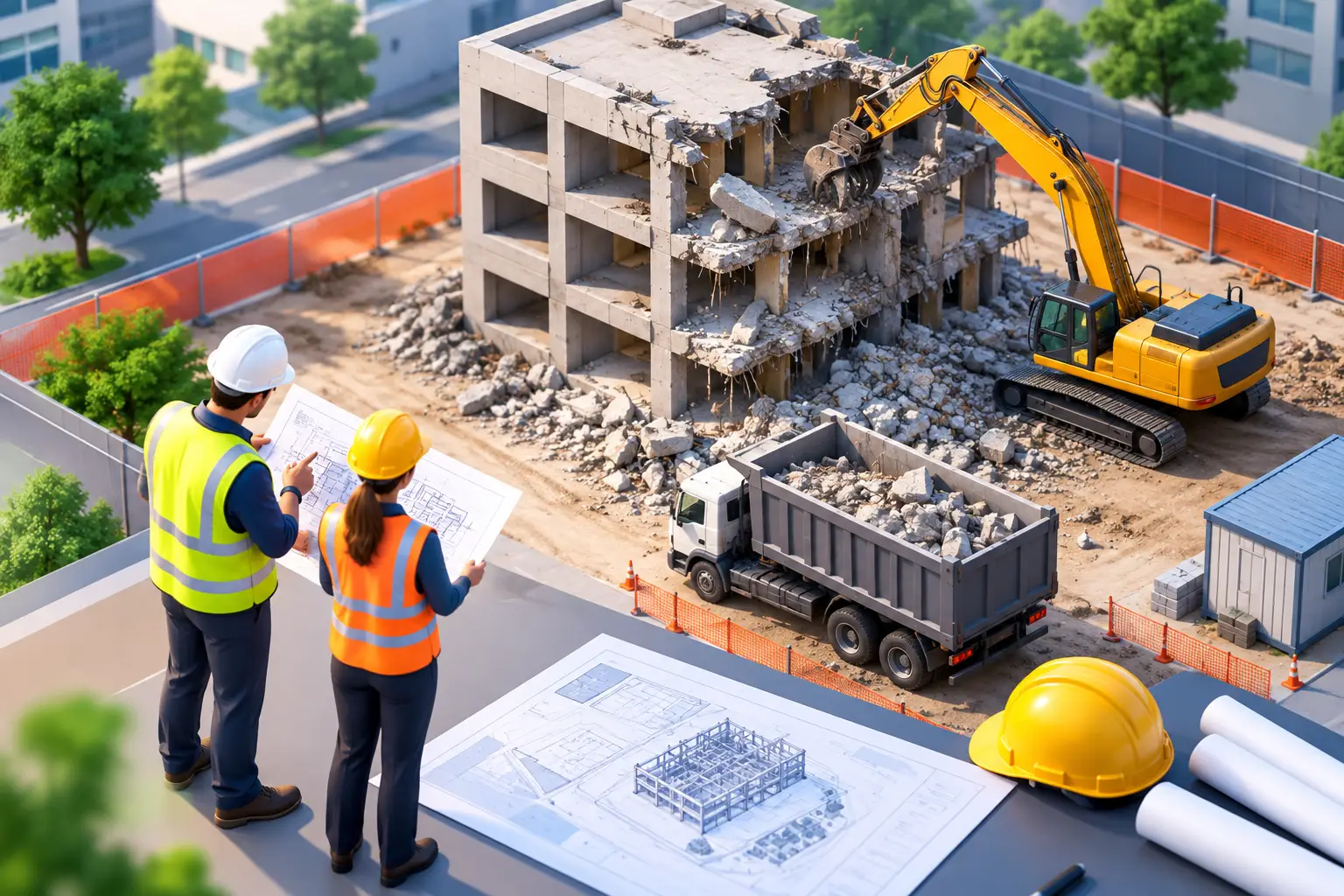
A safe structure demolition planning guide starts before a machine reaches the property. Demolition is not simply tearing down an old building, shed, slab, or damaged structure. It is a controlled site operation that affects utilities, neighboring properties, drainage, public access, and the construction work that follows.
For property owners across the Coastal Bend, planning matters even more when wind, rain, soft soils, and tight access are part of the job. A clean demolition protects the schedule and creates a better foundation for the next phase, whether that is a new concrete driveway, commercial pad, parking lot, home addition, or full site redevelopment.
Start With the Scope, Not the Equipment
The first question is not what machine will be used. It is exactly what must come down, what must stay, and what needs protection. A clear scope separates a straightforward removal from a project with structural, environmental, or access concerns.
Walk the site with the contractor and identify the limits of demolition. That includes the structure itself, attached slabs, footings, fences, trees, retaining features, buried lines, nearby buildings, and any materials intended for salvage. If a concrete slab is being removed but the adjacent foundation is staying, the demolition approach must prevent cracking, undermining, or movement at that remaining structure.
It also helps to define the desired end condition. Some projects need only a cleared footprint. Others require removal of buried concrete, grading, compaction, hauling, and preparation for new construction. Leaving this unclear can create change orders and delays once the visible structure is gone.
Confirm Permits and Property Requirements Early
Demolition work may require permits, inspections, utility documentation, or approvals based on the structure, location, and local jurisdiction. Residential accessory structures, commercial buildings, concrete removals, and work near public rights-of-way can each have different requirements.
A qualified contractor should verify what applies before mobilizing equipment. Property owners should also check whether there are deed restrictions, property-management rules, historic concerns, or site-specific requirements that affect work hours, truck access, debris placement, or fencing.
For commercial properties, the planning conversation should include business operations. Can customers still enter safely? Will deliveries continue? Is there a separate route for employees and demolition trucks? In many cases, the safest plan is phased work that keeps one part of the property operating while another is secured for demolition.
Locate and Disconnect Every Utility
Utility planning is one of the most important parts of safe demolition. Underground and overhead services can include electric, gas, water, sewer, storm drainage, telecommunications, irrigation, and private electrical lines. A line that appears inactive may still be energized or connected elsewhere on the property.
Utility locating is necessary, but marks alone do not replace a site-specific plan. The contractor needs to know which lines are public, which are private, which need formal disconnection, and where service must remain active. For example, a commercial building may need power to stay on for adjacent tenants even when one structure is being removed.
Never assume a utility is dead because it is not visible. Confirmation should come from the proper utility provider or licensed trade professional. Once lines are identified, the demolition crew can establish exclusion zones and choose equipment paths that reduce the chance of strikes.
Inspect for Hazardous Materials and Structural Risks
Older structures may contain asbestos-containing materials, lead-based paint, mold, chemical residues, fuel tanks, refrigerants, or damaged electrical components. These conditions need to be identified before demolition begins, not after debris is already on the ground.
If testing or abatement is required, it should be handled by properly qualified professionals. General demolition crews should not disturb suspect materials without the right evaluation and controls. This protects workers, occupants, neighbors, and the property owner from avoidable exposure and improper disposal issues.
Structural condition matters too. Fire damage, rot, storm damage, foundation movement, and partial collapse can change the demolition sequence. A weakened wall may look stable until attached framing, roofing, or bracing is removed. The contractor should determine the order of work based on how loads are supported, not on what is fastest to reach.
Build a Controlled Work Zone
A demolition site needs clear boundaries. The work zone should separate workers, equipment, trucks, occupants, customers, and the public. The level of control depends on the project, but it commonly includes fencing, barricades, warning signs, designated equipment routes, and a planned debris staging area.
Access is especially important on occupied residential and commercial properties. A skid steer, excavator, or dump truck requires room to move, turn, load, and exit without creating conflicts with parked vehicles or pedestrian traffic. A crew should not be forced to work around people walking through an active demolition area.
Dust, noise, and debris travel farther than many owners expect. Water-based dust suppression, covered loads, controlled drop zones, and frequent housekeeping help keep the project contained. On coastal sites, wind direction can change quickly, so dust control should be adjusted throughout the day instead of treated as a one-time setup.
Plan the Demolition Sequence
This safe structure demolition planning guide comes down to sequence. Crews should work from a planned order that maintains stability, controls falling material, and keeps equipment operators aware of changing conditions.
For a typical structure, the sequence may include removing nonstructural materials, disconnecting services, separating recyclable materials, taking down upper sections in a controlled manner, breaking up foundations or slabs, loading debris, and checking the site for buried remnants. The exact order depends on the building type, condition, access, and equipment available.
Mechanical demolition is efficient for many projects, but hand demolition may be safer around close property lines, retained walls, utility corridors, or structures that need partial preservation. It depends on the site. The right method is the one that controls risk and protects the finished work, not simply the one that appears quickest.
Daily communication matters during active work. The crew should understand equipment movements, spotter responsibilities, exclusion areas, emergency procedures, and the day’s specific objectives. Conditions can change quickly once hidden damage, unexpected concrete thickness, or unmarked site features are uncovered.
Manage Debris, Hauling, and Disposal
Demolition is not complete when the structure is down. Debris must be separated, loaded safely, transported properly, and disposed of through approved channels. Concrete, metal, wood, roofing, soil, fixtures, and regulated materials may each require different handling.
Concrete can often be processed or recycled when it is kept reasonably clean and separate from mixed waste. That can reduce landfill volume and may benefit projects that need crushed material for base preparation. However, recycling is not always practical when concrete is heavily contaminated or mixed with other debris. A contractor should explain the disposal plan rather than promising a one-size-fits-all approach.
Before the crew leaves, the site should be checked for nails, exposed rebar, loose debris, open excavations, and trip hazards. If the property will remain vacant before construction starts, temporary stabilization may be needed to prevent standing water, erosion, or unauthorized access.
Prepare the Ground for What Comes Next
Demolition and site preparation are connected. Removing an old slab or building can reveal poor drainage, unstable fill, hidden footings, damaged pipes, or low spots that were not visible before. Addressing these issues before new concrete or construction begins is far less expensive than discovering them after installation.
The final grade should direct water away from buildings and keep the site workable. In Corpus Christi and surrounding South Texas communities, drainage and soil conditions deserve close attention. Heavy rain can expose weak grading quickly, while coastal moisture and soil movement can affect long-term performance if the base is not properly prepared.
For projects moving directly into concrete work, confirm the required excavation depth, base material, compaction, reinforcement, forms, drainage features, and access for concrete trucks. A demolition contractor who understands the next construction phase can help avoid unnecessary rework between crews.
Choose a Contractor Who Plans Before Breaking Ground
The lowest demolition quote is not always the lowest project cost. Missing utility coordination, poor debris control, damaged improvements, inadequate grading, or weak communication can create expensive problems after the equipment has left.
Look for a contractor that explains the work area, safety controls, hauling plan, site restoration expectations, and any conditions that could affect price or schedule. Licensed, insured, safety-focused crews bring discipline to work that can become dangerous when rushed. Haylo Construction approaches demolition as part of the larger site plan, with attention to controlled removal, clean preparation, and the concrete or construction work that follows.
A well-planned demolition leaves more than an empty space. It leaves a property that is safer, cleaner, properly prepared, and ready for the work you actually want completed.