A spalling repair example is easiest to understand when you see what caused the damage in the first place. A small rough spot on a driveway, parking lot, slab edge, or stair can look like a simple surface issue. In many cases, it is not. Spalling means concrete has broken away from the surface, exposing weaker material underneath and sometimes revealing reinforcing steel. A repair that only covers the hole may look acceptable for a few months, then fail again when moisture, corrosion, movement, or poor drainage continues below the patch.
For property owners in the Coastal Bend, concrete repairs need to account for heat, heavy rain, humidity, salt exposure near the coast, and shifting soil conditions. The right repair starts with finding sound concrete, correcting the underlying problem, and using materials that bond properly to the existing slab.
A Realistic Spalling Repair Example
Consider a commercial parking area with a damaged slab corner near a downspout. The surface has broken away over an area roughly two feet wide. The concrete is rough and flaky, with a shallow depression at the edge of the slab. After rain, water pools in the damaged section and runs along the joint. A few small cracks extend back from the spalled area.
At first glance, this may appear to be a straightforward patch. But a proper assessment finds three contributing issues: repeated water exposure from the downspout, poor drainage at the slab edge, and weakened concrete below the visible damage. If the repair crew applies patch material directly over the loose surface, water will keep working behind it. The patch may separate, crack, or spall again.
The lasting fix is not just filling the missing concrete. It is removing failed material, preparing the repair area correctly, addressing the water source, and restoring the slab with a compatible repair system.
Step 1: Define the Full Extent of the Damage
The visible spall is rarely the exact boundary of the problem. The repair area must be checked for hollow, loose, delaminated, or deteriorated concrete around the damaged section. Sounding the surface with a hammer is one practical way to identify weak material. Solid concrete produces a sharper sound, while delaminated concrete often sounds hollow.
The crew marks the repair perimeter beyond the loose edges. This creates a clean work area and prevents thin feathered patch edges, which are more likely to break down under traffic. For a parking area, driveway, or loading zone, the repair also needs to account for vehicle weight and repeated tire impact at slab edges.
If cracks continue well beyond the spall, if the slab has settled, or if reinforcement is heavily corroded, a patch alone may not be the right answer. In that situation, partial-depth removal, full-depth slab replacement, drainage correction, or joint repair may be needed.
Step 2: Remove Unsound Concrete
The damaged concrete is removed until the crew reaches clean, solid material. Depending on the size and depth of the repair, this may involve saw cutting the perimeter followed by chipping, breaking, or carefully removing the failed section. The goal is a stable repair edge with enough depth for the patch material to perform.
This is where shortcuts cause trouble. Leaving weak concrete in place gives the new repair material a poor base. Overcutting can also create unnecessary damage, especially around embedded steel, slab joints, utilities, or nearby finished surfaces. Experienced concrete repair work requires controlled demolition, not just aggressive breaking.
All loose debris, dust, and contaminated material must be removed from the repair area. Bonding products and cementitious repair materials need a clean, properly prepared surface. Oil, dirt, standing water, and weak concrete can all reduce adhesion.
Step 3: Inspect and Treat Reinforcing Steel
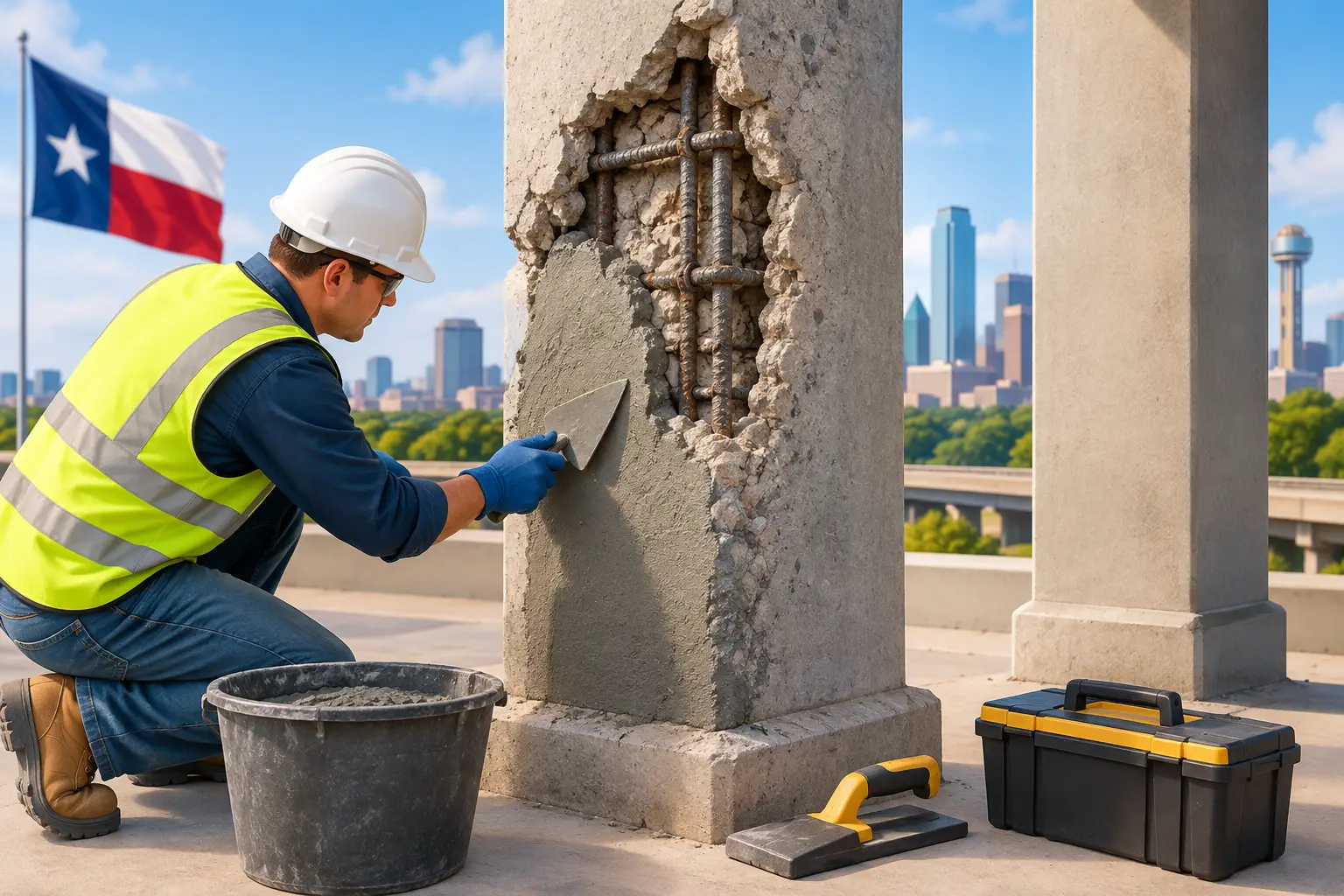
If the spall reaches reinforcing steel, the repair becomes more serious. Rusting rebar expands as it corrodes, putting pressure on the surrounding concrete. That pressure can crack and push off the concrete cover, creating the spalling seen from above.
The exposed steel should be inspected for section loss. Light surface corrosion may be cleaned and treated as part of the repair. Steel that has lost significant thickness may require engineering review or replacement before concrete is placed. Covering severely corroded rebar without addressing it can trap the problem inside the slab.
Coastal exposure matters here. Salt-laden air and moisture can accelerate corrosion, particularly on exterior concrete near Corpus Christi and surrounding communities. A repair plan should consider how water and chlorides reached the steel, then reduce the chances of the same exposure continuing.
How the Concrete Patch Is Installed
Once the repair area is clean and stable, the concrete substrate is prepared according to the selected repair material’s requirements. Some systems require a bonding agent. Others are placed onto a saturated surface-dry base, meaning the concrete is damp but has no standing water. The correct approach depends on the product, repair depth, weather, and existing concrete condition.
For the parking area example, a high-quality cementitious repair mortar or concrete repair mix may be used, depending on the depth of removal. The material is placed firmly into the prepared area, consolidated to eliminate voids, and finished to match the surrounding slope and texture. At a vehicle area, the finished patch must transition cleanly so tires do not strike a raised or weak edge.
The crew restores the drainage path as part of the work. That may mean extending or redirecting the downspout, correcting a low spot, sealing an adjacent joint where appropriate, or adjusting nearby grading. Concrete repair and drainage are connected. If water repeatedly sits on or below a slab, even good repair materials are being asked to work against a continuing problem.
Curing Is Part of the Repair, Not an Afterthought
Fresh repair material needs time and moisture control to gain strength. Hot South Texas conditions can pull moisture out of concrete quickly, increasing the risk of shrinkage cracking and weak surface development. Depending on the material and job conditions, curing may include wet curing methods, curing compounds, protective coverings, or restricted traffic for a specified period.
Opening a driveway or parking area too soon can damage a repair before it has developed enough strength. Property owners should ask when foot traffic, passenger vehicles, delivery vehicles, or heavy equipment can safely return. That answer should come from the repair material specifications and actual site conditions, not guesswork.
When a Patch Is Not Enough
A spalling repair can be durable, but it is not a universal fix. Some concrete damage points to a larger failure that needs a different scope of work. Full replacement may be more cost-effective when spalling is widespread, the slab is badly cracked or settling, drainage is poor across the entire area, or the concrete has deep deterioration.
A thin cosmetic overlay is also not a substitute for structural repair. Overlays can improve appearance when the base concrete is sound and properly prepared. They should not be used to hide active delamination, deep cracks, corroded reinforcement, or slab movement. The right decision depends on the extent of damage, the use of the surface, and what is happening below it.
For example, a small patio spall caused by an impact may only need localized repair. A parking lot spall near multiple failing joints may call for a broader maintenance plan. A foundation wall or structural slab with exposed reinforcement should be evaluated more carefully because the consequences of continued deterioration are higher.
What Property Owners Should Look For
Early action is usually less expensive than waiting for a small spall to spread. Watch for flaking surfaces, exposed aggregate, rust stains, cracks around a damaged area, hollow-sounding concrete, pooling water, or pieces breaking away at edges and joints. These signs do not always mean full replacement is necessary, but they do justify a professional inspection.
When requesting a repair estimate, ask what caused the spalling, how far the deteriorated concrete extends, whether reinforcement is exposed, and how drainage will be handled. A clear answer should explain the scope of removal, surface preparation, repair material, curing plan, and any traffic restrictions. Those details separate a lasting repair from a temporary cover-up.
Haylo Construction approaches concrete repair with the same practical standard used for new slabs, driveways, and commercial paving: prepare the base correctly, use the right materials, and build for the conditions the concrete will face. If broken concrete is spreading or water is collecting around the damage, getting the area evaluated now can help protect the rest of the slab and keep the repair scope under control.