A stamped patio can look like natural stone, slate, or wood without the cost and maintenance of those materials. But appearance is only one part of the decision. Homeowners and property managers commonly ask, is stamped concrete slippery, especially when the surface will be near a pool, entry door, outdoor kitchen, or high-traffic walkway.
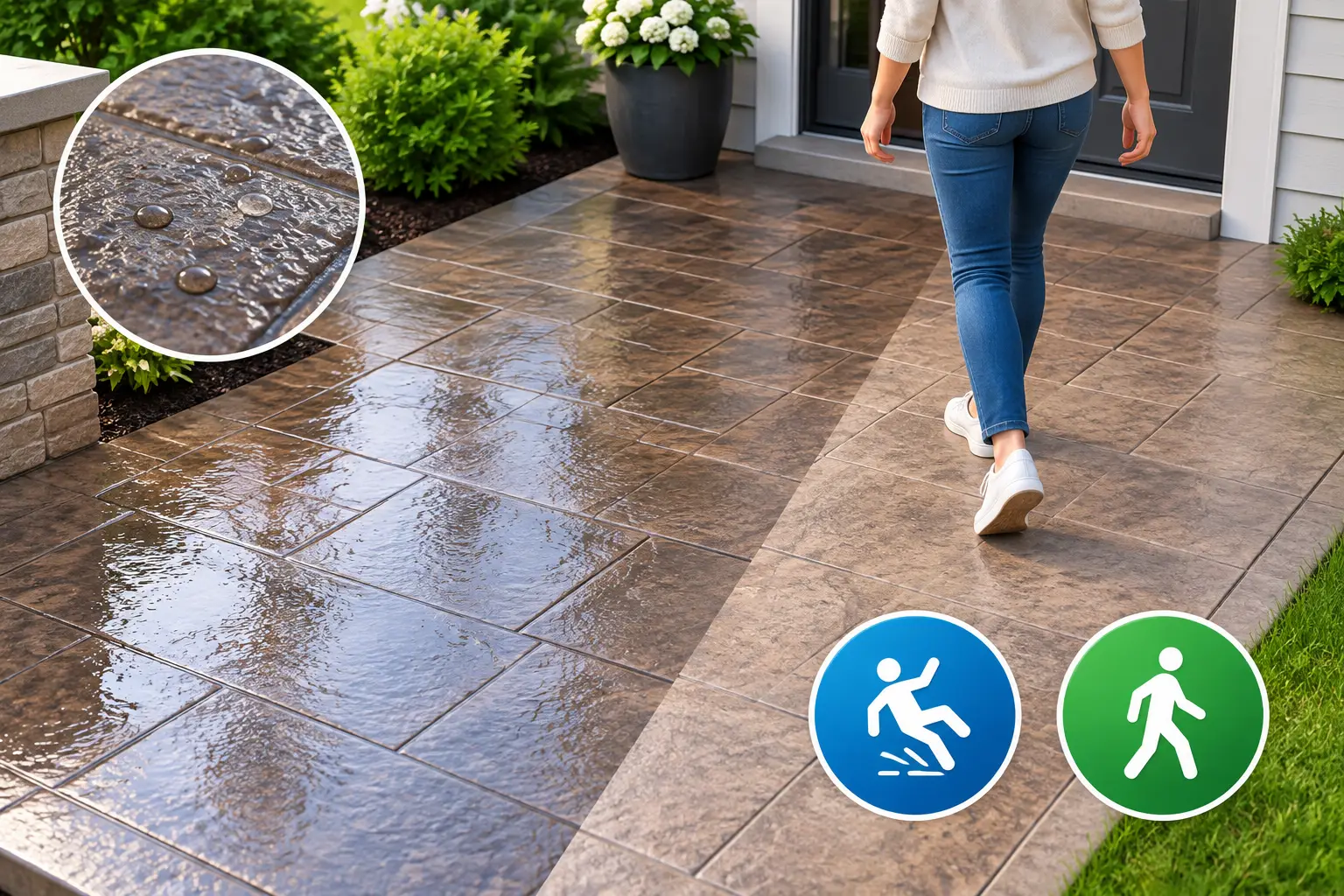
The straight answer is that stamped concrete can be slippery when it is wet, but it does not have to be. Traction depends on the pattern, surface texture, sealer, drainage, and how the concrete is maintained. A properly planned installation gives you the decorative finish you want without treating safety as an afterthought.
Is Stamped Concrete Slippery When Wet?
Stamped concrete is often smoother than broom-finished concrete, particularly after a clear sealer has been applied. That smoother finish can reduce grip under wet shoes, bare feet, or vehicle tires. The risk increases when water is allowed to sit on the slab or when the sealer creates a glossy, film-like surface.
That does not mean every stamped surface is unsafe. Many stamped concrete patios, walkways, and driveways perform well because the installer selects a textured stamp pattern, uses an appropriate sealer, and builds the slab with the right slope for drainage. The goal is to manage the conditions that create slips rather than assume decorative concrete will behave exactly like rough broom-finished pavement.
For a pool deck, front walk, restaurant patio, or commercial entrance, traction should be part of the design conversation before concrete is poured. It is much easier and more cost-effective to specify the right finish at the start than to correct a slick surface after the project is complete.
What Makes a Stamped Concrete Surface Slick?
Several factors work together. The stamp pattern is one of the biggest. A deeply textured stone pattern has more natural grip than a pattern with broad, smooth sections. Some designs look excellent in sample photos but are better suited to low-traffic decorative areas than wet walkways.
Sealer selection matters just as much. Sealers protect decorative concrete from staining, weather exposure, and wear, but too much sealer or the wrong product can leave a shiny surface with reduced traction. A contractor should apply sealer evenly and avoid heavy buildup. Repeated coats applied without proper cleaning or surface preparation can also make an existing patio more slippery over time.
Water has to go somewhere. Poor grading, low spots, clogged drains, and runoff from a roof can keep areas wet long after a storm. In Corpus Christi and across the Coastal Bend, humid conditions, heavy rain, salt air, and frequent outdoor use can all add to the problem. A patio that holds water near a gate, grill area, or back door deserves attention before it becomes a safety concern.
Contamination is another issue. Algae, mildew, dirt, sunscreen, food grease, and automotive fluids can make any hard surface slick. This is especially common in shaded areas and around pools. The concrete itself may have adequate texture, but buildup on top of it changes how the surface performs.
How Contractors Improve Traction on Stamped Concrete
A reliable stamped concrete installation starts below the finished surface. Proper base preparation, reinforcement where required, joint layout, and grading help create a durable slab that drains correctly. Decorative work is still concrete work, and a good-looking finish will not compensate for poor site preparation.
For the surface itself, contractors can use a stamp pattern with meaningful texture rather than an overly smooth design. A subtle texture may be enough for a covered patio, while a more aggressive texture is usually the better choice around pools, sloped walks, or areas that regularly get wet.
A traction additive can also be mixed into the final sealer coat. These additives are typically fine, clear, or lightly textured materials that improve foot grip without drastically changing the color or overall appearance. The amount must be appropriate for the space. Too little may not provide enough benefit, while too much can create an uncomfortable or overly rough feel on bare feet.
The sealer finish should match the use of the area. High-gloss sealer can deepen color and make stamped details stand out, but it is not always the right call for a wet pool deck or a busy business entrance. A satin or lower-sheen finish often provides a more practical balance between appearance, protection, and traction.
Drainage Is a Safety Feature, Not an Upgrade
Concrete should be sloped so water moves away from buildings and does not collect in walking paths. Even a well-textured stamped surface becomes less safe if it stays wet. On patios and driveways, the finished grade should consider roof drainage, surrounding soil, gates, landscaping, and adjacent slabs.
This is particularly relevant on coastal properties, where flat lots and sudden rain can expose drainage problems quickly. If the existing yard directs water toward the house or across a main walkway, the solution may involve more than replacing the concrete. Grading, drains, or adjustments to nearby site features may be needed to keep the finished surface usable.
Best Uses for Stamped Concrete and Where to Be Careful
Stamped concrete works well for patios, courtyards, walkways, decorative driveways, outdoor living spaces, and entry areas. It gives property owners the look of more expensive materials while providing the strength and continuity of a concrete slab.
The best application depends on how the area will be used. A covered backyard patio with limited moisture can support a wider range of patterns and sealers. A pool surround needs more deliberate traction planning. A steep driveway, wheelchair route, or commercial walkway may call for a different finish altogether, such as broom-finished concrete with decorative borders or saw-cut design elements.
There is no one-size-fits-all answer. A smooth ashlar pattern may be a good fit for a low-traffic porch but a poor choice for a frequently wet recreation area. The right contractor will explain that trade-off clearly instead of selling the same finish for every project.
Can Existing Stamped Concrete Be Made Less Slippery?
Yes, in many cases. The first step is identifying why the surface is slick. If the issue is algae, mildew, or residue, a thorough cleaning may restore much of the original traction. Use cleaning products that are appropriate for sealed decorative concrete, and avoid aggressive methods that can damage the color or weaken the sealer.
If the sealer has become too glossy or has built up over several applications, the surface may need to be stripped or mechanically prepared before being resealed. A new coat with a traction additive can make a noticeable difference. This work requires care because stamped concrete often has color hardener, antiquing release, or stain effects that can be affected by improper cleaning and recoating.
Low spots should also be evaluated. Adding another coat of sealer will not fix standing water. Depending on the layout, correction may require localized concrete repair, drainage improvements, or replacement of a problem section.
Maintenance That Helps Keep the Surface Safer
Routine maintenance is straightforward, but it should not be ignored. Sweep away leaves, sand, and dirt so they do not hold moisture against the surface. Clean spills promptly, especially grease near outdoor cooking areas and sunscreen around pools. Treat algae or mildew early instead of letting it become a recurring slick film.
When it is time to reseal, do not assume more shine means better protection. The sealer should be selected for the specific use of the slab, applied at the proper coverage rate, and paired with traction additive where needed. A professional assessment is worthwhile if the concrete is near a pool, business entrance, or other area where falls could create a serious liability issue.
Ask These Questions Before Choosing a Finish
Before approving a stamped concrete design, ask how the area will drain, whether the selected pattern has enough texture for its use, and what sealer sheen is recommended. If the project will be exposed to splash water, frequent rain, or bare feet, ask whether a traction additive is included in the final coat.
Also discuss the condition of the site. Existing drainage issues, shifting soils, and failing adjacent concrete can affect the long-term performance of a new patio or walkway. A dependable contractor should look at the full project, not just the decorative pattern on top.
Stamped concrete can be a durable, attractive choice for South Texas properties when it is designed for real-world use. If safety, drainage, and finish selection are handled correctly from the beginning, you can enjoy the appearance of decorative concrete without creating a slick surface where people live, work, and gather.