A retaining wall has one job: hold back soil safely while moving water where it needs to go. The best retaining wall materials are not always the cheapest or most decorative option. For properties in Corpus Christi and across the Coastal Bend, the right choice depends on wall height, soil movement, drainage, salt exposure, vehicle loads, and what sits above and below the wall.
A wall that looks good on installation day can still fail early if its base is poorly prepared, drainage is ignored, or the material does not fit the site. Before selecting a finish or comparing prices, start with the forces the wall will need to handle.
What a Retaining Wall Must Handle
Retaining walls resist lateral pressure from the soil behind them. That pressure increases when the soil becomes saturated after heavy rain. On many South Texas properties, shifting soils, intense storms, and poor grading put added stress on a wall. Near the coast, salt air and moisture can also affect exposed materials and metal components.
Drainage is usually the difference between a wall that performs and one that starts leaning, cracking, or washing out. A properly built wall may need a compacted base, gravel backfill, a drainpipe, filter fabric, and a defined outlet for water. The material matters, but it is only one part of the system.
Wall height also changes the conversation. A low landscape border may be suitable for a simpler material and installation method. A taller wall supporting a driveway, building pad, pool area, or sloped yard needs engineered design, deeper foundations, reinforcement, and careful site preparation. Local permitting requirements may apply depending on the height, location, and load conditions.
Best Retaining Wall Materials by Project Type
There is no single best material for every property. These are the most common options, where they work well, and the trade-offs to consider.
Reinforced Concrete
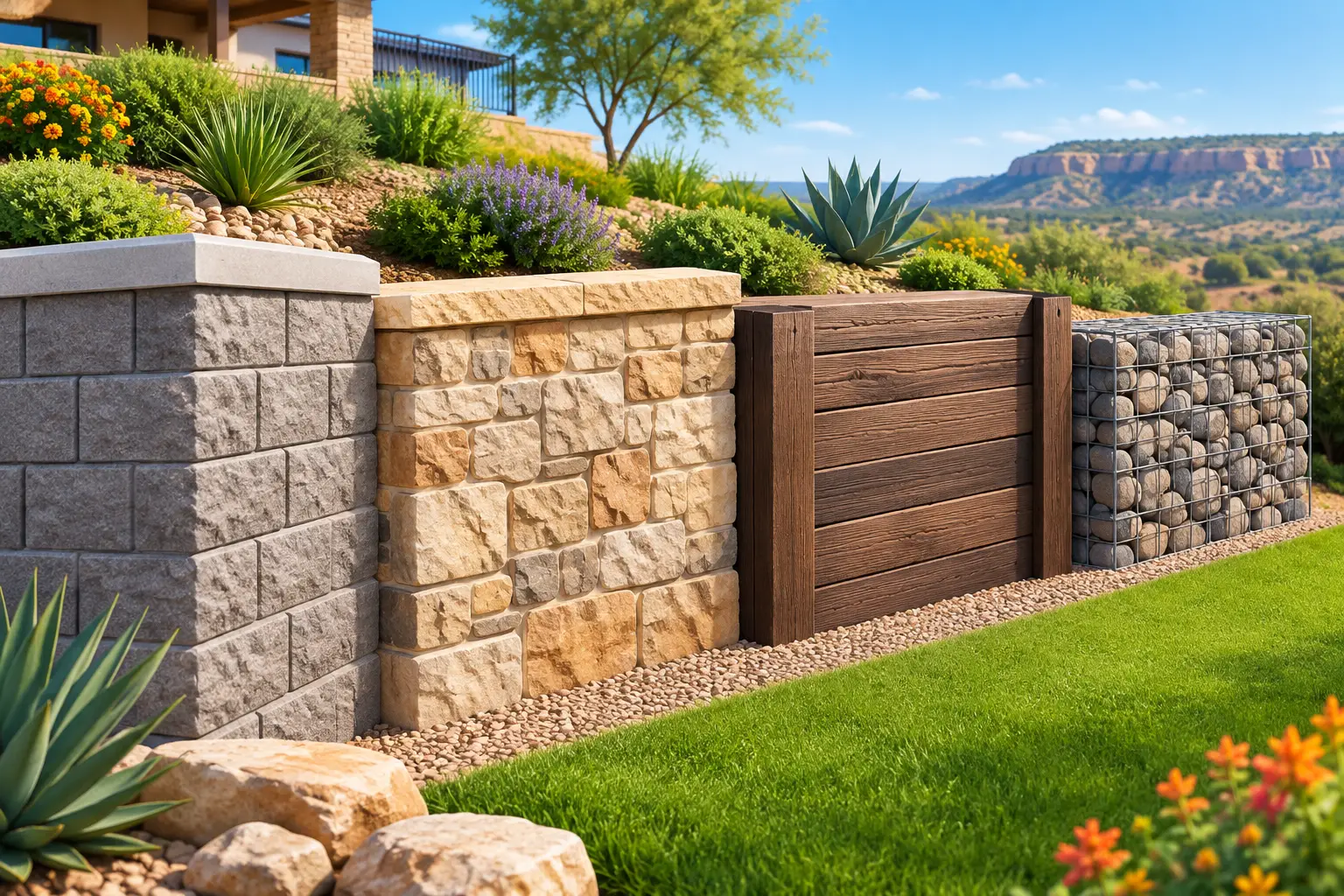
Poured reinforced concrete is often the strongest long-term option for structural retaining walls. It is well suited for walls that support significant grade changes, carry surcharge loads from vehicles or structures, or need to fit a specific footprint. Concrete can be formed into straight runs, curves, steps, planters, and walls with a clean finished appearance.
The strength comes from the full system: excavation, steel reinforcement, concrete thickness, footing design, drainage, and backfill. A concrete wall without adequate drainage can still experience pressure-related problems. When built correctly, however, reinforced concrete offers excellent durability and low day-to-day maintenance.
Its main trade-off is cost. Concrete walls generally require more labor, equipment, formwork, and planning than small block or timber walls. They also need proper curing and experienced installation. For a commercial property, a driveway edge, a bulkhead-related application, or a major residential grade change, that investment is often justified.
Segmental Concrete Block
Segmental retaining wall blocks are the interlocking concrete units commonly used for residential landscaping, raised beds, and moderate slopes. They offer a finished, consistent look and are available in several colors and face textures. Because they are modular, they can work well around curves and stepped grades.
For shorter walls, block systems can be a practical choice when installed on a properly compacted gravel base with good drainage behind the wall. Taller walls often require geogrid reinforcement extending back into the soil, along with an engineered layout. The wall should not be treated like a simple stack of decorative blocks.
Block walls are a good middle ground for many homeowners. They are more substantial than timber, more flexible in appearance than a plain concrete wall, and usually less costly than a fully poured structural wall. The quality of the base preparation matters more than the visual pattern on the block face.
Natural Stone and Stone Veneer
Natural stone retaining walls can give a property a timeless, high-end appearance. Dry-stacked stone walls are often used for low garden walls and landscape transitions, while mortared stone can provide a more formal finish. Stone veneer can also be applied to a reinforced concrete wall when the project needs structural strength without a plain concrete appearance.
Stone is durable, but it is not automatically the right choice for a tall or heavily loaded wall. Individual pieces vary in size and shape, and proper construction takes skill. A decorative stone wall built without a stable base or drainage can shift just like any other material.
This option makes the most sense when curb appeal is a major priority and the wall is low to moderate in height, or when stone is being used as a finish over an engineered structural wall. It is usually more labor-intensive than standard block systems, which affects budget and installation time.
Pressure-Treated Timber
Pressure-treated timber remains a budget-friendly material for low retaining walls, garden edges, and basic landscape changes. It is relatively fast to install and can fit rustic or informal outdoor spaces. For a small wall with limited soil pressure, timber may be a reasonable short-term solution.
Its limitations are clear in wet, coastal, or high-pressure conditions. Even treated wood can eventually rot, warp, split, or suffer fastener corrosion. It also has a shorter expected service life than concrete or masonry. Timber is generally not the right choice for walls supporting driveways, structures, large slopes, or areas where failure could create a safety concern.
If timber is selected, use materials rated for ground contact, corrosion-resistant hardware, proper drainage, and sturdy anchoring. It should be installed with the understanding that replacement may be needed sooner than with a concrete-based wall.
How to Choose Between Retaining Wall Materials
Start with the load, not the look. A wall holding back a few inches of mulch has different requirements than one retaining several feet of saturated soil beside a parking area. The higher the wall and the greater the load above it, the more important professional design and construction become.
Consider these site questions before deciding:
- How high is the grade change, and is the wall supporting a driveway, structure, fence, or pool area?
- Where will water collect during heavy rain, and where will the drainage system discharge?
- Is the property exposed to coastal moisture, salt air, or frequent flooding?
- Does the soil stay stable, or has the area shown signs of erosion, settling, or washout?
- Is the wall primarily decorative, or does it protect a usable part of the property?
For a low landscape wall, segmental block or properly installed timber may be enough. For a long wall, a steep grade, or a wall holding back active use areas, reinforced concrete or an engineered block system is usually the more dependable path. Stone can be an excellent finish choice when appearance is a priority, but it should not replace structural planning.
Do Not Cut Corners on Drainage and Base Work
Many retaining wall failures start underground. The wall face may be attractive, but if it sits on loose soil, lacks a compacted base, or traps water behind it, the structure is already at risk. Water adds weight to the soil and can force material outward. It can also erode the base and carry fine soil through joints.
A professional installation typically addresses excavation depth, compacted aggregate, leveling, backfill, drainage pipe placement, and water outlet locations before the wall is completed. For concrete walls, reinforcement and control joints are also part of the plan. For block walls, the correct base dimensions, block alignment, and geogrid placement are critical on taller installations.
This work is not the visible part of the project, but it is what protects your investment after the first major storm. If a contractor only discusses block color or wall texture and does not ask about grading and drainage, get more information before moving forward.
When Repair Is Not Enough
A leaning wall, open joints, bulging sections, cracking concrete, or soil washing out at the base are signs that the wall needs attention. Small cosmetic issues can sometimes be repaired, but movement usually points to a drainage, base, or structural problem. Covering the damage with new stone or patch material will not correct the cause.
Replacement may be the safer choice when the wall has shifted significantly, is supporting a load it was not designed for, or shows ongoing erosion. A qualified contractor can evaluate whether targeted repair is practical or whether demolition, regrading, drainage correction, and a new wall will provide a better long-term result.
The right retaining wall should make your property more usable without creating another maintenance problem. Choose a material that fits the load and site conditions, then make sure the preparation underneath it is built to last. For walls in the Coastal Bend, that disciplined approach is worth more than any quick fix.