A failing shoreline does not wait for a convenient time. Once erosion starts taking soil from beneath a yard, dock, driveway, or commercial site, every tide and heavy rain can make the damage worse. When property owners search for bulkhead construction Coastal Bend, they need more than a wall installed at the waterline. They need a system designed for local soil, drainage, water movement, and the long-term demands of the Texas coast.
A properly built bulkhead protects usable land, helps control erosion, and creates a stable edge along canals, bays, waterfront lots, and drainage areas. A poorly planned one can shift, crack, bow outward, or allow soil to wash out from behind it. The difference comes down to site evaluation, material selection, structural support, and disciplined installation.
What a Bulkhead Is Built to Do
A bulkhead is a retaining structure that separates land from water. Its job is to hold back soil while resisting pressure from tides, rainfall, runoff, and changing water levels. On Coastal Bend properties, it often serves as the first line of defense for yards, building pads, access areas, landscaping, and waterfront improvements.
Bulkheads are not one-size-fits-all projects. A residential canal lot with moderate boat traffic has different needs than a commercial waterfront site, marina edge, or property exposed to open-bay wave action. The wall height, soil conditions, drainage path, water depth, and nearby structures all affect the design.
The goal is not simply to place panels or pilings along the shoreline. The goal is to create a stable retaining system that manages water pressure and protects the land behind it for years to come.
Why Coastal Bend Conditions Demand Better Planning
The Coastal Bend presents challenges that inland retaining-wall projects may never face. Salt exposure can accelerate corrosion. Saturated soils can lose strength. Storm surge and heavy rainfall can change the amount of force acting against a structure in a short period of time. Wind-driven waves and boat wakes can also wear away shoreline material over time.
Drainage is one of the most overlooked parts of bulkhead work. Water that collects behind the wall has to go somewhere. Without proper drainage provisions, water pressure builds in the soil behind the bulkhead. That pressure can push on the structure, contribute to movement, and carry fine soil particles out through weak points.
The grade of the property matters just as much. If runoff naturally moves toward the bulkhead, the installation needs to account for it. In some cases, grading improvements, drainage features, or erosion-control measures are needed to keep water from undermining the work after construction is complete.
Soil Movement Cannot Be Ignored
South Texas soils can expand, contract, settle, and shift depending on moisture levels and site conditions. That movement can affect pile alignment, panel connections, and the backfill supporting the wall. A contractor needs to evaluate the ground before recommending a material or construction approach.
This is why the lowest initial price is not always the best value. Skipping proper excavation, inadequate embedment, weak connections, or poor backfill can create an expensive repair problem later. A bulkhead should be built around the conditions on the property, not around a generic installation plan.
Material Choices for Bulkhead Construction in the Coastal Bend
The right material depends on the location, water exposure, structural demands, appearance goals, and project budget. Each option has trade-offs, and a dependable contractor should explain them clearly before work begins.
Vinyl sheet piling is commonly used for residential waterfront applications because it resists rot and is not vulnerable to corrosion in the same way as unprotected metal. It can provide a clean appearance and long service life when it is properly supported and installed. However, vinyl still requires the correct pile spacing, cap system, anchoring, and soil retention plan. It is not a shortcut for structural design.
Treated timber has been used for waterfront bulkheads for decades. It can be a practical choice in the right setting, but it must be rated for the intended exposure and installed with durable hardware. Timber can be affected by long-term moisture exposure, marine organisms, and changing site conditions, so it may not be the best fit for every shoreline.
Concrete bulkheads offer strength and a substantial finished appearance. They can work well for projects that require heavy-duty performance or coordination with concrete walkways, docks, patios, and site improvements. Concrete construction requires careful reinforcement, placement, curing, and drainage planning. It is durable, but only when the supporting work beneath and behind the wall is done correctly.
Steel systems may be considered for specialized commercial or high-load applications. In a coastal environment, corrosion protection and ongoing maintenance requirements must be taken seriously. The best material is the one that matches the site, not necessarily the one that looks strongest on paper.
The Construction Process Should Start Before Equipment Arrives
Good bulkhead work begins with a clear look at the site. The contractor should identify the existing shoreline condition, signs of erosion, water access constraints, existing utilities, nearby structures, elevation changes, and drainage patterns. Property lines and any required permits should be addressed before construction is scheduled.
After planning is complete, the crew prepares the work area and establishes the layout. Depending on the project, this can include removing damaged bulkhead sections, clearing unstable material, excavating as needed, and creating access for equipment and materials. Safe site control matters, especially where a project is close to water, residences, docks, or active business operations.
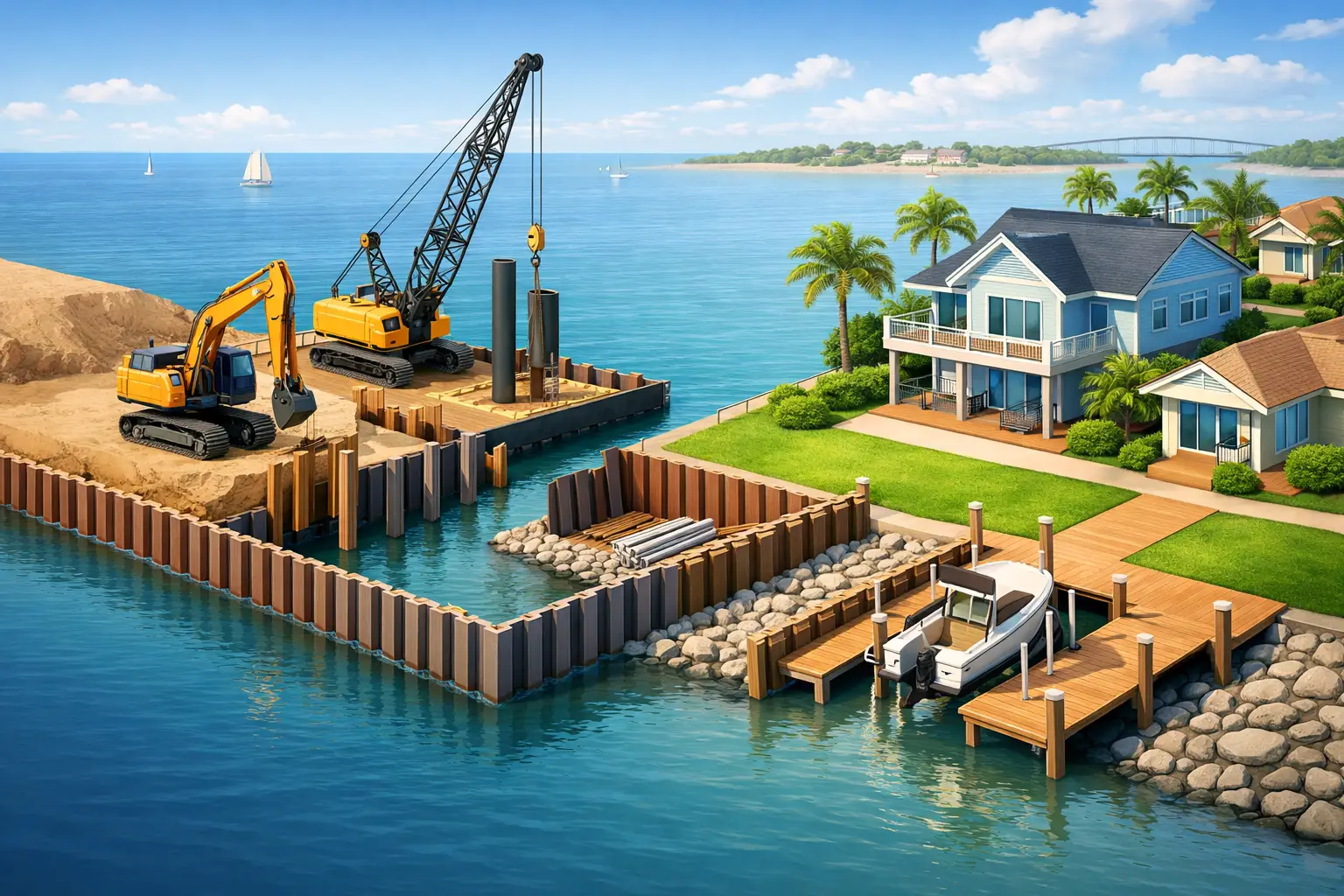
The support system is then installed to the required depth and alignment. This may involve driven pilings, structural posts, tie-back systems, or other engineered components. The wall panels or retaining elements are set carefully, and the cap is installed to tie the system together and provide a finished edge.
Backfill and drainage work follow. This stage deserves close attention because the soil behind the wall is part of the system. Proper backfill helps support the structure while drainage measures reduce the buildup of hydrostatic pressure. The final grade should direct water appropriately rather than trapping it against the bulkhead.
Warning Signs That a Bulkhead Needs Attention
Waiting until a wall fully fails can turn a manageable repair into a larger shoreline restoration project. Property owners should watch for visible movement and changes in the soil behind the wall.
Common warning signs include leaning or bowing sections, gaps between panels, cracked or deteriorated caps, exposed tie rods, loose hardware, and soil settlement near the shoreline. Sinkholes, standing water, washed-out areas, or sudden erosion behind the wall are also serious concerns. If a dock, fence, patio, or walkway near the edge begins to shift, the bulkhead may be losing support.
Some damage can be repaired if it is caught early. A localized section may need reinforcement, new drainage, replacement panels, or backfill restoration. If the support system has deteriorated across a large area, full replacement may be the more responsible option. The right answer depends on the age of the structure, the cause of failure, and whether the remaining sections can still perform safely.
Choosing a Contractor for Waterfront Work
Bulkhead construction is not a project to hand off to a crew without coastal experience. Ask how the contractor evaluates drainage, soil conditions, pile depth, and water pressure. Confirm that they are licensed and insured, and make sure the scope identifies the materials, demolition needs, access plan, and final grading work.
Clear communication is especially important on waterfront projects. Conditions below grade or behind an old wall may not be fully visible until work begins. A professional contractor should explain what is known upfront, identify potential site issues, and communicate promptly if field conditions require an adjustment.
Haylo Construction approaches shoreline and site projects with the same practical standard applied to concrete, demolition, and structural exterior work: prepare the site correctly, use materials suited to the job, and do not cut corners that affect long-term performance.
If your shoreline is showing erosion, settlement, or visible bulkhead damage, address it before another storm season puts more land at risk. A site evaluation can help you understand the condition of the wall, the likely cause of the problem, and the work needed to protect your property with confidence.