A driveway crack can start as a thin line near the garage and turn into a wider break that catches tires, collects water, and makes the whole property look neglected. For homeowners and property managers along the Coastal Bend, understanding what causes driveway cracking in Texas helps you address the real problem instead of repeatedly patching the surface.
Concrete is durable, but it is not flexible. It will move, shrink, and respond to the conditions beneath and around it. Texas driveways face a combination of heat, changing moisture levels, active soils, coastal weather, and heavy use. Some cracking is normal. Other cracking is a warning that the base, drainage, or concrete installation needs attention.
Why Texas Driveways Crack
Most driveway cracks do not come from one single cause. They result from concrete stress that exceeds what the slab can handle. A properly built driveway is more than concrete poured on dirt. It depends on site preparation, stable grading, adequate base material, proper thickness, reinforcement where appropriate, drainage, and correctly placed control joints.
When one or more of those elements is missing, the slab is more likely to crack early or deteriorate faster. In South Texas, the soil and weather make those details especially important.
Expansive and Shifting Soil
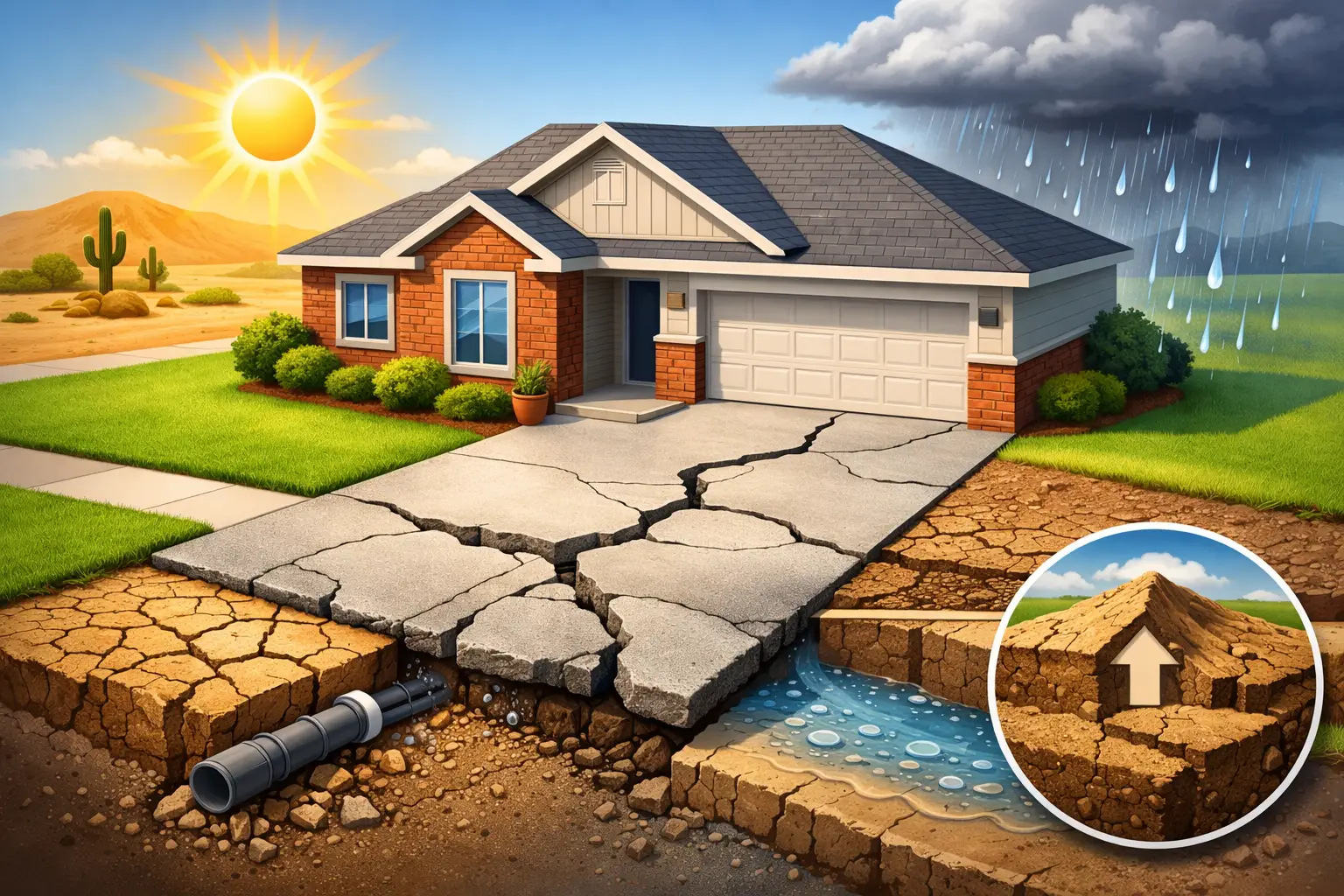
Soil movement is one of the biggest reasons concrete driveways crack in Texas. Many areas have clay-heavy soils that expand when wet and shrink as they dry. That repeated movement pushes on the slab from below, causing sections of concrete to lift, settle, or flex unevenly.
A crack caused by soil movement may run across the driveway, widen over time, or leave one side of the crack higher than the other. This is more serious than a small surface crack because it can create a trip hazard and allow more water into the base.
Coastal areas can also have variable soil conditions, including soft ground, sandy material, and fill soil from past construction. A driveway needs a properly compacted base suited to the site. Pouring concrete over loose, wet, or poorly prepared ground may look fine at first, but the slab can settle once traffic and weather take their toll.
Extreme Heat and Rapid Temperature Changes
Texas heat puts concrete under constant stress. Concrete expands in hot temperatures and contracts as it cools. That movement is expected, which is why professional concrete work includes control joints. These planned cuts create a weaker line where concrete can crack in a controlled, less noticeable way.
Without correctly spaced joints, the slab will still crack. It just chooses its own path. Long, unbroken sections of concrete are especially likely to develop random cracks during hot weather.
Rapid drying after a pour can also cause trouble. If new concrete loses moisture too quickly in high heat or wind, it can shrink before it gains enough strength. This may lead to shallow surface cracking, often called shrinkage cracking. Proper curing practices help concrete develop the strength and durability a driveway needs.
Poor Drainage Around the Driveway
Water is one of the most damaging forces around concrete. It can soften soil, wash out base material, and create voids beneath the slab. Once a section of driveway no longer has full support, vehicle weight can cause it to crack or sink.
Driveways should be graded to move water away from the garage, home, and slab edges. Downspouts should not discharge directly beside the driveway. Standing water near expansion joints, low areas, or slab edges deserves attention, especially after a heavy rain.
Poor drainage often shows up as cracks near the edge of the driveway, sunken corners, or a visible gap where the slab has pulled away from adjacent concrete. A surface patch may improve appearance temporarily, but it will not solve an active drainage or washout issue underneath.
Installation Problems That Lead to Early Cracking
Concrete has limits, but a well-built driveway should not fail prematurely under normal residential use. When cracking appears soon after installation or becomes widespread, workmanship and site preparation should be evaluated.
An Inadequate Base
The base beneath the concrete carries the load. If it is not compacted properly, the driveway can settle unevenly. This is common where organic material, loose soil, construction debris, or uncompact fill was left in place before the pour.
A stable base also helps distribute the weight of vehicles across the slab. Without it, concentrated pressure from tires can crack concrete in weak areas. This matters even more for driveways used by work trucks, loaded trailers, RVs, or frequent delivery vehicles.
Concrete That Is Too Thin for the Use
Not every driveway has the same demands. A standard passenger vehicle driveway may need a different design than a commercial entrance, a property with heavy pickups, or a drive used for trailers and equipment.
If the concrete is too thin, it has less ability to bridge minor soil movement and resist heavy wheel loads. Thin concrete is also more vulnerable at edges, where support is limited. Adding thickness, reinforcement, and a stronger base can cost more upfront, but it often prevents major replacement costs later.
Missing or Poorly Placed Control Joints
Control joints are not a cosmetic detail. They are part of the driveway’s crack-management plan. Joints need to be installed at appropriate spacing and depth, with a layout that accounts for the driveway shape and changes in direction.
A driveway with too few joints, poorly timed saw cuts, or awkwardly placed joints may crack outside the intended lines. No concrete contractor can promise that concrete will never crack. The goal is to reduce uncontrolled cracking and build a slab that performs reliably for its intended use.
Traffic, Tree Roots, and Edge Damage
Heavy loads can crack a driveway even when the concrete appears sound. Repeated parking in the same location, turning wheels while stopped, and driving heavy equipment over a residential slab all increase stress. Garbage trucks, moving trucks, and construction equipment can cause damage if the driveway was not designed for that weight.
Tree roots are another common cause. As roots grow beneath or beside the driveway, they can lift sections of concrete and create uneven cracks. Cutting roots without understanding the tree’s condition can create a separate problem, so the best approach depends on the tree, its location, and the extent of the slab damage.
Driveway edges are also vulnerable. They have less support than the center of the slab and can break when vehicles drive too close to them. Crumbling edges may point to thin concrete, poor base support, erosion, or regular vehicle traffic beyond the intended drive path.
Which Driveway Cracks Need Professional Attention?
Hairline cracks are common as concrete cures and ages. If they are narrow, stable, and not causing elevation changes, sealing them may be enough to keep water and debris out. Still, they should be monitored.
A professional assessment makes more sense when cracks are widening, multiple cracks are spreading across the slab, or the concrete is becoming uneven. Pay close attention to cracks with one side higher than the other, visible sinking, broken edges, standing water, or gaps near the garage and foundation.
These conditions can indicate an underlying support or drainage issue. Repairing the crack alone may not last if the slab is still moving. Depending on the cause, the right solution could include crack repair, concrete removal and replacement, base reconstruction, drainage correction, or adjustments to nearby grading.
How to Reduce Future Driveway Cracking
You cannot stop Texas soil and weather from changing, but you can reduce the stress they place on a driveway. Keep drainage paths clear, direct roof runoff away from slab edges, and avoid parking heavy vehicles on concrete not built for that load. Watch for low spots where water stands after rain, since those areas can signal early settlement.
For a new driveway or replacement, do not judge the project only by the finished surface. Ask about excavation, base preparation, compaction, concrete thickness, reinforcement, drainage, and control-joint layout. Those are the parts of the job that determine whether the driveway holds up after the crew leaves.
If cracks are growing or the slab is no longer level, acting early usually gives you more repair options. A qualified local concrete contractor can identify whether the issue is cosmetic, structural, drainage-related, or tied to soil movement, then recommend work that addresses the cause rather than covering the symptom.