A retaining wall that looks straight on day one can start leaning, cracking, or washing out after the first hard rain if the work underneath is wrong. That is why anyone planning to build residential retaining wall systems needs to think beyond block color or wall height. The real job is managing soil pressure, drainage, grading, and base support so the wall holds up for years.
For homeowners, this usually comes down to one question: is this a manageable project or a job that needs a contractor? The answer depends on height, slope, water conditions, and what sits above or below the wall. A short garden wall is one thing. A structural wall supporting a driveway, patio, or home foundation is another.
When it makes sense to build residential retaining wall projects
Retaining walls solve practical problems. They hold back soil on sloped lots, create usable flat space, control erosion, and help direct water away from structures and hardscapes. In South Texas, that last part matters. Heavy rain, shifting soils, and drainage issues can turn a simple grade change into a recurring repair problem if the wall is undersized or poorly drained.
A well-built wall can also improve access and appearance, but looks should be secondary to performance. If the wall fails, the cleanup usually costs more than doing the work right the first time. That is especially true where runoff moves quickly or where the wall protects concrete slabs, fencing, or other site features.
Start with the wall’s job, not the material
Before choosing concrete block, natural stone, poured concrete, or timber, define what the wall actually needs to do. Is it holding back two feet of landscaping soil, or is it retaining a steep cut near a driveway? Is there water flowing toward it from a yard or roof line? Will vehicles or structures add weight behind the wall?
These questions affect the wall’s design. Higher loads mean more reinforcement, deeper base prep, and better drainage. In some cases, geogrid reinforcement may be needed to tie the wall back into the soil. In others, a simple gravity wall may be enough. A lot of failures happen because people copy a wall style they like without matching it to site conditions.
Planning, layout, and local requirements
The first step is to mark the wall alignment and check the grade along the full run. A string line and level can help you see where the wall will step up or down and where water currently moves. You also need to know what is buried in the area before excavation starts.
Permits and engineering requirements depend on wall height, location, and whether the wall supports a surcharge load such as a driveway, structure, or pool deck. In many areas, taller retaining walls require engineered plans. Even if a permit is not required, engineering may still be the smart move. Soil pressure does not care whether the wall is in a backyard or on a commercial site.
If the site has poor drainage, soft subgrade, or signs of previous movement, that should be addressed before construction. A retaining wall is not a shortcut around deeper grading or drainage issues.
Base preparation is where the wall really starts
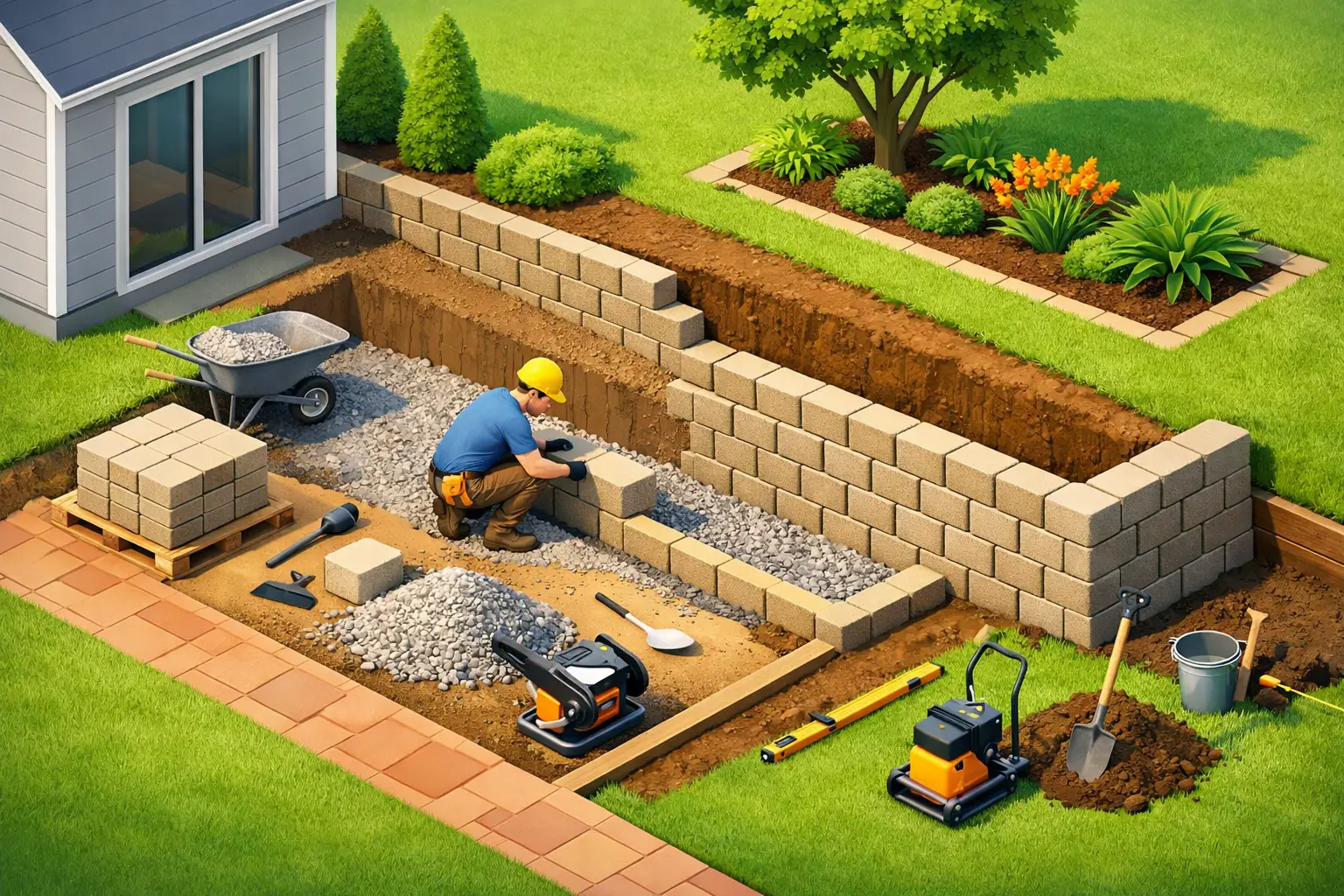
The visible wall is only part of the system. The buried base does most of the heavy lifting. Excavation should remove loose soil and organic material until you reach competent ground. Then you install and compact a base layer that can support the wall evenly.
For segmental block walls, that usually means a crushed stone base, not topsoil and not whatever happened to be in the trench. The first course needs to sit level from end to end and front to back. If the base is off, every course above it carries that error forward.
Compaction matters as much as material. Loose base stone can settle later, which creates dips, rotation, and cracking. This is one reason rushed retaining wall jobs often fail early. The wall may look finished, but the support under it was never properly built.
Drainage is not optional
If you remember one thing about how to build residential retaining wall systems, remember this: water is usually the problem. When water builds up behind a wall, hydrostatic pressure increases fast. That pressure can push a wall outward even when the blocks themselves are strong enough.
A proper drainage setup often includes clean backfill directly behind the wall, drainage stone, filter fabric where appropriate, and a perforated drain pipe at the base routed to a safe discharge point. The goal is to move water out before it builds pressure.
This is also where site grading matters. If roof runoff, downspouts, or yard drainage dump water behind the wall, the drainage system will be overloaded. In coastal Texas conditions, heavy rainfall can expose weak drainage design in a hurry. A retaining wall should be part of the overall site drainage plan, not treated as a standalone feature.
Building the wall course by course
Once the trench is excavated and the base is compacted and level, the first course goes in. This is the most important row in the entire wall. Each unit should be set carefully, checked for level, and aligned to the string line. Some wall systems bury part of the first course below grade for added stability and appearance.
From there, each additional course is stacked according to the manufacturer’s system or the engineered plan. Joints should be staggered for strength. As the wall rises, backfill should be placed in lifts and compacted in controlled stages. Dumping all the fill at once and pushing it tight against the wall is a good way to create movement.
If geogrid is part of the design, it needs to be installed at the specified elevations and extended back into the retained soil at the proper length. This is not a guesswork item. Wrong placement reduces the wall’s ability to resist pressure.
Caps and finish details come last, but they still matter. A clean top course helps shed water and gives the wall a finished look. More importantly, it protects the upper edge from loosening over time.
Common mistakes that shorten wall life
Most retaining wall problems are not mysterious. They usually trace back to a few predictable issues. The base was too shallow, drainage was skipped, backfill was poor, or the wall was asked to retain more load than it was designed for.
Another common mistake is using the wrong material for the application. Timber may be fine for some low landscape walls, but it is not the same as a reinforced concrete block system when height, moisture, and soil load increase. Poured concrete can be very strong, but it still needs proper footing design, reinforcement, and drainage behind it.
There is also a difference between a decorative wall and a structural retaining wall. If the wall protects a slope near a home, driveway, or fence line, failure can affect more than landscaping. It can undermine nearby improvements and create safety issues.
When to call a contractor
A short wall on stable ground may be within reach for an experienced DIY homeowner. But once wall height increases, drainage becomes complicated, or the site has slope and load concerns, the risk goes up fast. Professional installation brings site evaluation, equipment, grading knowledge, and a better handle on compaction and drainage.
That matters even more when concrete work, demolition, excavation, or other site services tie into the project. A retaining wall often affects surrounding surfaces, fence lines, drainage paths, and access. Working with one contractor who understands the whole site can prevent pieced-together work that causes problems later.
Haylo Construction handles retaining wall and site-related projects with that bigger picture in mind. For property owners who want durability instead of guesswork, that approach saves time and helps avoid repeat repairs.
What a lasting retaining wall really depends on
A strong retaining wall is less about the face material and more about the hidden work: excavation, compaction, reinforcement, backfill, and drainage. If those pieces are done right, the wall has a real chance to perform for the long term. If they are rushed, even an expensive wall can fail early.
So before you build, take an honest look at the site conditions, the wall height, and the consequences of failure. A retaining wall should do more than hold dirt in place. It should protect your property, manage water, and stay stable through weather, runoff, and daily use. When the job calls for more than basic landscaping, getting the wall built right the first time is the part that pays off.