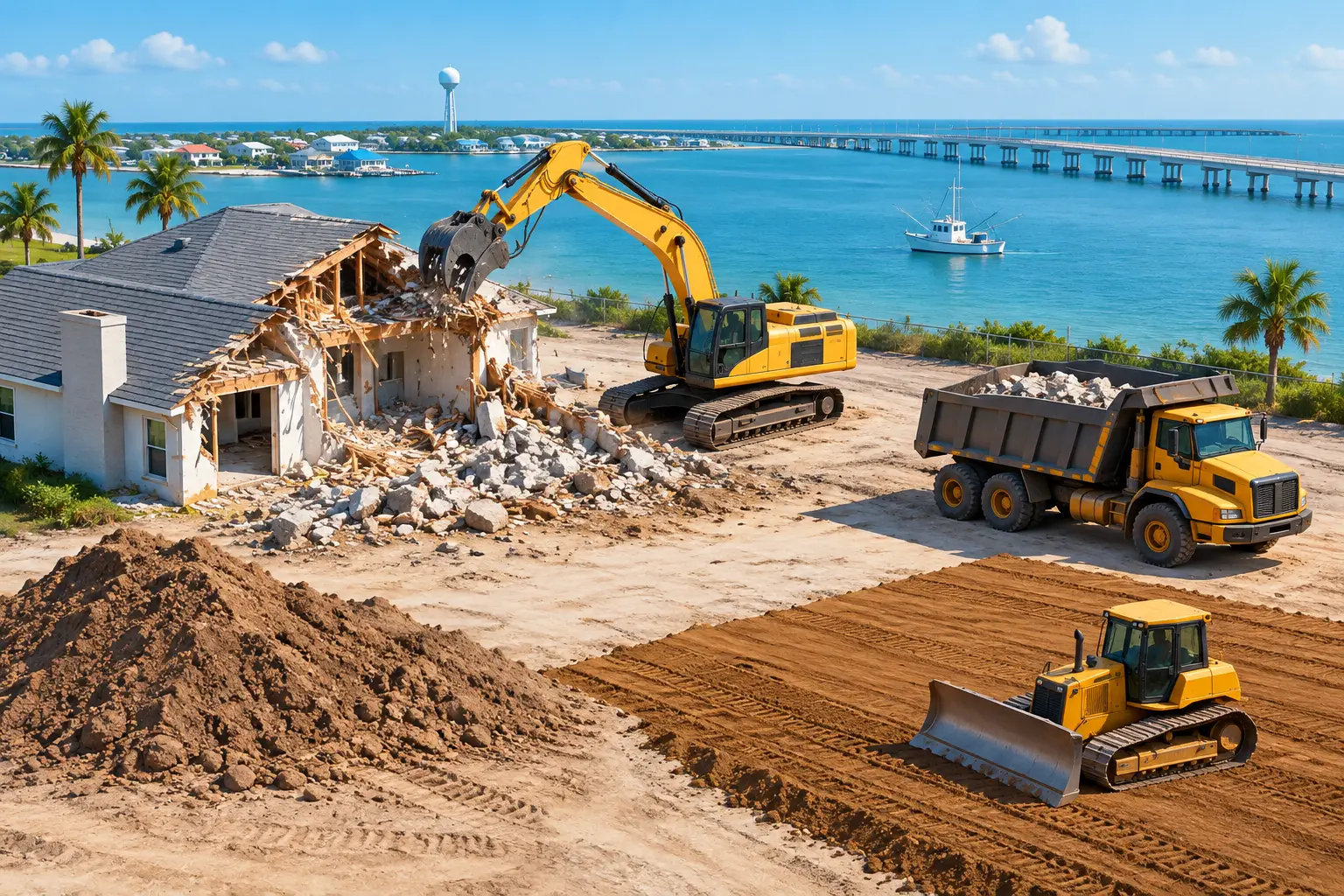
A failing slab, abandoned structure, or low-lying lot can hold up everything planned next. Demolition and grading Aransas Pass property owners need is not simply about knocking something down or moving dirt. It is the work that determines whether a new driveway, foundation, parking area, drainage system, or commercial build starts on solid ground.
Along the Coastal Bend, site preparation has to account for drainage, changing soil conditions, heavy rain, wind exposure, access limitations, and the condition of existing utilities. A fast-looking job can create expensive problems if debris is left behind, elevations are guessed at, or water is directed toward a building instead of away from it. The right approach is organized, safety-focused, and built around what the property needs next.
Demolition and Grading in Aransas Pass Starts With a Site Plan
Every site has different constraints. A residential demolition may involve an old patio, failing driveway, shed, pool deck, or damaged concrete slab. A commercial project may require removal of parking areas, foundations, curbs, fencing, structures, or unwanted site improvements before redevelopment can begin.
The first question is not how quickly materials can be removed. It is what must remain protected. That can include nearby structures, mature trees, utility lines, drainage paths, fencing, sidewalks, and access routes for residents, tenants, or customers. A qualified contractor assesses the work area, identifies hazards, confirms access for equipment, and plans where material will be loaded and hauled.
For larger projects, the scope should also account for permits, utility location requirements, demolition limits, disposal planning, and final site elevations. These details are what separate a clean site-prep job from a project that stalls halfway through because an issue was missed at the beginning.
Safe Removal Comes Before Speed
Demolition requires the right equipment, but equipment alone does not make a job safe. Controlled removal protects the people on site and reduces the risk of damage to adjacent improvements. Concrete demolition may involve saw cutting to create clean separation points before breaking and removal. Structure removal may require a sequence that prevents unstable sections from falling unexpectedly.
Dust, debris, exposed rebar, and heavy equipment traffic also need to be managed. A contractor should keep the job site organized, maintain safe work zones, and remove debris as the work progresses. This matters on tight residential lots, but it is equally important for commercial properties where business operations or public access may be nearby.
Not every demolition project needs a full tear-down. Sometimes selective demolition is the better option. Removing only the cracked section of a driveway, an unsuitable slab, or a damaged retaining feature can preserve useful improvements and control the project budget. The right choice depends on the condition of what remains, the intended use of the site, and whether the existing material will interfere with new construction.
Why Proper Grading Matters on Coastal Texas Properties
Grading gives a property its working shape. It establishes elevations, supports pavement and concrete, creates drainage paths, and prepares the base for what will be built next. If the grade is wrong, even high-quality concrete and construction can fail sooner than expected.
Standing water is one of the clearest signs of a grading problem. Water that ponds near a foundation, driveway, patio, parking lot, or building entrance can soften subgrade, contribute to erosion, create trip hazards, and place unnecessary stress on concrete. In coastal South Texas, strong rain events can expose weak drainage planning in a single afternoon.
Proper grading moves surface water away from structures and toward an appropriate drainage route. The required slope varies by site. A small residential yard may need careful finish grading around a new patio or foundation, while a commercial property may need broader elevation planning for parking areas, entrances, curbs, and drainage infrastructure. There is no one-size-fits-all slope that works for every property.
Subgrade Preparation Is the Work Beneath the Work
A finished surface can look level while the ground below it remains unstable. That is why grading should include attention to subgrade preparation. Soft spots, organic material, loose fill, buried debris, and uneven soil conditions can affect the performance of a future slab, driveway, or parking area.
Depending on the project, preparation may involve removing unsuitable material, placing fill where needed, shaping the area to the required elevation, and compacting the base. The goal is to create consistent support for the next phase of construction. For concrete work, this step is especially important because the slab depends on the material underneath it to carry loads evenly.
Cut and fill work also requires balance. Cutting too deeply can create drainage issues or leave a property lower than surrounding areas. Adding fill without proper compaction can lead to settling later. A dependable site contractor evaluates the existing conditions before deciding how much material needs to move.
Common Projects That Need Both Services
Demolition and grading are often handled together because removal changes the condition and elevation of a site. Once an old slab, structure, driveway, or parking area is removed, the exposed ground usually needs more than a quick cleanup.
A few common examples include:
- Removing a cracked concrete driveway and rebuilding the base before installing a replacement
- Clearing an outdated patio, pool deck, or accessory structure to prepare for new outdoor improvements
- Demolishing old commercial pavement before regrading for a new parking lot or site layout
- Removing an unstable slab or foundation area before preparing for new construction
- Clearing debris and uneven ground from a vacant lot before foundation, fencing, or concrete work
Combining the work under one coordinated plan helps prevent handoff problems. The demolition crew should not leave behind material, rough elevations, or drainage conditions that make the grading phase harder. The grading work should be planned around the final construction requirements, not treated as an afterthought.
What to Ask Before Hiring a Contractor
Price matters, but the lowest bid does not always cover the same scope. Property owners should understand exactly what is included before equipment arrives. Ask whether the proposal includes saw cutting, debris loading, hauling, disposal, site cleanup, rough grading, finish grading, fill material, compaction, and utility protection.
It is also worth discussing the project’s next step. If a new concrete slab, driveway, foundation, or parking lot will follow, the demolition and grading plan should support that installation. The contractor needs to know the intended use, expected vehicle loads, drainage needs, and final elevations. A base prepared for a decorative patio is not necessarily adequate for delivery trucks or a heavily used commercial parking area.
Communication is part of the work. You should know where equipment will enter, how long access may be affected, where debris will be staged, and what the finished site will look like. For occupied homes and active businesses, a clear schedule helps reduce disruption and keeps the project moving.
A Better Start for Concrete and Construction Work
The best demolition and grading work does not draw attention after the project is complete. It leaves a clean, stable, properly shaped site that is ready for the next trade. That may mean a new reinforced driveway, a foundation pad, a drainage improvement, a parking lot replacement, or a fresh start for a property that has outgrown its existing layout.
Haylo Construction approaches site-related work with the same priorities that matter in concrete construction: safe execution, solid preparation, proper drainage, and straightforward communication. The goal is not to rush through removal. It is to leave the property ready for durable work that holds up over time.
Before approving a demolition or grading project, walk the site with the contractor and discuss where water goes now, where it needs to go after construction, and what the finished elevation must accomplish. That conversation can prevent the kind of site problems that are far more expensive to fix once new concrete or construction is already in place.