A failing waterfront wall rarely starts with a dramatic collapse. It often starts with soil washing out behind the structure, standing water near the edge, a leaning cap, or a few loose boards. Experienced bulkhead contractors look past the visible damage to identify what is moving, where water is traveling, and what it will take to protect the property for the long haul.
For property owners along the Coastal Bend, a bulkhead is more than a boundary line. It helps hold back soil, protect improvements near the water, maintain usable ground, and limit erosion caused by tides, rain, boat wakes, and changing water levels. Getting the work right requires more than setting a wall at the shoreline. It requires proper design, capable equipment, sound materials, drainage planning, and a crew that understands coastal conditions.
What a Bulkhead Is Built to Do
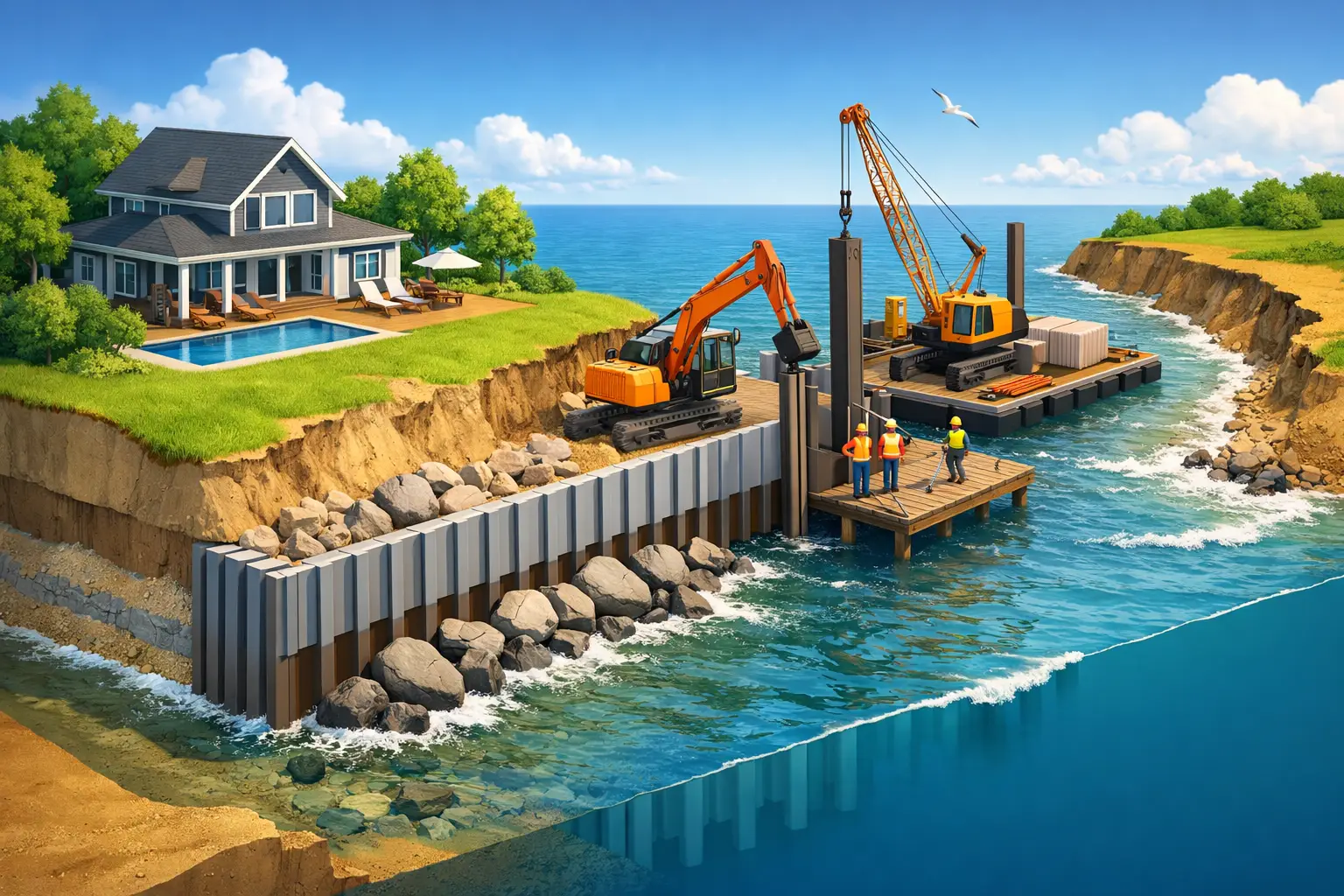
A bulkhead is a retaining structure installed along a waterfront or drainage edge to separate land from water and retain the soil behind it. It may be built from vinyl sheet piling, treated timber, concrete, steel, or a combination of materials, depending on the site and design requirements.
The goal is straightforward: keep the bank from washing away. The actual work is more involved. Water creates pressure against the wall, and saturated soil behind it creates additional pressure. If the wall is not driven deep enough, tied back correctly, or supported by proper drainage, it can shift, bow, settle, or fail before its time.
A well-built bulkhead also protects the rest of the property. That can include a yard, driveway, patio, foundation area, fence line, utility run, dock access, or commercial waterfront site. On a tight lot, losing even a few feet of soil can create a larger and more expensive problem than many owners expect.
Why Coastal Bulkhead Work Requires Local Experience
South Texas waterfront conditions are demanding. Coastal soil can be soft, sandy, silty, or inconsistent from one part of a property to another. Salt exposure affects material selection and hardware. Heavy rain can overwhelm poor drainage, while wind, tidal action, and storm surge can place serious forces on the shoreline.
That is why a bulkhead should not be treated like a standard landscape wall. The depth of the sheeting, the spacing and capacity of tiebacks, the deadman anchor system, the cap design, and the backfill all need to work together. A wall that looks straight on installation day can still move if the supporting system below grade is inadequate.
Site access matters too. Some waterfront properties offer room for equipment, material staging, and a clean work path. Others have homes, fences, mature landscaping, docks, and neighboring structures close to the work zone. A qualified contractor plans for access before starting, not after equipment arrives.
What Bulkhead Contractors Should Evaluate First
Before selecting materials or pricing a replacement, the contractor should inspect the site conditions. A proper evaluation begins with the existing shoreline and the land behind it, not just the portion of wall that is visible above water.
The first concern is the condition of the current structure. Leaning walls, separated cap boards, rusted or broken rods, rotten timber, cracked concrete, and sinkholes behind the bulkhead all point to different levels of repair or replacement. In some cases, a targeted repair can extend service life. In others, patching a failing wall only delays the larger job.
The contractor should also evaluate soil loss and drainage. Water trapped behind a bulkhead adds pressure and finds weak points. The design may need filter fabric, drainage stone, weep openings, or other measures that allow water to relieve pressure while keeping soil from escaping.
Property elevation and water exposure are equally important. A protected canal lot does not face the same conditions as an open shoreline. Boat traffic, prevailing wind, tidal movement, and nearby drainage outlets can all affect the design. There is no honest one-size-fits-all bulkhead solution.
Choosing the Right Bulkhead Material
Material selection should be based on the project conditions, expected service life, appearance, budget, and engineering requirements. The lowest initial price is not always the lowest cost over time, especially near saltwater.
Treated timber remains a familiar option for many waterfront properties. It can provide a traditional look and may fit certain budgets and site conditions. However, wood is subject to deterioration over time, particularly where moisture, insects, and salt exposure are constant. Hardware quality and proper installation are critical.
Vinyl sheet piling is a common choice for coastal applications because it resists rot and corrosion. It can provide a clean appearance and long service life when properly engineered and installed. Vinyl is not automatically right for every wall, though. The sheet profile, depth, tieback design, cap, and soil conditions still determine how the system performs.
Concrete bulkheads offer strength and durability for demanding applications. They can be a strong fit for commercial sites, high-load areas, or properties where a substantial long-term structure is needed. Concrete work requires careful planning for reinforcing steel, forms, curing, and site access. It can also carry a higher upfront cost.
Steel can be appropriate for certain engineered structures but requires attention to corrosion protection in a coastal environment. The best choice depends on the wall design and site, not a sales pitch for one material over another.
The Details That Determine Whether a Wall Lasts
Most bulkhead failures are not caused by one obvious mistake. They come from missed details in design, installation, drainage, or maintenance. A dependable contractor focuses on the full system.
Sheet piling must be installed to the required depth and alignment. Tie rods and anchors must be properly sized, positioned, and secured to resist the pull of retained soil. The cap should tie the wall together and provide a finished, stable top edge. Backfill should be placed carefully so voids do not form behind the wall.
Drainage is especially important. A bulkhead holds soil, but it should not be forced to hold unnecessary water pressure. Proper drainage behind the wall reduces stress on the structure during heavy rainfall and helps prevent washout. If a property has grading problems, nearby downspouts, or runoff moving toward the water, those issues should be addressed as part of the project plan.
Construction near water also calls for disciplined jobsite practices. Equipment must be operated carefully around slopes and existing improvements. Material handling, demolition of the old wall, and debris removal need to be managed safely. For occupied homes and active commercial properties, communication and clean work areas matter just as much as the finished structure.
Repair or Replacement: How to Make the Call
A bulkhead repair may make sense when the main wall remains structurally sound and the issue is limited. Replacing a damaged cap, reinforcing localized hardware, filling minor voids, or correcting drainage can be practical when caught early.
Replacement is usually the better decision when a wall is leaning significantly, tieback systems have failed, timber is extensively deteriorated, soil is disappearing behind the structure, or several sections show movement. Trying to save a wall that has lost its structural integrity can put nearby improvements at risk.
The right answer depends on the condition of the wall and what it protects. A short backyard wall with limited exposure is different from a bulkhead supporting a commercial lot, dock area, or building-adjacent grade. A contractor should explain the condition clearly, outline the workable options, and identify where repairs would be temporary rather than dependable.
Permits, Planning, and Property Protection
Waterfront construction may involve local, state, or federal permitting requirements depending on the location, waterway, property lines, and scope of work. Rules can also affect demolition, fill, access, and work below certain elevations. Permitting should be addressed early, before material orders and scheduling decisions are made.
Property owners should also confirm where the bulkhead sits in relation to the boundary line and any easements. Replacing a wall in the wrong location can create unnecessary disputes and added cost. Clear planning protects the project before construction begins.
It is also wise to consider what work should be completed while the site is open. A failing bulkhead may expose drainage issues, damaged fencing, cracked flatwork, or unstable grade near the water. Coordinating related site work at the same time can reduce repeated mobilization and leave the property in better shape when the project is finished.
Questions to Ask Before Hiring Bulkhead Contractors
The contractor should be able to explain how the wall will be supported, how drainage will be handled, what material is being proposed, and why it fits the site. Ask whether the scope includes demolition and disposal of the existing wall, backfill, grading, cap installation, cleanup, and protection of nearby improvements.
Ask about licensing, insurance, safety practices, equipment access, expected scheduling, and how changes in site conditions will be communicated. A clear estimate should define the work instead of leaving major details to assumptions. Waterfront work has variables, but professional communication should not be one of them.
Haylo Construction approaches bulkhead and site work with the same standard applied to concrete, retaining, and demolition projects: assess the ground conditions, plan the work carefully, build for durability, and keep the customer informed. If your shoreline is showing signs of movement or erosion, address it before the damage reaches the structures and improvements behind it.