Waterfront damage usually starts small. A few loose boards, a slight lean, soil washing out after a hard rain. Then one day the yard edge looks different, the dock feels less stable, and the repair that could have been straightforward turns into a larger structural job.
If you are looking for a bulkhead repair contractor Corpus Christi property owners can rely on, the real question is not just who can patch visible damage. It is who understands coastal conditions, drainage pressure, soil movement, and how to make repairs that hold up in South Texas. Bulkhead work is structural work. It protects land, helps control erosion, and supports the long-term use of your waterfront property.
What a bulkhead repair contractor in Corpus Christi should actually solve
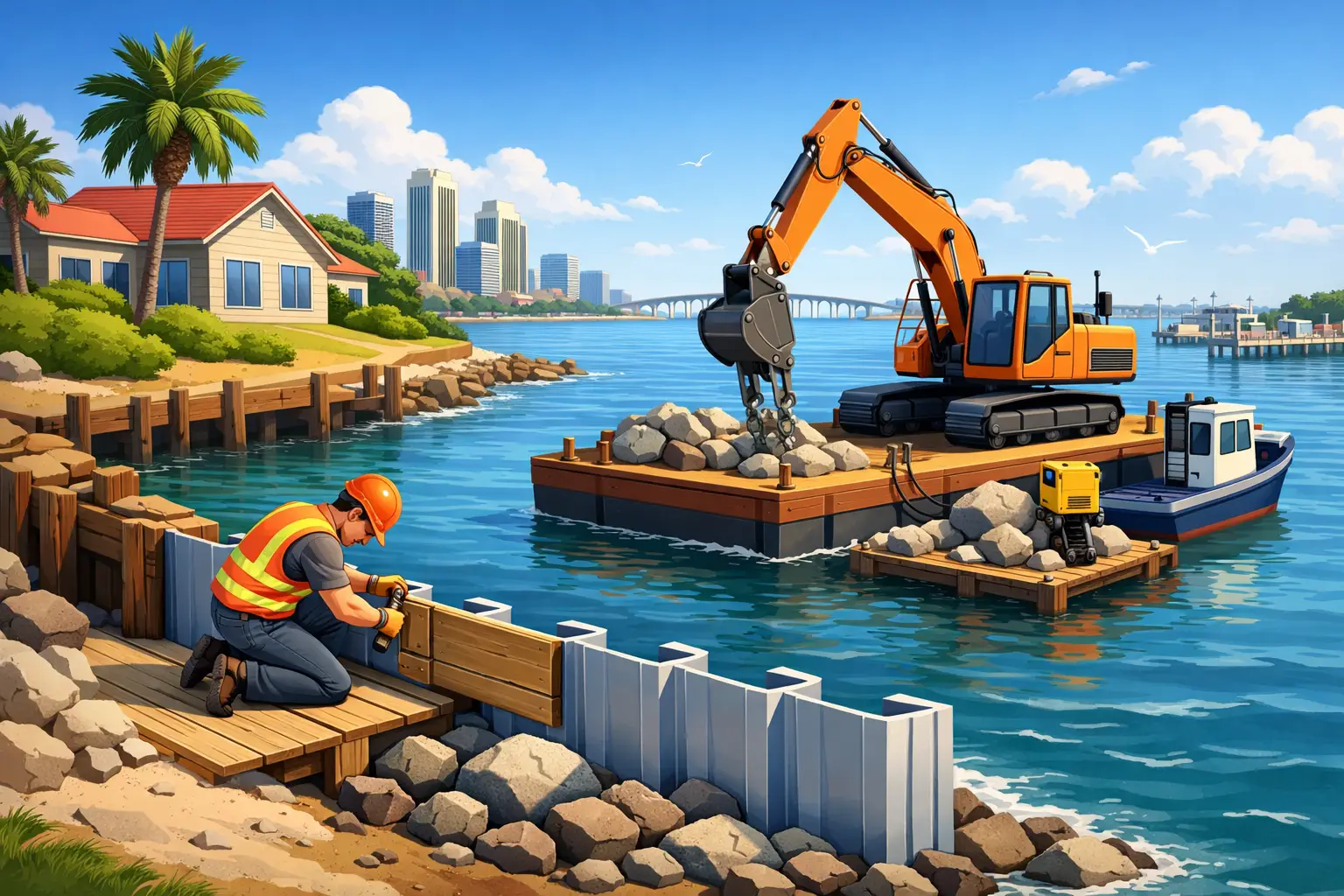
A bulkhead is not there for appearance alone. It helps retain soil, manage water impact, and preserve the edge of a property that may be exposed to wave action, changing tides, runoff, and storm events. When it starts to fail, the problem usually reaches beyond the wall itself.
A good contractor looks at the entire condition of the site. That includes the face of the bulkhead, the tieback system, the cap, signs of voids behind the wall, drainage performance, nearby concrete, and the condition of the surrounding grade. In many cases, visible damage is only part of the story.
This is especially true along the Coastal Bend, where salt exposure, saturated soils, and repeated weather stress can wear down materials faster than inland properties experience. Repairs need to be based on field conditions, not guesses.
Common signs your bulkhead needs repair
Some failures are obvious. Others show up gradually and are easy to overlook until the repair bill grows.
Leaning sections, separated joints, rot, cracking, sinkholes behind the wall, and washed-out areas near the shoreline are all warning signs. Rusted hardware, displaced caps, and uneven settlement can also point to deeper structural movement. If the area behind the bulkhead stays wet or soft, drainage pressure may be building where it should not.
It depends on the age of the structure, the material used, and how the site was originally built. A timber bulkhead may show deterioration very differently than a concrete or vinyl system. That is why a proper inspection matters. The right repair plan for one waterfront lot may be the wrong one for the next.
Repair or replacement depends on the extent of failure
Not every damaged bulkhead needs full replacement. That matters to property owners because there is a major cost difference between targeted repair and rebuilding an entire shoreline edge.
If the wall is still structurally sound overall, a contractor may be able to repair damaged sections, reinforce weak points, address drainage issues, replace failed hardware, and stabilize adjacent soil. That can extend service life and restore function without rebuilding everything.
If the wall has widespread movement, major material failure, failing anchors, or substantial erosion behind the system, replacement may be the more practical decision. Spending money on surface-level fixes when the structure is already compromised usually leads to more work later.
An honest contractor will tell you when repair makes sense and when it does not. That kind of guidance saves time and prevents property owners from paying twice.
Why coastal experience matters on bulkhead repair jobs
Bulkhead repair is not the same as general fence or landscape work. In Corpus Christi, waterfront structures deal with conditions that require practical local knowledge.
Salt air and moisture can accelerate corrosion in fasteners and reinforcement. Soil can shift with saturation and drying cycles. Drainage behind the wall can create hidden pressure that pushes the structure outward. Storm surge and repeated wave action can hit the same weak area over and over.
A contractor who works in this region should already be thinking about material performance, grade control, reinforcement, and how nearby site features affect the wall. That includes driveways, slabs, retaining areas, and drainage paths that feed runoff toward the shoreline edge.
This kind of repair also needs clean execution. Waterfront access can be tight. Equipment has to be managed carefully. Site safety matters, especially when work is happening near structures, docks, utilities, or occupied properties.
What to expect during the repair process
A professional bulkhead repair job starts with a clear site review. The contractor should assess the visible damage, identify likely causes, and explain whether the issue is isolated or structural.
From there, the repair scope should match the problem. That may include replacing damaged wall sections, reinforcing weakened areas, rebuilding caps, improving drainage, filling voids, stabilizing the grade, or tying the repair into nearby concrete or retaining features. Some projects also require coordination with access limitations, water conditions, or local requirements.
Property owners should expect direct communication on timeline, scope, and what conditions could affect the price. Bulkhead work can uncover hidden issues once damaged material is removed. That does not mean surprises should be handled casually. It means your contractor should explain possible contingencies up front and keep you informed if site conditions change.
Bulkhead repair contractor Corpus Christi owners trust for long-term value
The lowest quote is not always the lowest cost. Waterfront repair work that fails early usually costs more because erosion keeps moving, the site gets harder to stabilize, and the next repair starts from a worse position.
Long-term value comes from diagnosing the right problem, using materials suited to the environment, and building the repair to handle real site pressure. That may mean reinforced concrete elements, better drainage relief, more stable backfill, stronger anchoring, or a broader repair area than the damaged section alone first suggests.
For homeowners, that protects the usable footprint of the property and helps avoid ongoing shoreline loss. For commercial properties and managed sites, it also protects safety, access, and appearance. A failed waterfront edge can create liability concerns as quickly as it creates structural ones.
Questions worth asking before hiring a contractor
Before you hire a bulkhead repair contractor, ask how they determine whether repair or replacement is the better option. Ask what signs they look for behind the wall, how they address drainage, and what materials they recommend for the site.
You should also ask about licensing, insurance, and jobsite safety practices. Bulkhead work is not a place to cut corners on coverage or field discipline. If other site elements are involved, such as concrete removal, grading, or adjacent structural repairs, it helps to work with a contractor who can handle those scopes without handing the job off in pieces.
Clear estimates matter too. A good proposal should describe the work in practical terms, not hide behind vague language. You want to know what is being repaired, what is being replaced, and what conditions could affect the final scope.
Why integrated site knowledge makes a difference
Many bulkhead failures are connected to broader site problems. Poor drainage, runoff from hard surfaces, settlement near slabs, and erosion around retaining areas can all feed the same issue.
That is why it helps to work with a contractor who understands more than the wall itself. When repair crews can evaluate concrete, grading, demolition needs, and structural site conditions together, the result is usually more durable. The repair is built around how the property actually functions, not just around the most visible symptom.
For property owners in and around Corpus Christi, that practical approach matters. Coastal jobs rarely reward shortcuts. They reward solid prep, sound materials, and workmanship that respects the conditions on the ground.
Haylo Construction approaches this kind of work the same way it handles other structural and site-related projects – with a focus on durability, safety, and getting the job done right the first time.
If your shoreline edge is shifting, cracking, leaning, or washing out, waiting usually gives water more time to win. A careful inspection and a clear repair plan can protect the property you already paid for and keep a manageable issue from turning into a full rebuild.