A failing concrete slab, an outdated interior, or a damaged commercial structure does not always call for tearing everything down. The decision between selective versus total demolition determines what stays, what goes, how the site is protected, and what the next phase of work will cost. For property owners in the Coastal Bend, the right choice starts with an honest look at the building condition, future plans, utilities, access, and safety risks.
Demolition is not simply removal. Done correctly, it is controlled site preparation. The work must protect people, nearby structures, underground services, and the portions of the property that remain in use. Whether the job involves a residential driveway, a concrete patio, a retail build-out, or an aging commercial building, the demolition scope should match the actual problem.
What Is Selective Demolition?
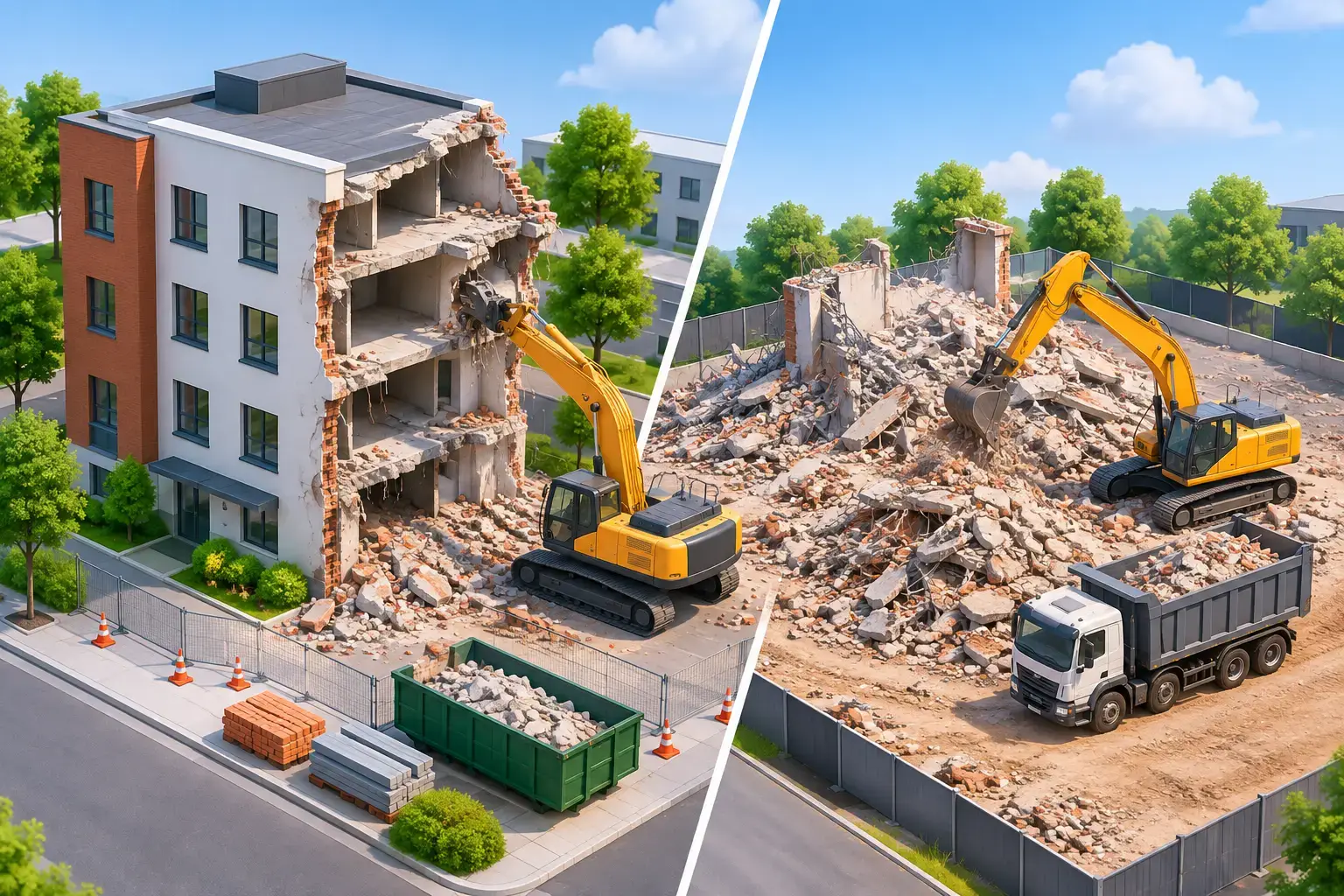
Selective demolition removes specific building components while preserving the rest of the structure. It may involve taking out an old concrete driveway, a damaged slab section, interior walls, flooring, fixtures, a canopy, loading areas, or a small detached structure. The goal is to create room for repair, renovation, replacement, or expansion without disturbing sound materials that still serve the property.
This approach requires planning. Crews need to identify load-bearing elements, active utilities, drainage paths, and areas that must stay protected. In a commercial space, selective work may also need to happen around operating tenants, customers, equipment, or scheduled business hours. In a home, it may mean protecting landscaping, fencing, exterior walls, and access to the house.
Selective demolition is often the better fit when the existing structure is fundamentally sound and the project has a defined repair or renovation scope. Removing only a cracked driveway panel before replacing it, for example, can be more practical than tearing out an entire driveway that still has a stable base and good drainage.
When selective demolition makes sense
Selective work is commonly used when only part of a property has failed or no longer fits its purpose. A property owner may need to remove a patio to make way for a larger slab, demolish damaged concrete around a foundation repair, or clear an obsolete interior build-out before a new tenant moves in.
It is also useful when preserving the surrounding structure has real value. Keeping usable portions of a parking area open, retaining a sound building shell, or avoiding unnecessary disturbance near an existing foundation can reduce downtime and keep the overall project focused. That said, saving part of a structure only makes sense when that portion is truly worth saving. A weak or poorly constructed area can create problems later if it is left in place simply to reduce the initial scope.
What Is Total Demolition?
Total demolition means removing an entire structure or major site feature down to the planned grade. This can include a house, commercial building, detached garage, warehouse, old foundation, parking lot, or large concrete area. The site is then cleared and prepared for new construction, redevelopment, or a different use.
This type of demolition is often the straightforward answer when a structure has widespread deterioration, storm damage, serious structural issues, fire damage, repeated water intrusion, or an outdated layout that cannot be reasonably adapted. It may also make more financial sense when renovation would require extensive repairs to several building systems at once.
A complete removal project involves more than bringing in equipment. Before work begins, the contractor needs a clear plan for utility disconnection, permits, site access, debris handling, dust control, safety barriers, and final grading. Concrete, steel, wood, masonry, and other materials must be separated and hauled away according to the project requirements.
When total demolition is the better investment
Total demolition may be the better long-term decision when repair costs keep growing and the structure still will not meet the owner’s needs. This often happens with older buildings that have extensive slab problems, poor drainage, outdated utilities, or structural modifications that would be difficult to correct piece by piece.
It can also give developers and commercial owners a cleaner path forward. Starting with a cleared, properly graded site allows the next construction phase to be designed around current needs instead of old limitations. For a new parking lot, foundation, retail pad, or equipment yard, that clean start can prevent costly compromises later.
Selective Versus Total Demolition: Key Differences
The biggest difference is scope, but scope affects nearly every part of the project. Selective demolition is more precise. Total demolition is more comprehensive. Neither is automatically cheaper, faster, or safer in every situation.
Selective work can reduce disposal volume and preserve usable materials, but it may require more labor, careful cutting, temporary support, and protection measures. Removing a single concrete section beside an occupied building, for example, can take more precision than clearing an open lot. The equipment may be smaller, the work area tighter, and the margin for error lower.
Total demolition can move quickly once the site is prepared, especially when the structure is vacant and access is clear. However, it generally produces more debris, requires more hauling, and may involve additional permitting or environmental review. Larger projects also need a clear plan for controlling dust, noise, traffic, and site security.
The best decision comes down to the condition of what remains and the goals for what comes next. If a repair or renovation will depend on old materials that are unstable, poorly drained, or incompatible with the new design, keeping them may cost more over time than a full removal.
Cost Is More Than the Removal Price
Property owners naturally want to know which option costs less. The answer depends on the conditions behind the visible surface. A demolition quote should account for labor, equipment, hauling, disposal, cutting, utility coordination, site protection, permit requirements, and final cleanup. Concrete thickness, reinforcement, access limitations, and nearby structures all affect the price.
Selective demolition can have a lower total cost because less material is removed. But it can also be more expensive per square foot due to the added care required. Saw cutting reinforced concrete, protecting a building edge, working around utility lines, and maintaining access for residents or customers require time and disciplined execution.
Total demolition has a broader upfront cost, yet it can reduce uncertainty before new construction begins. If a contractor discovers that an old slab has poor subgrade, hidden voids, or drainage failures, removing it entirely may be less expensive than trying to build around those conditions. A clear site also makes it easier to establish proper grading and a stable base for new concrete.
Safety, Utilities, and Site Conditions Come First
The most important demolition decision is never based on appearance alone. Cracks, settlement, rusted reinforcement, and water damage can point to deeper issues. Before removal begins, the site needs to be evaluated for structural stability and active utility connections. Gas, electric, water, sewer, irrigation, and communications lines must be identified and handled correctly.
Coastal South Texas conditions add another layer of consideration. Heavy rain, poor drainage, shifting soils, salt exposure, and high winds can affect both aging structures and new work. Removing damaged concrete without correcting the underlying drainage or base problem simply sets up the replacement for the same failure.
A qualified demolition contractor should also consider neighboring properties, public sidewalks, overhead lines, and access for trucks and equipment. The job is not complete when the structure is down. The site must be left clean, safe, and ready for the next trade.
How to Choose the Right Demolition Scope
Start by defining the end goal. Are you repairing a damaged area, renovating for a new use, expanding an existing footprint, or clearing land for a complete rebuild? That answer should guide the demolition plan.
Next, assess the condition of the materials you hope to keep. Sound concrete and structural components may be worth preserving. Areas with widespread cracking, settlement, water damage, or poor workmanship may be better removed rather than patched around. Consider how the remaining structure will connect to new foundations, slabs, drainage systems, or pavement.
Finally, think about operations. A homeowner may need to keep a driveway or side entrance available. A business may need to maintain customer access, deliveries, or tenant occupancy. Selective demolition can help maintain continuity, while total demolition may be the cleaner choice when the property can be fully closed and cleared.
Haylo Construction approaches demolition with the same focus used for concrete and site work: clear scope, safe execution, proper cleanup, and preparation for what comes next. A detailed on-site evaluation helps determine whether a controlled removal or a complete teardown will protect your investment best.
The right demolition plan should leave you with more than an empty space. It should leave you with a safe, workable site that is ready for durable repairs, new concrete, or the next stage of construction.