A driveway crew has the forms set, the truck is on the way, and a South Texas rain cell shows up on the forecast. Can concrete cure in rain? Yes, concrete can continue curing after rain, but rain that hits a fresh pour at the wrong time can weaken or ruin the finished surface. The right decision depends on the rain’s timing, intensity, concrete placement stage, drainage, and the type of project being poured.
Concrete work should not be treated as a gamble against the weather. For a patio, driveway, slab, parking lot, or foundation, an experienced contractor watches the forecast, prepares protection before the truck arrives, and knows when delaying the pour is the better call.
Can Concrete Cure in Rain Without Problems?
Concrete cures through hydration, a chemical reaction between cement and water. It does not need dry air to harden. In fact, properly maintained moisture helps concrete gain strength after placement. Light rain after concrete has set enough to resist surface damage may have little effect, and in some cases it can help keep the surface from drying too quickly.
The problem is not simply that concrete gets wet. The problem is uncontrolled water on fresh, unfinished concrete. Rain can add water to the top layer before it has set, changing the water-to-cement ratio at the surface. That surface may become dusty, weak, blotchy, or prone to scaling and flaking later.
A hard rain can also leave divots, wash cement paste from the surface, expose aggregate, and damage edges. On flatwork such as driveways and parking areas, pooling water can make it difficult to achieve the correct finish and slope. If rain reaches the pour before the concrete has been placed, screeded, and protected, the crew may have limited options besides stopping work.
The Timing of Rain Makes the Difference
Rain before a pour is not always a cancellation, but it creates conditions that must be checked. Saturated ground can soften subgrade, disturb compacted base material, fill forms with water, and cause muddy contamination. For structural work, a wet excavation or unstable footing bottom should be addressed before concrete is placed.
Rain during placement is more serious. Light, brief rainfall may be manageable if the crew can keep runoff out of the forms and cover fresh areas quickly. A steady downpour or thunderstorm can overwhelm protection, make finishing unsafe, and compromise surface quality. No contractor should rush through a critical pour simply to beat a storm.
Rain shortly after finishing is often the highest-risk window for appearance and surface durability. Fresh concrete may look firm enough to walk around, but it can still be easily marred. Rain drops create pockmarks, and standing water can damage the cement paste before it has developed adequate strength.
Once concrete has reached its initial set and can resist rain impact, the risk drops significantly. The exact timing varies with the mix design, temperature, humidity, wind, and use of admixtures. In hot Coastal Bend weather, concrete can set faster than expected. In cooler, humid weather, it can remain vulnerable longer. A contractor should judge the slab itself, not follow a one-size-fits-all clock.
What Rain Can Do to Fresh Concrete
A rain-damaged slab is not always a structural failure. Many problems are limited to the top surface, but that surface is what vehicles, foot traffic, furniture, equipment, and weather will wear on for years.
Common rain-related issues include:
- Surface scaling or peeling caused by a weak top layer
- Dusting, where the concrete produces a powdery residue as it wears
- Pitting, divots, or exposed aggregate from raindrop impact
- Uneven color or a blotchy appearance on decorative concrete
- Poor traction or inconsistent texture on broom-finished walkways and driveways
- Low spots that hold water because finishing and grading were interrupted
The risk is especially high for stamped, stained, or decorative concrete. Those finishes depend on controlled timing, surface condition, and color application. Rain can damage release agents, alter color consistency, or make an imprint uneven. If the forecast is questionable, rescheduling decorative work is often the practical choice.
How Professionals Protect a Pour From Rain
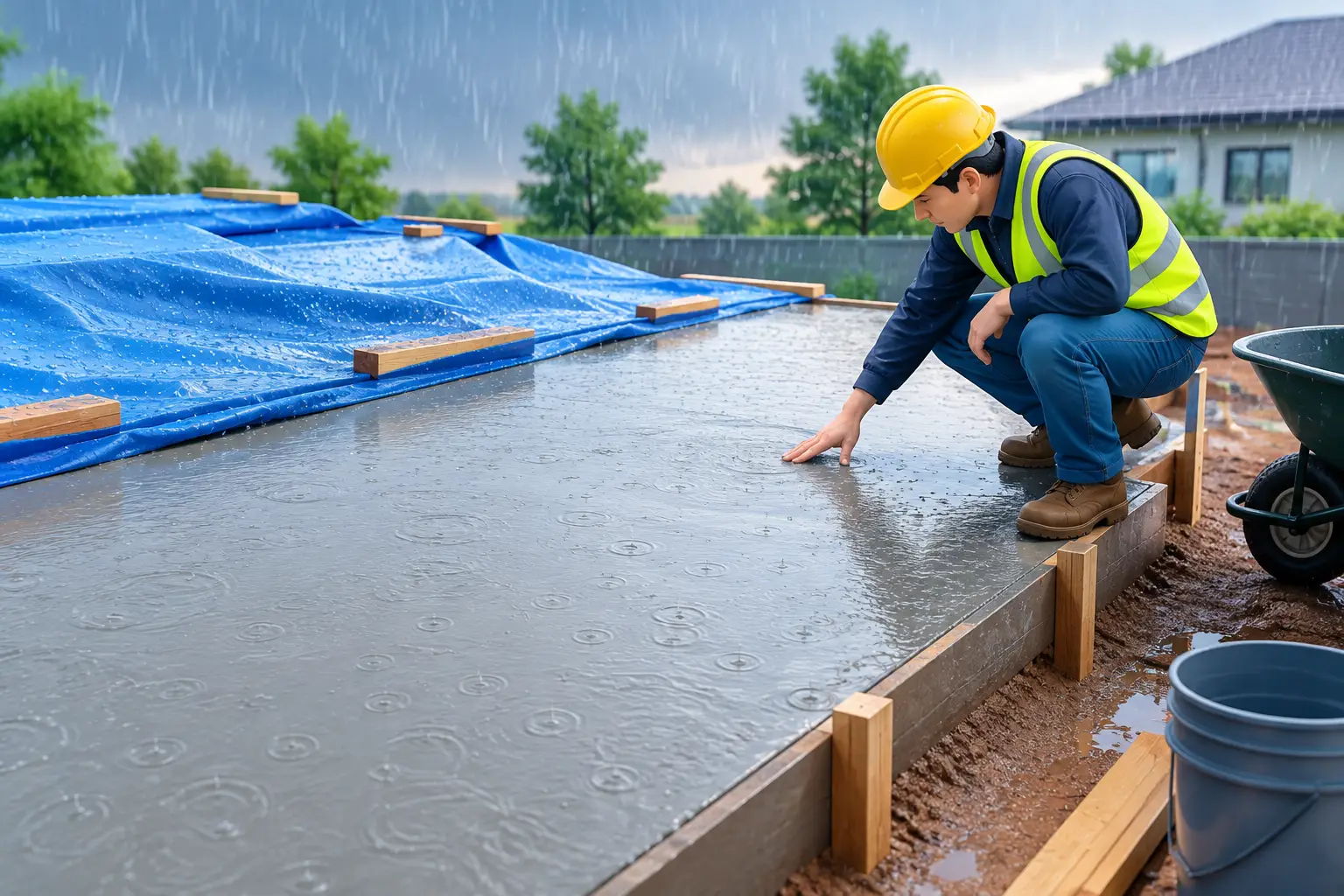
Weather preparation starts before concrete arrives. A capable crew checks radar, identifies drainage paths, confirms that forms and base are ready, and has enough labor and material on site to protect the pour. Plastic sheeting, tarps, temporary covers, pumps, and tools should be available before the first load is discharged.
Covering concrete requires care. Plastic placed directly on soft concrete can leave marks, discoloration, and wrinkles in the finish. Whenever possible, covers should be supported above the surface or applied only after the concrete can tolerate contact. Covers must also be secured so wind cannot drag them across the slab.
The crew should keep rainwater from running through forms or across fresh concrete. Water moving across a slab can carry cement paste and fine material toward low areas, leaving an uneven, weakened surface. On larger commercial pours, planning for runoff and access becomes even more critical.
If rain begins during a pour, the response depends on conditions. The crew may pause placement, cover completed sections, move concrete away from exposed areas, or stop the pour entirely. Forcing a finish on rain-soaked concrete is not a repair. It usually creates a problem that shows up later.
What Not to Do After Rain Hits Fresh Concrete
Do not sprinkle dry cement on a wet slab to soak up water. This old shortcut can create a thin, brittle surface layer that cracks or scales. Do not work standing water into the concrete with a trowel or broom, either. Finishing rainwater into the top layer increases the water content where durability matters most.
Avoid walking on the surface to inspect it until the concrete has hardened sufficiently. Footprints, tarp marks, and tool damage are difficult to correct without making the surface worse. If a contractor must assess the slab, that evaluation should be done carefully and based on the concrete’s stage of set.
Property owners should also resist the urge to hose off a rain-marked slab or apply a sealer immediately. The concrete needs time to cure, and any repair plan should match the actual damage. Cosmetic discoloration may fade as the slab dries. Surface erosion, widespread scaling, or loss of finish may require more involved correction.
When Should a Concrete Pour Be Rescheduled?
A forecast is not perfect, and a small chance of light rain does not automatically mean a project should be delayed. Still, postponing is usually the right call when severe storms, prolonged heavy rainfall, lightning, flooding, or high winds are expected during placement and finishing.
The same applies when the site cannot drain properly or the base has become soft and unstable. Concrete placed over poor preparation does not become dependable just because the mix itself is strong. Proper grading, compaction, reinforcement, thickness, and joint layout remain essential, especially for driveways, parking areas, and slabs supporting heavy loads.
For homeowners and property managers, a weather delay can be frustrating. It may affect scheduling, access, deliveries, or tenant operations. But a short delay is usually less costly than a surface failure, premature repair, or complete replacement. Good concrete work is built around long-term performance, not a rushed calendar.
Rain After the Pour: Curing Still Matters
Once the concrete is protected and has reached a safe stage, curing should continue. Concrete gains much of its early strength during the first week, but it continues developing strength over time. Standard design strength is commonly measured at 28 days.
Keep vehicles, heavy equipment, and unnecessary foot traffic off new concrete according to the contractor’s instructions. A residential driveway may look finished quickly, but it should not be treated like a fully cured surface the next day. The proper wait time depends on the concrete mix, weather, slab thickness, and expected load.
In Corpus Christi and nearby coastal communities, heat, humidity, wind, and sudden rain can all affect a concrete schedule. That is why local experience matters. Haylo Construction plans concrete work around site conditions and protects each phase of the job, from base preparation through finishing and curing.
When rain is in the forecast, the best question is not whether the crew can pour anyway. Ask whether the project can still be completed to the standard your property needs. A dependable contractor will give you a straight answer, protect the work when conditions allow, and wait when quality demands it.