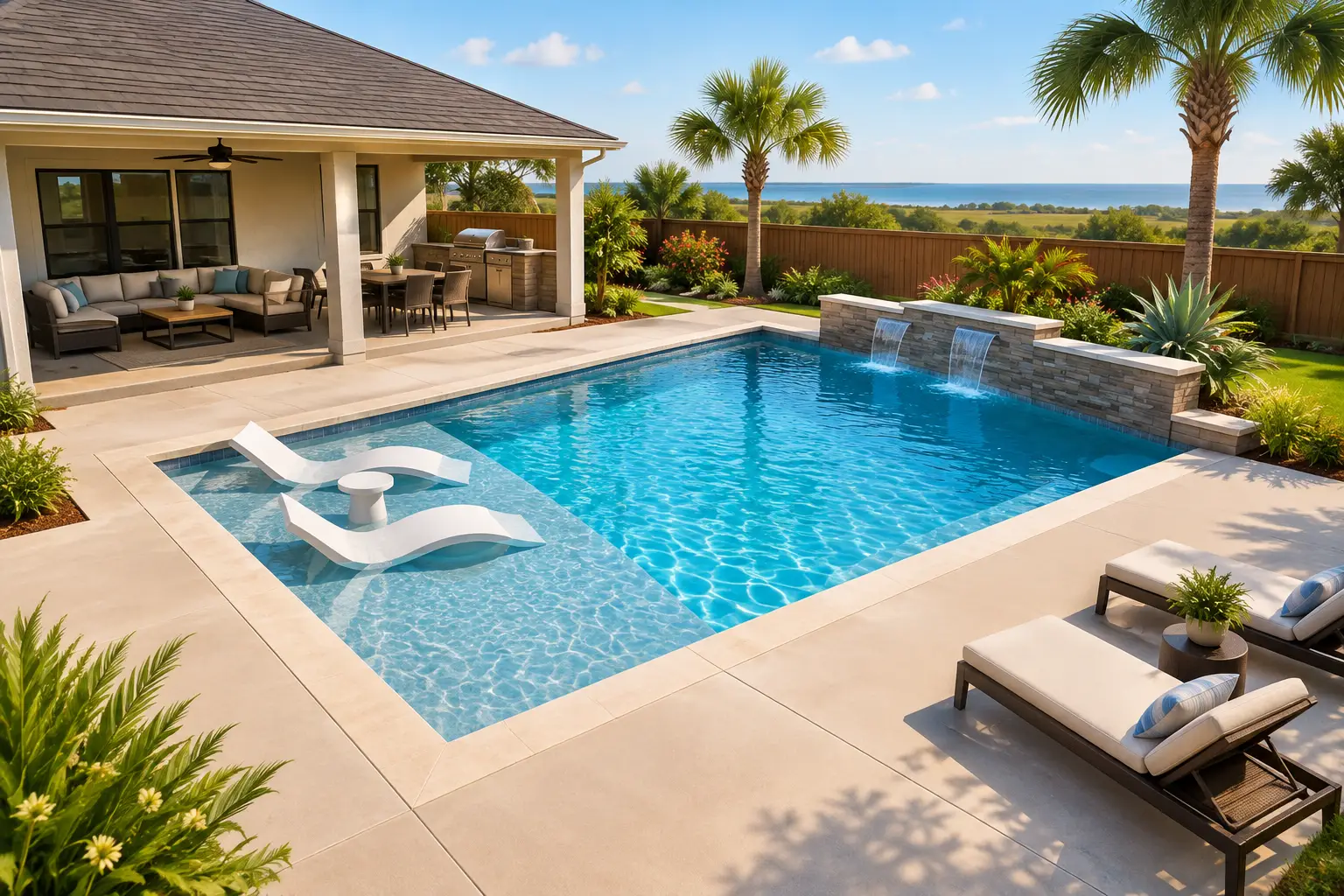
A pool deck has to do more than look good next to the water. It needs to provide safe footing, direct water away from the pool and home, handle outdoor furniture, and stand up to intense sun, salt air, and shifting ground. This concrete pool deck guide covers the construction decisions that make the difference between a deck that lasts and one that starts cracking, holding water, or becoming too hot to use.
For homeowners and property managers in the Coastal Bend, the best result starts below the surface. Finish and color matter, but proper site preparation, reinforcement, slope, joints, and curing are what protect the investment over time.
Start With the Site, Grade, and Drainage
Water management should be settled before concrete is poured. A pool deck needs a controlled slope so splash-out, rainwater, and cleaning water move away from the pool structure and away from the building foundation. Water that sits along the deck edge can create slippery areas, stain the surface, and contribute to soil movement below the slab.
The right slope depends on the layout, existing elevations, yard drainage, and where water can safely discharge. On a flat lot, a contractor may need to adjust surrounding grades or install drainage features to keep runoff from collecting at low points. The goal is not to push water toward a neighbor’s property or straight into landscaping that cannot handle it.
In Corpus Christi and nearby coastal communities, drainage planning deserves extra attention. Heavy rain can arrive fast, while dry periods can cause some soils to move and shrink. A deck installed without a stable, compacted base and clear drainage path may settle unevenly or develop cracks that were preventable.
Choose a Concrete Pool Deck Finish for Real Use
Pool deck finishes should be selected for traction, comfort, maintenance, and appearance together. A finish that looks sharp in a photo may not be the best choice for bare feet, frequent pool traffic, or a full day of Texas sun.
Broom-Finished Concrete
A broom finish is a practical choice for many pool decks. The light texture improves traction when the surface is wet, keeps the appearance clean and straightforward, and generally costs less than decorative options. It is a strong fit for homeowners who want a durable, low-maintenance deck without making the concrete the main visual feature of the backyard.
The texture should be consistent and comfortable. An aggressive finish can catch bare feet and make cleaning harder, while a finish that is too smooth can be slick around a pool.
Stamped Concrete
Stamped concrete can give a pool area the look of stone, tile, brick, or wood planks without using individual pavers. It works well when the deck is part of a larger patio design or when a property owner wants a more finished, high-visibility outdoor space.
There are trade-offs. Deep patterns and heavily textured stamp profiles can collect dirt, sunscreen residue, and leaves. Some stamped surfaces can also become hot in direct sun, particularly in darker colors. Choose a pattern with practical texture rather than selecting solely by appearance, and plan on proper sealing and periodic maintenance.
Stained or Colored Concrete
Integral color, color hardeners, and concrete stains can help a deck complement the house, pool coping, or landscape. Lighter colors are usually more comfortable underfoot because they reflect more heat than dark charcoal, brown, or black surfaces.
Color can also make repairs more noticeable if new concrete is added later. That does not mean decorative color is a bad choice. It means the layout should account for future access, additions, and repair possibilities before the work begins.
Exposed Aggregate and Specialty Textures
Exposed aggregate offers natural texture and strong slip resistance, but it is not always the most comfortable bare-foot option. Larger or sharper aggregate can feel rough, especially for children or guests moving around the pool all day. Specialty coatings and cool-deck systems may help reduce surface temperature, but their condition depends heavily on correct preparation and maintenance.
Get the Concrete Thickness and Reinforcement Right
A residential pool deck is not a driveway, but it is still an exterior slab that must bridge variable soil conditions and regular use. Thickness, reinforcement, and base preparation should match the project rather than follow a one-size-fits-all rule.
A properly prepared subgrade is critical. Soft spots, organic material, loose fill, and poorly compacted areas need to be addressed before placing concrete. The crew should establish the final grade, compact the base as needed, and maintain proper elevation around coping, doors, gates, drains, and landscape borders.
Reinforcement helps manage cracking and keeps sections performing as intended, but it does not eliminate cracks completely. Concrete naturally shrinks as it cures, and South Texas ground movement adds another variable. Rebar or welded wire reinforcement must be correctly supported within the slab, not left sitting at the bottom where it provides little value.
For decks next to a house, pool shell, retaining wall, or other fixed structure, isolation joints are necessary. These joints allow separate materials to move independently instead of forcing stress into the new concrete. This is one of the details that is easy to overlook and costly to correct later.
Plan Control Joints Before the Pour
Control joints create planned weak points where concrete can crack in a straighter, less noticeable line. Without them, the slab will still crack – it will simply choose its own path.
Joint spacing depends on slab thickness, deck shape, re-entrant corners, and obstacles such as skimmers, equipment pads, drains, or columns. Long, uninterrupted sections are more likely to crack unpredictably. A qualified contractor lays out joint lines as part of the deck design, not as an afterthought once the concrete is setting.
The deck should also be divided logically around curves, steps, outdoor kitchens, and separate activity areas. Clean joint placement improves both performance and appearance, especially with decorative concrete where random cracking can stand out.
Consider Heat, Glare, and Bare Feet
The South Texas climate changes the way a pool deck should be designed. Direct sun can make almost any concrete hot by late afternoon, and dark colors absorb more heat. Light beige, soft gray, sand, and muted earth tones are often better choices for open pool areas than deep, saturated colors.
Shade structures, umbrellas, landscaping, and furniture placement can matter as much as the concrete finish itself. Before committing to a deck layout, consider where people will enter the pool, where children will run, where lounge chairs will sit, and how the sun moves across the yard. The most attractive section of the deck is not very useful if no one can comfortably walk across it.
Glare also deserves consideration. Very pale, highly reflective surfaces can be hard on the eyes around water. The best color is usually a practical middle ground: light enough to limit heat, but not so bright that it creates constant glare.
Know When a Repair Is Enough
Not every cracked pool deck needs full replacement. Small, stable cracks may be repairable, particularly when the slab remains level and drainage is still working. Surface scaling, minor spalling, worn sealer, and isolated damage can sometimes be addressed with targeted concrete repair or resurfacing.
Replacement is often the more reliable option when slabs have settled, sections are heaved or badly displaced, cracks are wide and moving, or water is consistently draining the wrong way. Covering a serious structural or drainage issue with a coating may improve the look temporarily, but it does not correct the cause.
Pool decks require added caution because repairs occur close to coping, plumbing, and the pool shell. Demolition and replacement should be planned to avoid damaging adjacent features. A contractor should inspect the deck, surrounding soil, drainage conditions, and connection points before recommending a repair scope.
Build the Deck Around How You Use the Pool
A well-built pool deck should fit the property, not just fill the space around the water. Leave enough room for safe circulation, gates, furniture, grills, and maintenance access. Keep equipment areas accessible, and do not create tight corners where leaves, water, and debris will collect.
For commercial or multifamily properties, code requirements, accessibility needs, occupancy levels, and maintenance demands may affect the deck design. Residential projects have more flexibility, but safety still comes first. Clear walking paths, slip-resistant finishes, proper drainage, and secure transitions at steps and gates are worth prioritizing.
The right concrete pool deck is built from the ground up: stable base, correct slope, dependable reinforcement, smart joint layout, and a finish that works in real conditions. If your existing deck is cracked, holding water, or ready for an upgrade, start with a site evaluation and a clear plan for the work before choosing the color or pattern.