A fence has to do more than mark a property line. It needs to handle Gulf Coast sun, wind-driven rain, humidity, shifting ground, and day-to-day use without becoming a constant repair project. When comparing wood versus vinyl fencing, the right answer depends on your budget, the look you want, how much maintenance you will accept, and how the fence will be installed.
For many properties in Corpus Christi and the Coastal Bend, fence material matters just as much as post depth, drainage, gate framing, and layout. A good-looking fence with weak posts or poor installation will not stay good-looking for long.
Wood Versus Vinyl Fencing at a Glance
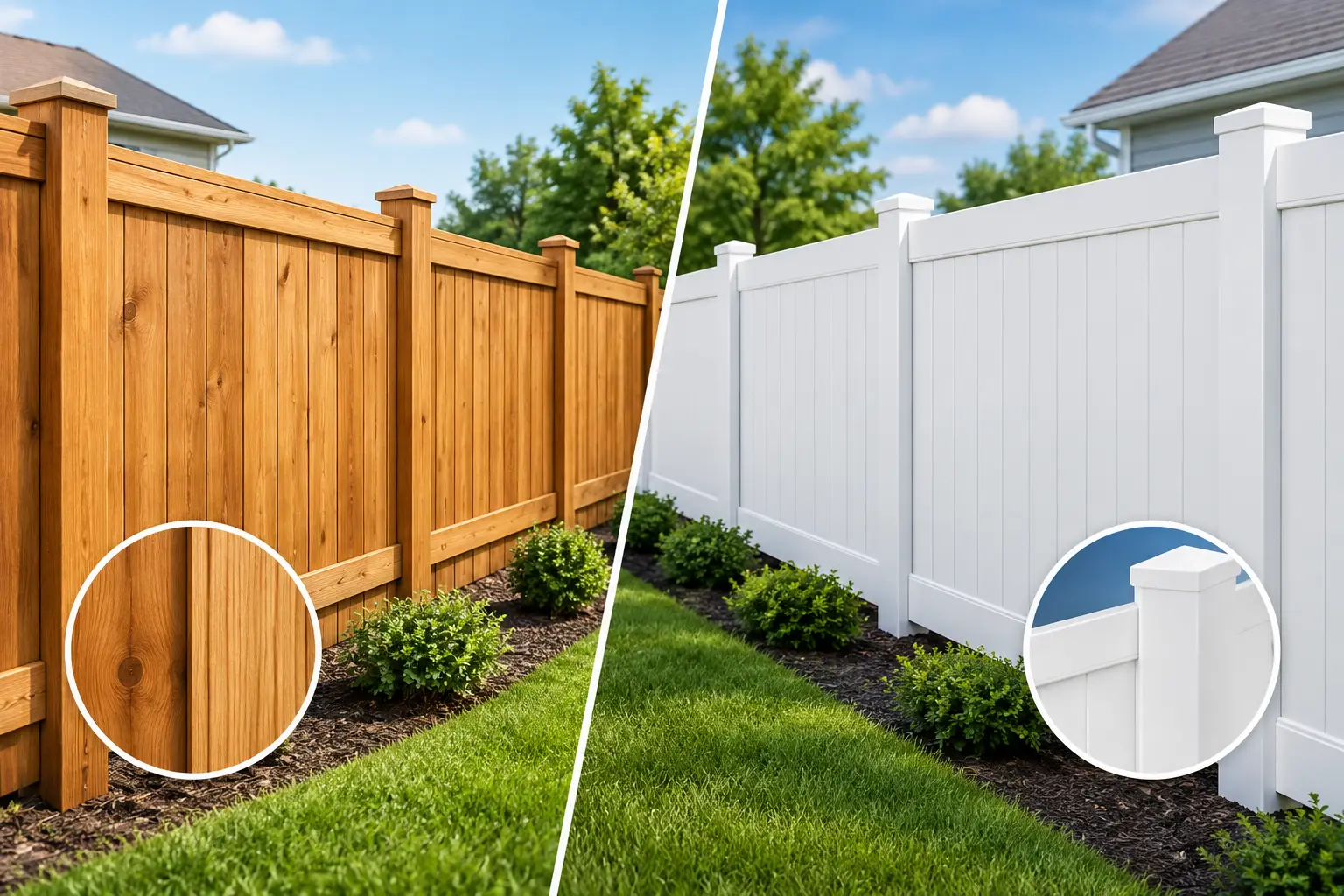
Wood remains a practical choice because it is familiar, versatile, and easy to customize. A cedar or treated-pine privacy fence can be built to suit uneven lots, existing landscaping, unusual property lines, and nearly any height allowed by local rules. It also delivers the traditional fence appearance many homeowners prefer.
Vinyl fencing has a cleaner, more uniform finish. It does not need staining or painting, and it will not rot, splinter, or attract termites. For property owners who want a low-maintenance privacy or perimeter fence, vinyl can be a strong long-term option.
Neither material is automatically better. Wood generally offers lower initial cost and easier spot repairs. Vinyl costs more up front but can reduce routine maintenance over its service life. The installation conditions often decide which material delivers better value.
Upfront Cost and Long-Term Value
Wood fencing is usually less expensive to install than vinyl, particularly when using pressure-treated pine. Material prices vary by fence height, board style, gate count, post spacing, and site conditions, but wood provides an accessible starting point for many residential projects.
That lower initial price does not tell the whole story. Wood needs periodic care to protect it from moisture and sunlight. Depending on the product and exposure, that may include cleaning, sealing, staining, repainting, replacing warped pickets, and repairing loose sections. A fence in full South Texas sun or near salt air may need attention sooner than one in a sheltered inland yard.
Vinyl typically carries a higher material and installation cost. However, it does not require paint, stain, or sealant. Routine care is generally limited to washing dirt, mildew, and landscape residue from the surface. For a rental property, commercial site, or homeowner who does not want to schedule regular fence maintenance, that lower upkeep can offset part of the initial investment.
The best value is not always the lowest estimate. Consider how long you plan to own the property, whether appearance affects curb appeal or tenant perception, and whether ongoing maintenance fits your schedule and budget.
Coastal Weather Changes the Decision
Coastal Texas conditions are hard on exterior materials. Heat can dry and fade wood. Humidity can encourage mildew and moisture-related deterioration when boards are not maintained. Heavy rain and poor drainage can keep posts wet at ground level, where many fence failures begin.
Wood can perform well in this environment when it is built correctly and maintained consistently. Pressure-treated posts, quality fasteners, proper spacing, and clearance from standing water all matter. Cedar offers natural rot resistance, while treated pine is a common, cost-effective material. Both benefit from a protective finish and regular inspection.
Vinyl does not absorb moisture like wood, which makes it resistant to rot and insect damage. Still, vinyl is not maintenance-free or indestructible. Extreme heat can cause some expansion and contraction. High winds can put major pressure on solid privacy panels. A hard impact from equipment, a vehicle, or storm debris can crack a panel that would have only dented or flexed a wood fence.
For either material, the posts and structural support are critical. Fence posts should be set to match the fence height, soil conditions, and expected wind exposure. Gates need reinforced framing and properly aligned hardware because they receive more movement than any other part of the fence.
Appearance, Privacy, and Design Flexibility
Wood gives property owners more visual flexibility. It can be built as board-on-board, shadowbox, horizontal, cap-and-trim, ranch style, lattice-top, or a straightforward privacy fence. It can also be painted or stained to work with an existing home, patio, gate, or commercial exterior.
That flexibility is useful on older properties, sloped yards, and lots with landscaping that does not follow a perfect straight line. Individual boards can be trimmed or replaced without rebuilding a full section. If a new retaining wall, concrete pad, or driveway changes the yard layout later, wood is often easier to modify.
Vinyl offers a consistent, polished appearance. White privacy fencing remains common, though other colors and textures are available. It works well where a clean, uniform perimeter is the goal, such as newer neighborhoods, pool areas, multifamily properties, and commercial sites where a consistent presentation matters.
Privacy is excellent with both materials when the fence is designed without gaps. For wind-prone locations, however, a contractor may recommend a layout that allows some airflow rather than creating one large solid surface that catches every gust.
Maintenance and Repair Considerations
Wood requires more hands-on care, but its repairs are usually straightforward. A damaged picket, rail, or section can often be replaced individually. Small issues are visible and can be addressed before they spread. The key is not waiting until posts lean, rails sag, or boards have widespread deterioration.
A practical wood-fence maintenance routine includes checking for loose fasteners, cracked boards, failing gate hinges, soil buildup around posts, and areas where sprinklers keep the fence wet. Cleaning and resealing on an appropriate schedule helps preserve both appearance and service life.
Vinyl avoids many of those routine tasks. It will not need paint or stain, and there are no boards to splinter. But when a panel or rail cracks, repairs can be more involved than swapping one wood picket. Matching older vinyl products can also be difficult if a manufacturer has changed colors or profiles.
Vinyl fences should still be inspected after severe weather. Look for loose post caps, shifted posts, damaged rails, and gate alignment problems. Keeping nearby shrubs trimmed and washing off buildup will help maintain the finish.
Installation Matters More Than Most Property Owners Expect
A fence is only as dependable as the work below and behind the visible panels. Weak post holes, poor concrete placement, undersized gate posts, inconsistent spacing, and failure to account for grade can shorten the life of wood or vinyl fencing.
Before installation, the project should account for property lines, underground utilities, drainage paths, existing concrete, tree roots, gates, and local or neighborhood requirements. A fence should not trap water against a home, block drainage, or interfere with access to equipment and service areas.
This is especially relevant when fencing connects to a new driveway, patio, retaining wall, slab, or demolition area. Coordinating the site work first prevents a newly installed fence from being removed or damaged during the next phase of the project. Haylo Construction approaches exterior work with that larger site picture in mind, not as a collection of disconnected tasks.
Choosing the Right Fence for Your Property
Choose wood when you want a traditional look, greater design flexibility, easier individual repairs, or a lower initial investment. It is a solid choice for homeowners willing to maintain the fence and for projects where custom sizing or styling matters.
Choose vinyl when you want a uniform finish and minimal routine maintenance, and you are comfortable with the higher upfront cost. It can be particularly useful for properties where long-term appearance and reduced upkeep are priorities.
If your lot has poor drainage, strong wind exposure, uneven grade, heavy gate use, or coastal conditions, do not select material based on appearance alone. Ask how the posts will be set, how gates will be reinforced, and how the fence design will handle water and wind. Those answers will do more for fence life than a sales brochure ever will.
A fence should fit the property, not just fill a line on the survey. Get the site conditions evaluated before committing to a material, and choose the system that you can maintain and rely on for years.