Along the Coastal Bend, concrete is exposed to more than rain and summer heat. Wind-driven salt spray, humid air, tidal flooding, poor drainage, and coastal soil conditions can all shorten its service life. Good concrete saltwater resistance is not a single product or coating. It comes from sound design, proper placement, curing, drainage, and early repair when damage appears.
For a driveway in Corpus Christi, a waterfront bulkhead near Rockport, or a commercial slab close to the bay, the goal is the same: keep chlorides and moisture from reaching the reinforcing steel, then give water a controlled path away from the concrete. That work has to happen before the pour, not after cracks and rust stains show up.
Why Saltwater Is Hard on Concrete
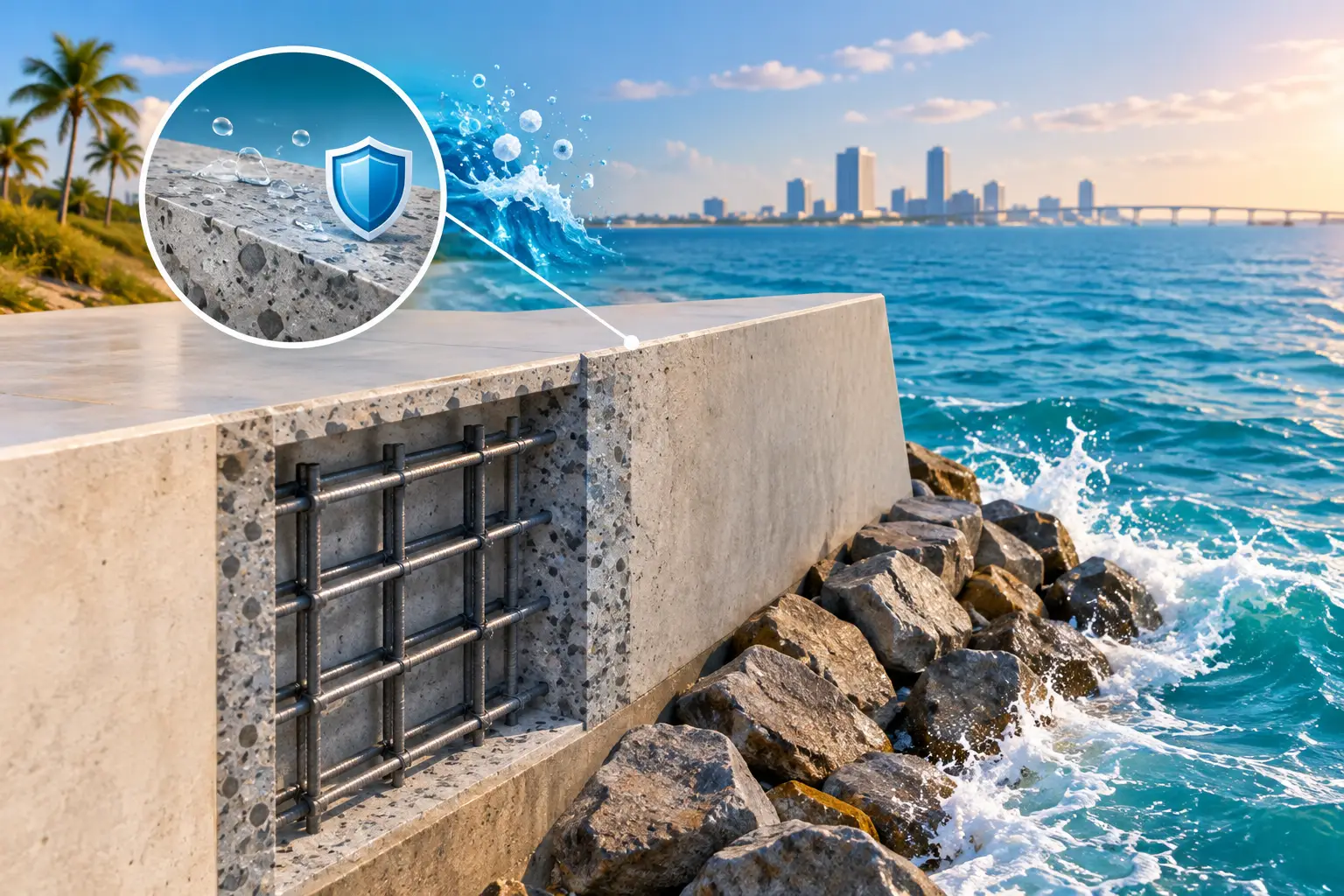
Concrete itself does not usually fail because salt instantly “eats” it away. The larger problem is chloride intrusion. Salt carried in air, standing water, splash zones, or saturated soil can move through pores and cracks in the concrete. Once enough chlorides reach embedded steel, they can break down the steel’s natural protective layer.
Steel then begins to corrode. Rust takes up more volume than sound steel, creating internal pressure that cracks the surrounding concrete. Over time, the surface may delaminate, spall, or break away entirely. What started as a small hairline crack or rust-colored streak can turn into exposed rebar and a costly structural repair.
Coastal exposure also keeps concrete wet longer. Moisture is a major part of the corrosion cycle, so shaded areas, low spots, planters, leaking downspouts, and poorly drained edges often show trouble first. Saltwater exposure is especially demanding where concrete regularly gets wet and dry, such as near boat access areas, seawalls, bulkheads, outdoor stairs, and low-lying commercial sites.
Concrete Saltwater Resistance Starts With the Mix
A coastal-ready concrete project starts with a mix designed for low permeability and the actual loads the slab, wall, or structure will carry. Higher strength alone does not automatically mean better durability. The key is producing dense, well-consolidated concrete with a controlled water-cement ratio and appropriate materials for the job.
Adding excess water at the jobsite may make concrete easier to place, but it can weaken the finished surface and create more pathways for moisture and chlorides. A workable mix is necessary. A watered-down mix is not. The crew should use the specified mix, place it efficiently, consolidate it correctly, and finish it without overworking the surface.
Supplementary cementitious materials may be appropriate for certain coastal projects because they can help reduce permeability when used as part of a properly engineered mix. The right choice depends on the application, exposure level, schedule, structural requirements, and local material availability. A residential patio does not need the same design approach as a reinforced retaining wall exposed to wet soil or a commercial slab handling delivery traffic.
Reinforcement Needs Protection Too
Reinforced concrete needs enough cover between the surface and the steel. Concrete cover is the depth of concrete protecting rebar, wire mesh, or other reinforcement. Too little cover leaves steel closer to salt, moisture, and surface cracking. Poorly positioned reinforcement can reduce that protection even when the mix itself is good.
Correct bar placement, proper chairs or supports, secure tying, and clean reinforcing steel all matter. Reinforcement should not be sitting directly on the ground or drifting during the pour. In coastal work, these are not small details. They are part of the structure’s long-term defense against corrosion.
Drainage and Grading Are Part of the Concrete System
A well-built slab can still have a short life if water is allowed to sit against it. Proper grading directs surface water away from buildings, slab edges, retaining walls, and paved areas. Drainage also helps reduce saturated soil conditions that can keep moisture against foundations and below-grade concrete.
For driveways, parking areas, patios, and sports courts, the finished slope must move water where it is supposed to go without creating trip hazards, ponding, or runoff problems on adjacent property. This takes planning before forms are set. It is much harder to correct after concrete hardens.
Expansion and control joints also need attention. Joints help manage expected movement and reduce random cracking, but they are not an excuse for poor workmanship. Joint layout should fit the slab shape, thickness, traffic pattern, and surrounding structures. Where sealants are needed, they should be maintained so water and debris do not work into vulnerable areas.
Curing Is Where Durability Is Often Won or Lost
Concrete gains strength and durability through curing. When fresh concrete dries too fast, the cement does not hydrate as effectively near the surface. That can leave a weaker, more porous top layer that is more susceptible to moisture penetration, dusting, cracking, and surface wear.
South Texas heat, direct sun, and coastal wind can pull moisture from fresh concrete quickly. Contractors need to account for weather conditions, delivery timing, placement speed, finishing practices, and curing methods. A rushed finish on a hot, windy day may look acceptable at first, then show premature problems later.
A proper curing plan helps the concrete develop the dense, durable surface the project was designed to deliver. It also supports better long-term performance under vehicle traffic, foot traffic, rain, salt air, and routine cleaning.
Where Protective Treatments Make Sense
Penetrating sealers can help reduce water and chloride absorption on some exterior concrete surfaces. They are often useful for driveways, walkways, patios, masonry walls, and other exposed areas that are still in sound condition. A sealer is not a substitute for a poor mix, inadequate drainage, or structural repair, but it can be a worthwhile maintenance measure.
The treatment needs to match the concrete and its use. Some surfaces need a breathable penetrating treatment rather than a film-forming coating that may peel under sun, moisture, or vehicle traffic. Decorative stamped or stained concrete may have different coating requirements than a broom-finished commercial sidewalk. Surface preparation and reapplication intervals matter as much as the product choice.
For high-exposure structural work, more substantial corrosion-control measures may be appropriate. These decisions should be based on the design, the proximity to saltwater, whether steel is present, and the consequences of failure. The more critical the structure, the less sense it makes to rely on a surface treatment alone.
Warning Signs That Coastal Concrete Needs Attention
Small defects are easier and less expensive to address before water reaches reinforcement or undermines the base. Property owners and managers should watch for these conditions:
- Rust-colored stains, especially along cracks or near reinforced edges
- Cracks that widen, hold water, or continue through a slab or wall
- Flaking, scaling, or hollow-sounding concrete surfaces
- Spalled areas that expose wire mesh or rebar
- Persistent ponding at slab edges, joints, drains, or building entrances
Not every crack means a slab is failing. Concrete naturally shrinks and moves, and some cracks are cosmetic. The concern rises when cracking combines with water intrusion, elevation changes, rust staining, loose concrete, or damage near a load-bearing area. A contractor can assess whether the right repair is crack sealing, partial removal and replacement, drainage correction, resurfacing, or a more involved structural solution.
Repair Before Salt Damage Spreads
Repairing coastal concrete is not just about patching the visible hole. If corrosion is active beneath the surface, a patch installed over contaminated or damaged concrete may not last. Sound repair work removes weak material, evaluates the condition of exposed steel, addresses the source of moisture, and uses a repair approach suited to the area.
For slabs and pavement, the base condition is also critical. If water has softened or washed out support beneath the concrete, surface repairs alone may not stop movement and repeat cracking. For retaining walls, bulkheads, foundations, and other structural elements, repair planning should account for soil pressure, drainage, reinforcement condition, and the loads the structure must continue to carry.
Build for the Coast From Day One
The best time to improve saltwater performance is during planning. A clear scope should identify exposure conditions, expected traffic, drainage needs, reinforcement requirements, joint layout, finish, and curing expectations. That applies to a residential driveway as much as a commercial parking lot, foundation, retaining wall, or waterfront-adjacent slab.
Haylo Construction approaches coastal concrete with the practical details in mind: proper site preparation, grading, reinforcement, placement, and repair decisions based on the actual condition of the property. A concrete project does not need unnecessary complexity, but it does need to be built for the environment it will face.
If your concrete is near salt air, standing water, or coastal soil, treat drainage, cracking, and rust staining as early warning signs. Addressing those issues while they are manageable is one of the most effective ways to protect the work you have already paid for.