A parking lot can look worn out long before it has failed structurally. On the other hand, a lot with a few surface cracks may have deeper base, drainage, or safety problems that patching will not solve. Knowing when to replace a parking lot helps property owners avoid spending money repeatedly on short-term repairs while protecting customers, tenants, employees, and vehicles.
For commercial properties across the Coastal Bend, pavement takes a beating from heat, heavy rain, coastal moisture, delivery traffic, and shifting soils. The right answer is not always full replacement. A professional evaluation should separate surface-level damage from failures in the concrete or asphalt base below.
When to Replace a Parking Lot Instead of Repairing It
Replacement is usually the better investment when damage is widespread, the pavement has lost structural support, or drainage problems are causing repeated deterioration. Repairs make sense when the underlying base is stable and damage is limited to a defined area. Once the same issues return year after year, patching often becomes the more expensive choice.
A parking lot replacement may involve demolition, grading, drainage corrections, base preparation, reinforcement, and new pavement installation. That is more work upfront, but it gives the property a clean starting point and addresses problems that cannot be seen from the surface.
1. Cracking Covers Large Sections of the Lot
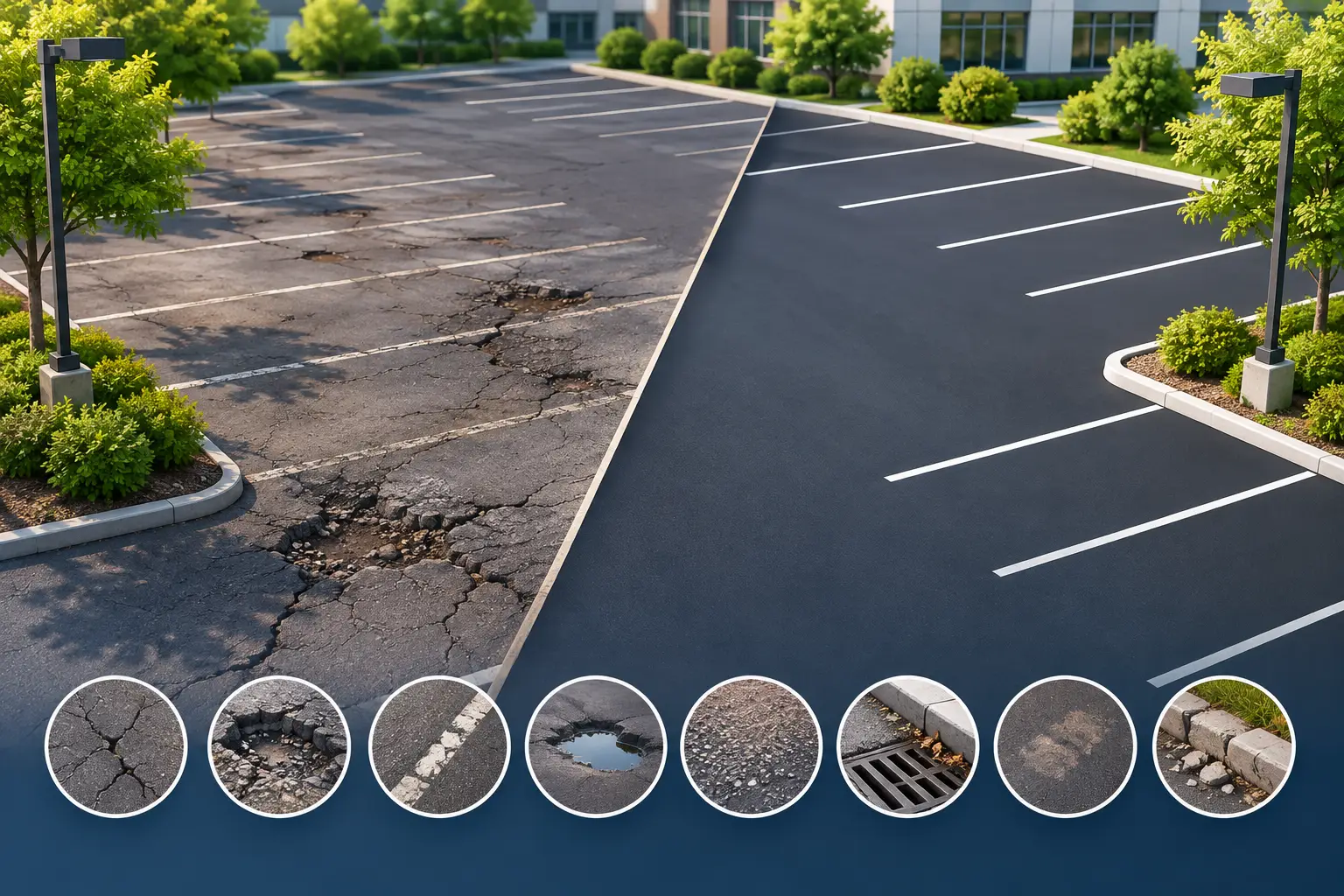
A few isolated cracks do not automatically mean the parking lot needs to be replaced. Small cracks can often be sealed before water reaches the base. The concern starts when cracks run across multiple parking areas, connect in a web pattern, or reopen shortly after repair.
Alligator cracking, which resembles the scales of reptile skin, is a common warning sign of base failure in asphalt. In concrete lots, widespread cracking, broken panels, and failing joints can point to movement beneath the slab. When damage affects a substantial portion of the paved area, spot repairs may only shift the problem from one section to another.
2. Potholes Keep Returning
Potholes are more than an appearance issue. They create trip hazards, damage vehicles, collect water, and allow further deterioration below the pavement surface. Filling a pothole can be appropriate when the surrounding material is solid. If potholes keep forming in the same area, however, the base is likely saturated, poorly compacted, or otherwise compromised.
Repeated pothole repairs are a clear sign to investigate replacement or full-depth reconstruction in that section. A lasting fix requires removing failed material, correcting the base, and restoring proper slope before installing new pavement.
3. Standing Water Does Not Drain Away
Water is one of the biggest threats to any parking lot. It works through cracks, softens the subgrade, erodes supporting material, and speeds up surface failure. In South Texas, heavy rain can expose drainage problems quickly, especially on older lots with settlement or poor original grading.
Puddles that remain long after rain should not be ignored. Water near entrances, accessible spaces, drive lanes, curbs, or building foundations creates both a safety concern and a maintenance problem. Depending on the cause, the solution may be localized drainage work, concrete panel replacement, regrading, or complete lot reconstruction.
4. The Pavement Has Noticeable Settlement or Heaving
A parking lot should provide a consistent, stable surface. Areas that sink, rise, tilt, or separate from curbs and sidewalks need prompt attention. Settlement may result from soil movement, erosion, inadequate compaction, leaking utilities, or long-term water intrusion. Heaving can occur when soil expands or when roots and other obstructions push upward.
These conditions affect more than ride quality. Uneven pavement can create ADA access issues, drainage changes, curb damage, and vehicle hazards. Grinding or patching may help in limited cases, but major elevation changes often require removal and replacement of the affected pavement and supporting base.
5. Repairs Are Taking Over the Maintenance Budget
There is a practical point where ongoing repairs stop being cost-effective. If your maintenance plan now includes frequent patching, crack filling, joint repairs, and emergency pothole work, compare those costs against a planned replacement project.
A planned project gives you control over the schedule, phasing, budget, and traffic flow. Emergency repairs usually cost more per square foot and disrupt business at the worst possible time. Replacement also provides an opportunity to correct layout issues, add or adjust drainage, improve striping, and rebuild high-traffic areas for their actual use.
Other Signs Your Parking Lot Has Reached the End of Its Service Life
Age alone does not determine whether a lot needs to be replaced. Quality of installation, traffic volume, maintenance history, drainage, and local conditions all matter. Still, older pavement deserves closer inspection because underlying materials eventually wear down.
Watch for these additional conditions:
- Broken curbs, crumbling edges, or wheel stops that no longer sit securely.
- Faded markings combined with a rough, uneven driving surface.
- Concrete slabs that rock, separate significantly at joints, or have exposed reinforcement.
- Asphalt that is severely oxidized, brittle, rutted, or unraveling at the surface.
- Frequent complaints about puddles, vehicle damage, tripping, or poor access.
None of these signs should be judged in isolation. A small area of distress near a dumpster enclosure has different repair needs than the same damage across primary customer parking and fire lanes.
Repair, Resurface, or Replace: Choosing the Right Scope
Parking lot work is not one-size-fits-all. The right approach depends on what is failing and how far that failure extends.
Repair is best for limited damage with a stable foundation. This can include crack sealing, joint repair, small concrete panel replacement, localized patching, or correcting a minor drainage issue. Repairs protect the rest of the lot when handled early.
Resurfacing may be an option for asphalt lots with a sound base but widespread surface wear. The existing pavement must be properly repaired and prepared first. Resurfacing will not fix deep cracking, settlement, or drainage failures below the surface.
Replacement is the right call when the pavement and supporting base have failed, major drainage corrections are needed, or large portions of the lot have reached the end of their useful life. For concrete parking lots, replacement can be phased by section to keep part of the property accessible during construction. For asphalt lots, full-depth replacement may be necessary in failed areas before a new surface is installed.
A qualified contractor should evaluate the pavement thickness, base condition, slope, drainage paths, traffic patterns, curb condition, and access requirements before recommending a scope. The cheapest option is not always the lowest-cost option over the next five or ten years.
Plan Replacement Around Your Property Operations
Parking lot replacement affects daily operations, so planning matters. A restaurant, medical office, apartment community, warehouse, or retail center may need phased work to preserve access for customers and deliveries. Clear signage, temporary parking plans, safe pedestrian routes, and coordination with tenants can keep the project organized.
Before work starts, confirm the project includes demolition or removal of failed material, proper grading, compaction, reinforcement where needed, drainage details, and final striping. If the lot serves commercial traffic, discuss truck routes, loading areas, dumpster access, fire lanes, and the thickness needed for heavier vehicles. Designing for actual traffic is one of the best ways to prevent early failure.
For Corpus Christi-area properties, local soil movement, intense sun, rain events, and coastal exposure should be part of the conversation. A parking lot that is properly graded and built on a prepared base is better positioned to handle those conditions over time.
Get a Clear Assessment Before Damage Spreads
Parking lot damage rarely improves on its own. Water finds cracks, traffic works loose material, and weak areas spread into larger failures. The best time to schedule an assessment is when damage is still limited enough to give you options.
Haylo Construction can help property owners evaluate whether targeted repairs, reconstruction, or full replacement makes the most sense for the site. A clear scope, proper preparation, and durable workmanship give your property a safer surface and a parking lot built for the traffic it handles.