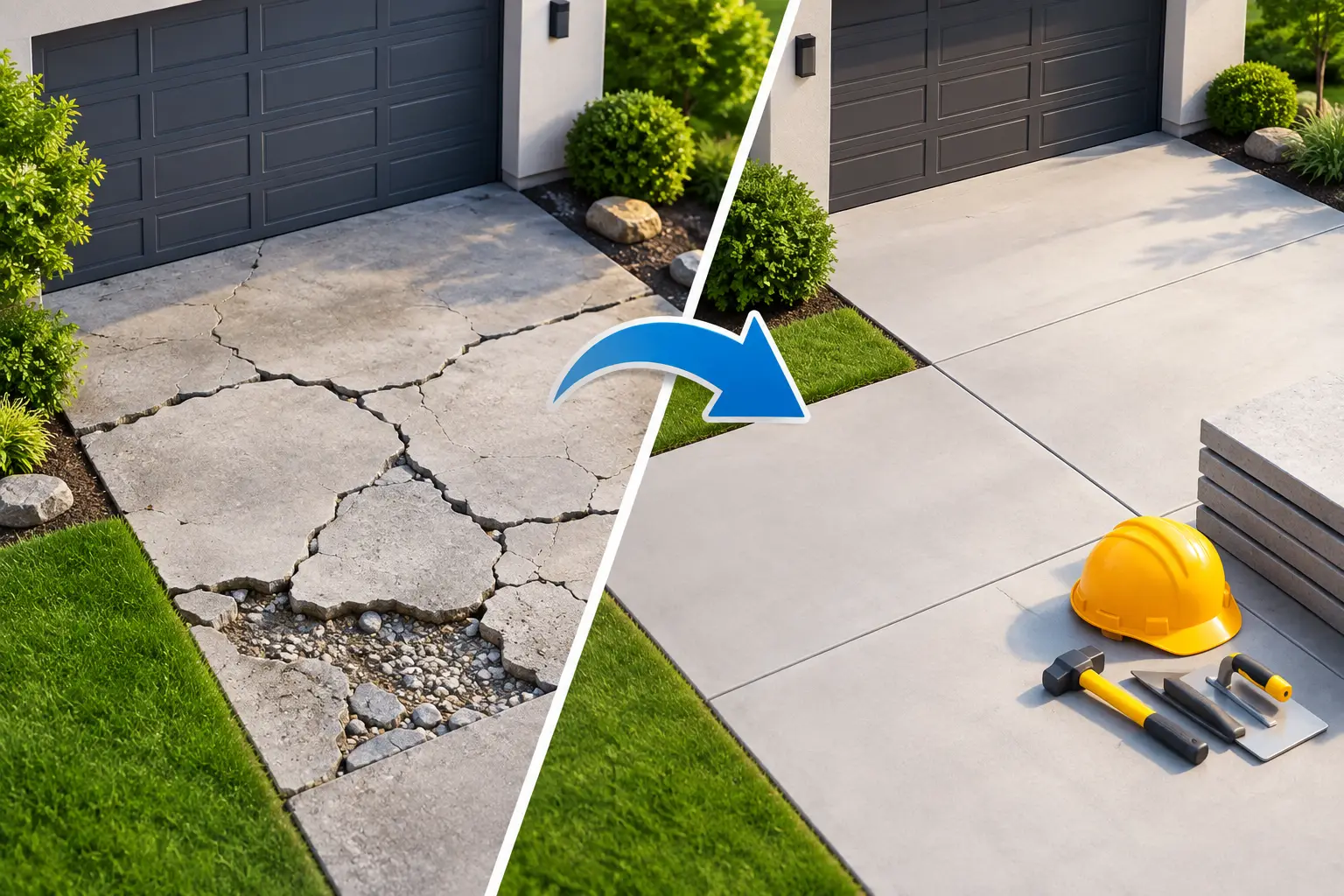
A driveway that catches your tires, a patio that slopes toward the house, or a parking lot with broken edges is more than an appearance problem. Knowing when to replace concrete can prevent trip hazards, vehicle damage, drainage failures, and larger repair costs down the road. The right answer depends on what caused the damage, how deep it goes, and whether the base beneath the slab is still stable.
Concrete is built to last, but it is not permanent. Coastal weather, saturated soils, heavy traffic, tree roots, poor drainage, and inadequate installation can all shorten its service life. In Corpus Christi and throughout the Coastal Bend, a proper assessment should look below the surface instead of judging the slab by cracks alone.
When to Replace Concrete Instead of Repairing It
Small defects do not automatically require a full replacement. A few narrow surface cracks, minor staining, or localized chips can often be repaired when the slab is level, structurally sound, and well supported underneath. A professional repair can restore appearance and help keep water out of small damaged areas.
Replacement becomes the better investment when damage is widespread or points to a base, drainage, or structural problem. Patching a slab that continues to settle may make it look better temporarily, but it will not correct the reason the damage occurred. New concrete installed over the same unstable conditions can fail as well, which is why site preparation matters as much as the concrete itself.
Cracks Are Wide, Deep, or Spreading
Concrete commonly develops hairline cracks as it cures and ages. These are usually cosmetic if they remain narrow, stable, and do not create an uneven surface. Cracks need closer attention when they are widening, branching across large sections of the slab, or separating one portion of concrete from another.
Replacement is often warranted when cracks are deep enough to create movement between slab sections or when one side sits higher than the other. Wide cracks allow water into the base material. That water can wash out supporting soil, worsen settlement, and accelerate breakage around the crack line.
Cracks accompanied by crumbling edges, exposed aggregate, or broken corners are another warning sign. On a driveway or parking lot, repeated vehicle loads will turn these weak areas into larger failures quickly.
The Slab Has Settled, Heaved, or Tilted
An uneven slab is one of the clearest signs that replacement may be necessary. Settlement can leave a driveway lower near the garage, create low spots in a parking lot, or produce trip hazards along sidewalks and entry paths. Heaving occurs when soil movement pushes portions of the slab upward, often creating sharp elevation changes at cracks or joints.
A limited area of settlement can sometimes be evaluated for lifting or targeted repair. However, full replacement is usually the more dependable option when the slab has settled in several places, has major height differences, or has failed because the soil underneath was not properly prepared.
For foundations, structural slabs, retaining walls, and bulkheads, movement should never be treated as a simple cosmetic issue. These projects need an experienced contractor to determine whether demolition, excavation, drainage correction, reinforcement, and replacement are required.
Water Is Draining Toward the Building
Standing water and poor drainage are common reasons concrete deteriorates early. If a patio, driveway, or walkway slopes toward a home or commercial building, water can collect against the structure and enter cracks, expansion joints, or surrounding soil. That can contribute to moisture problems, erosion, and movement beneath the slab.
A replacement project gives property owners the opportunity to correct the grade instead of living with the same drainage issue. Proper slope, base preparation, joint placement, and runoff planning help move water where it belongs. This is especially important in South Texas, where heavy rain can expose drainage problems fast.
Do not assume a surface overlay will fix a drainage problem. Overlays can add height, interfere with door thresholds, and fail if the original slab is unstable. In many cases, removing the damaged concrete and rebuilding it at the proper elevation is the cleaner, longer-lasting solution.
The Surface Is Spalling or Breaking Apart
Spalling happens when the top layer of concrete flakes, pits, or breaks away. It can result from age, poor finishing, moisture exposure, de-icing products in some climates, heavy use, or improper concrete placement. Light surface wear may be manageable with a repair or coating if the slab below remains solid.
Replacement is generally the better choice when spalling covers a large area, exposes reinforcing steel, or continues to break apart under normal use. A driveway with widespread surface loss will continue to shed material. A commercial walkway or parking area with deteriorated concrete can become both a liability issue and an operational headache.
Safety and Use Should Drive the Decision
Concrete replacement is not only about how a slab looks. A broken sidewalk can create a trip-and-fall risk. A failed parking lot can damage vehicles and make a business look neglected. A cracked driveway may interfere with drainage, garage access, or daily use of the property.
If the concrete serves a structural purpose or supports regular vehicle traffic, waiting too long can increase the scope of the project. Broken sections may require more demolition, and ongoing water intrusion can damage surrounding soil, curbs, landscaping, or nearby structures.
For commercial properties, visible slab failures should be addressed promptly when they affect customers, employees, deliveries, accessibility, or traffic flow. A planned replacement is usually easier to manage than an emergency repair after a section becomes unsafe.
What a Proper Concrete Replacement Should Include
Concrete replacement is more than removing old material and pouring a new slab. The work should begin with a clear evaluation of the old concrete and surrounding site conditions. The cause of failure should guide the replacement plan.
A dependable replacement scope typically addresses demolition, removal of failed material, proper grading, base preparation, reinforcement where appropriate, concrete thickness for the intended use, drainage, joints, finishing, and curing. A residential patio does not need the same design as a commercial truck-access area, and a driveway should not be built like a decorative walkway.
The site also matters. Poorly compacted fill, soft spots, drainage paths, utility locations, and access limitations should be considered before work begins. Cutting corners on preparation may reduce the initial price, but it often leads to the same cracking and settlement problems returning sooner than they should.
Repair or Replacement: Get a Straight Assessment
The best time to act is before a minor defect becomes a broad slab failure. If cracks are isolated and the concrete remains level, a targeted repair may be practical. If there is widespread cracking, drainage trouble, broken sections, or clear movement, replacement is usually the more responsible long-term choice.
Haylo Construction evaluates concrete with the full job in mind, including demolition, grading, reinforcement, and the demands the finished surface must handle. Homeowners and commercial property owners should ask for a clear explanation of what caused the damage, whether repair will hold, and what preparation is included in a replacement quote.
Concrete should give your property a stable, safe surface, not become another problem to work around. Addressing failing areas while the project is still manageable gives you more control over the schedule, budget, and final result.