A new patio can look sharp on the day it is poured and still become a problem if the finish does not fit the job. The right decorative concrete finish options account for how the surface will be used, how water will move across it, and how South Texas sun, rain, salt air, and traffic will affect it over time. Appearance matters, but a good finish also has to provide traction, hold up under use, and work with a properly prepared concrete slab.
For homeowners, a decorative finish can turn a plain driveway, walkway, patio, or pool deck into a defined outdoor living area. For commercial properties, it can improve curb appeal around entrances, sidewalks, courtyards, and common areas without sacrificing the durability concrete is known for. The best choice is rarely the most elaborate one. It is the one that suits the surface, budget, maintenance expectations, and local conditions.
Decorative Concrete Finish Options for Real Use
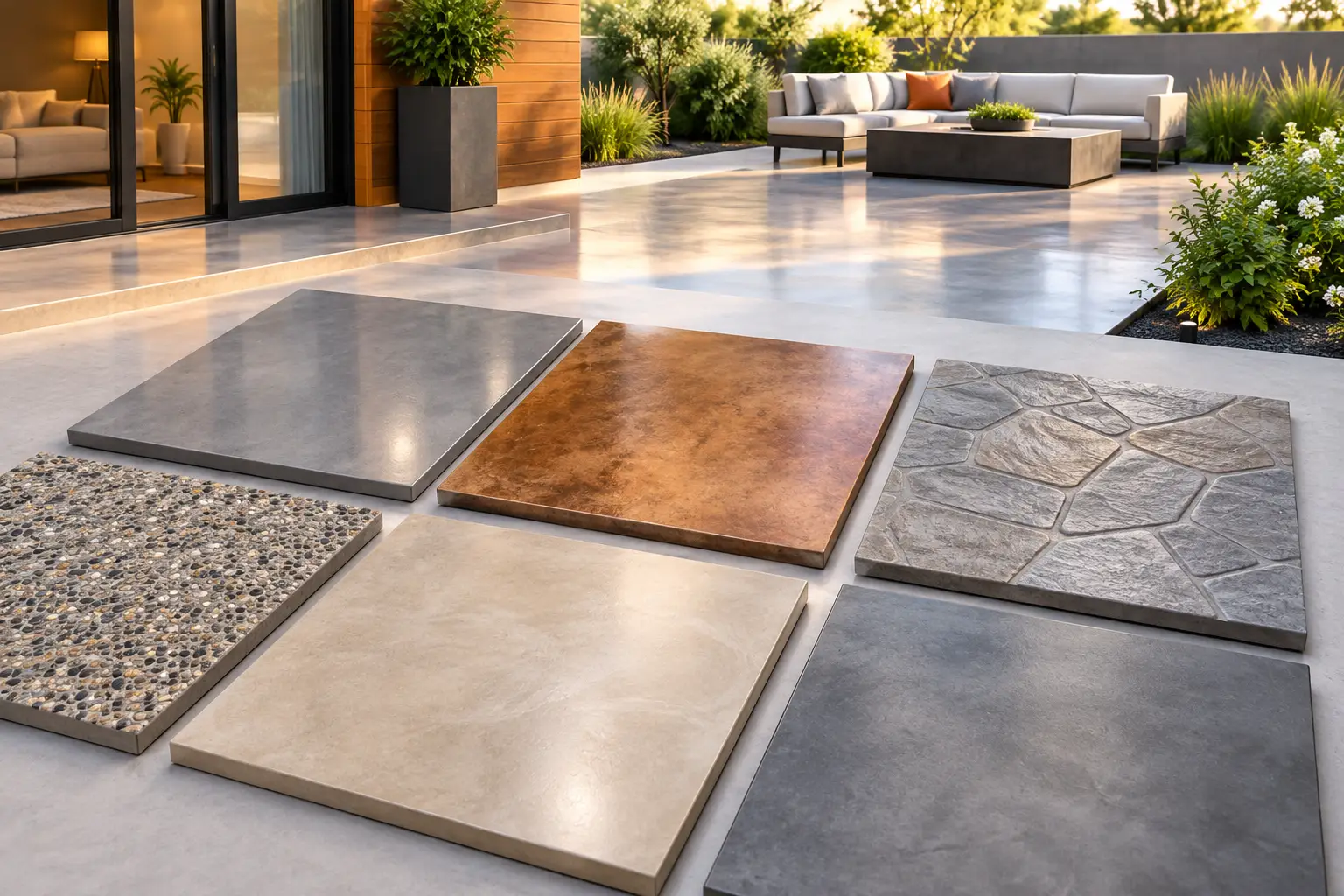
Decorative concrete is not one product. It is a group of finishing methods that change the color, texture, pattern, or surface profile of concrete. Some are installed while the concrete is fresh. Others are applied after the slab has cured. That difference matters because it affects cost, durability, repair options, and the condition the existing concrete must be in.
Broom finishes with color
A broom finish is one of the most practical exterior options. A broom is pulled across freshly placed concrete to create fine texture and traction. It is common on driveways, sidewalks, ramps, and pool-adjacent areas because it performs well when wet.
Adding integral color or a color hardener gives a broom-finished slab more character without making it overly decorative. Earth tones, charcoal, tan, and muted gray are often a good fit for South Texas properties because they coordinate with stone, brick, stucco, and metal fencing while hiding everyday dust better than very light or very dark colors.
This finish is a strong value when safety and durability lead the decision. It will not mimic natural stone, but it delivers a clean, finished appearance with less maintenance than more detailed decorative systems.
Stamped concrete
Stamped concrete is selected when a property owner wants the appearance of pavers, flagstone, slate, wood planks, brick, or tile without installing individual units. While the concrete is still workable, installers apply release color, press pattern mats into the surface, cut control joints, and seal the finished slab.
Stamped concrete works well for patios, entryways, courtyards, walkways, and low-to-moderate traffic driveways. Pattern and color can give a large concrete area more visual definition, especially around a pool, outdoor kitchen, or front entrance.
The trade-off is that stamped work demands careful installation and maintenance. Pattern alignment, joint placement, base preparation, drainage, and sealer selection all affect the final result. A glossy sealer may look good initially, but it can become slick when wet if the proper traction additive is not used. On a driveway, tire traffic and hot weather can also make sealer maintenance more noticeable over the years.
Exposed aggregate
Exposed aggregate reveals the small stones within the concrete mix by removing the top layer of cement paste after placement. The result is a textured, natural-looking surface with strong slip resistance. It is a practical choice for pool decks, walkways, patios, and some driveway applications.
Because aggregate is part of the slab rather than a thin coating, the finish has real depth. It also handles outdoor use well when installed over a sound base with proper grading. The surface can be harder on bare feet than a smooth patio finish, so it may not be the first choice for every pool deck or barefoot gathering area.
Aggregate selection matters. The size, color, and exposure level affect both the appearance and comfort of the surface. A contractor should provide realistic samples or explain how the available local aggregate will look after washing and sealing.
Stained concrete
Concrete stains add color variation rather than a heavy painted layer. Acid stains react with minerals in the concrete to create variegated, mottled tones. Water-based stains offer a wider range of colors and can produce more consistent results. Both are often used on patios, porches, interior floors, and covered outdoor areas.
Stain is a good option for an existing slab that is structurally sound and free from major surface damage. It can give plain concrete a richer appearance at a lower cost than a full stamped overlay. However, stains do not hide everything. Existing cracks, patches, discoloration, adhesive residue, and uneven repairs may remain visible or become more noticeable after color is applied.
For exterior surfaces, the sealer is part of the system. The right product needs to resist UV exposure and support the level of traction the area requires. Reapplication may be needed as wear and weather take their toll.
Decorative overlays
A cement-based overlay can refresh worn but stable concrete with a new textured or patterned surface. Depending on the system, an overlay may be troweled smooth, sprayed, stamped, scored, or finished to resemble stone or tile. This can be useful when replacing an entire slab is unnecessary.
An overlay is not a shortcut around concrete problems. If the existing slab is moving, badly cracked, poorly drained, contaminated with oil, or suffering from base failure, a decorative overlay may fail with it. Proper surface preparation is the deciding factor. That can include repairs, cleaning, mechanical profiling, crack evaluation, and correcting drainage before any decorative material is installed.
Polished or burnished concrete
Polished concrete is most often used indoors or in protected commercial settings, garages, showrooms, and covered spaces. Mechanical grinding and polishing create a dense, refined surface that can range from satin to high sheen. Dyes can add color, while aggregate exposure can create a terrazzo-like effect.
For an exterior patio or driveway, polished concrete is usually not the practical choice. Outdoor moisture, UV exposure, and traction needs generally point toward a textured finish instead. A burnished or steel-troweled finish can also look smooth and modern, but it should be used carefully around wet areas because smooth concrete can be slippery.
Choosing a Finish by Location
The same finish does not belong everywhere. Driveways need to handle vehicle weight, turning tires, oil drips, and direct sun. A colored broom finish, exposed aggregate, or certain stamped systems can work well, depending on traffic and maintenance expectations. For heavily used commercial drive lanes and parking areas, function usually comes before decoration.
Patios allow more freedom. Stamped concrete, stain, exposed aggregate, and textured overlays can all work when drainage is planned correctly. The decision often comes down to the desired style, whether the area is covered, and how much routine cleaning and resealing the owner is willing to handle.
Pool decks require special attention to traction and heat. Dark colors can become uncomfortable under bare feet during a Corpus Christi summer. Highly smooth or glossy finishes can create a slip concern. Lighter colors, textured profiles, and sealers with an appropriate traction additive are often the safer direction.
At commercial entrances, decorative concrete should support the property rather than create a maintenance burden. Textured concrete with restrained color can make a professional first impression while holding up better than a highly detailed finish in a busy public area.
What Makes Decorative Concrete Last
No finish can compensate for poor concrete work below it. Long-term performance starts with a stable base, correct reinforcement where required, appropriate concrete thickness, control joints, proper slope, and curing practices. In coastal areas, drainage is especially important. Standing water can stain surfaces, weaken surrounding soil, and accelerate wear at joints and edges.
Color also needs realistic expectations. Concrete is a natural material, and variation is normal. Batch differences, curing conditions, release agents, sealer sheen, and the existing condition of a slab can all change the final appearance. A dependable contractor explains those variables before work starts rather than promising a perfectly uniform surface where one is not realistic.
Maintenance is straightforward but should not be ignored. Keep leaves, soil, fertilizer, and automotive fluids from sitting on the surface. Clean spills promptly. Avoid harsh de-icing chemicals and aggressive pressure washing near joints or thin overlay edges. Sealed decorative concrete will typically need periodic resealing based on traffic, sun exposure, and the specific finish.
Get the Finish and the Concrete Work Right
A decorative surface should be planned alongside the concrete installation, not treated as an afterthought. Before choosing colors or patterns, assess the slab condition, drainage path, expected traffic, shade, and safety needs. That process prevents a good-looking finish from becoming an expensive repair issue.
Haylo Construction helps property owners and businesses evaluate decorative concrete options with the same focus applied to driveways, patios, slabs, and site work: proper preparation, clear communication, and workmanship built for the conditions. A free project estimate is the right place to compare finish choices against the actual use of your property and select a surface that will still make sense years after the pour.