A driveway can look solid for years, then start shedding thin chips from the surface after a wet season or a stretch of hot coastal weather. If you are searching why concrete flakes near coast properties, the answer is rarely one issue. Along the Coastal Bend, salt-laden air, moisture, heat, drainage problems, and installation details can work together to break down the top layer of a slab.
Concrete is built for hard use, but it is not maintenance-free or immune to local conditions. Knowing what caused the flaking matters because a cosmetic surface repair will not last if water, salt, or movement is still attacking the slab underneath.
Why Concrete Flakes Near the Coast
Concrete flaking is commonly called scaling or spalling, depending on how deep the damage goes. Scaling usually appears as thin, shallow flakes or patches coming loose from the surface. Spalling is more serious. It can expose aggregate, create deeper pits, and in reinforced concrete, eventually allow corrosion around embedded steel.
Coastal Texas creates conditions that put extra stress on exterior concrete. Salt spray and airborne chlorides can settle on driveways, patios, walkways, parking lots, and slabs near bays or open water. Humid air keeps surfaces damp longer. Heavy rain can push water into cracks and low spots. Then intense sun and heat dry the slab quickly, creating repeated wet-dry cycles.
Salt does not have to come from direct seawater flooding to matter. Wind carries fine salt particles inland, especially during storms and strong coastal weather. Over time, those deposits mix with rainwater and enter small pores, joints, surface cracks, and unsealed areas of concrete.
Salt and moisture work their way into pores
Concrete is dense, but it is still porous. Water can move through its surface, particularly when the concrete was not properly cured, has worn down, or contains hairline cracking. When salt-bearing moisture enters those pores, it can contribute to surface deterioration and make the slab more vulnerable over time.
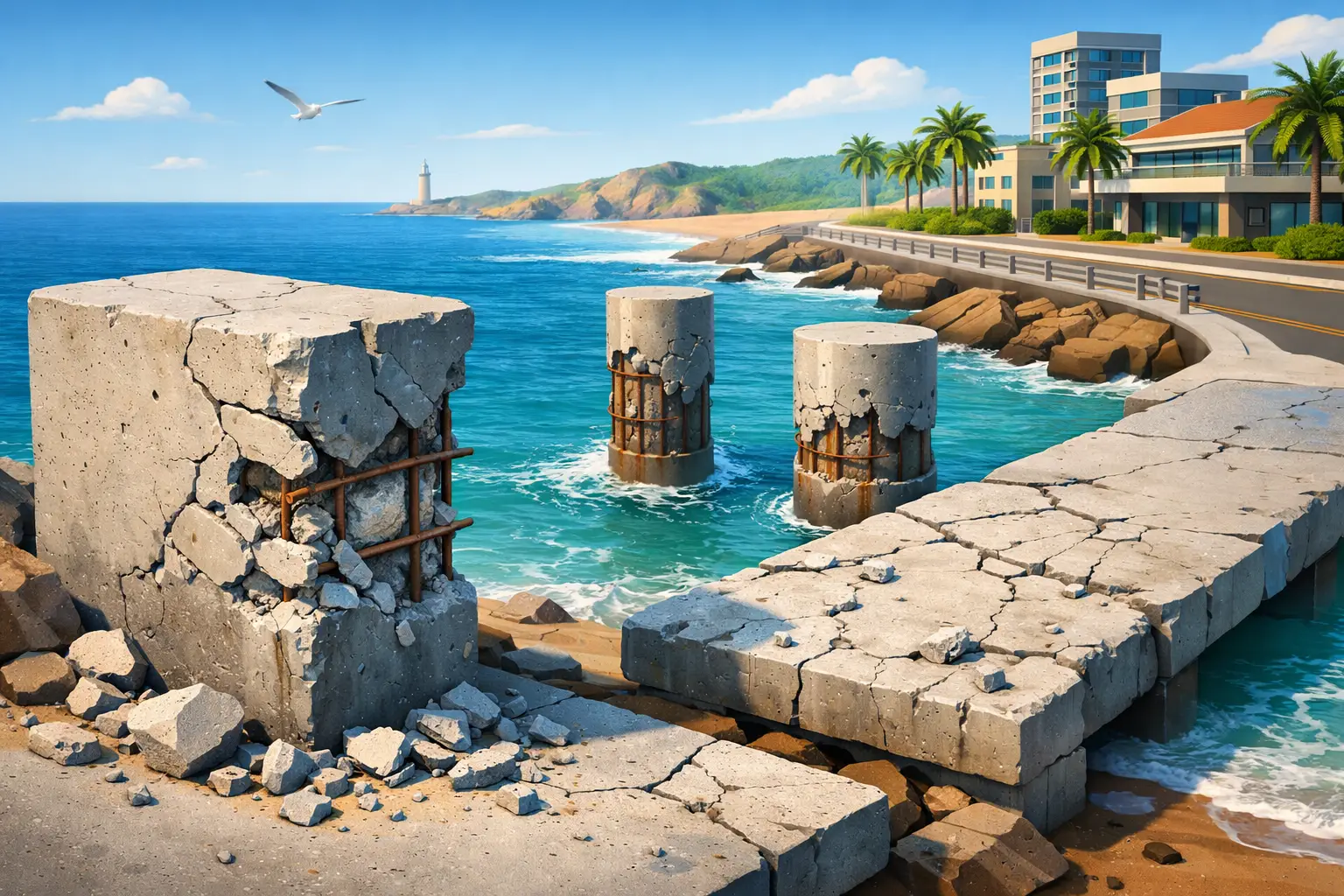
The bigger concern comes when chlorides reach reinforcing steel. Steel corrosion expands as it rusts. That expansion pushes outward against the surrounding concrete, causing cracks, delamination, and larger areas of spalling. This is especially relevant for slabs, steps, retaining walls, bulkheads, and structural concrete with reinforcing steel close to the surface.
Poor finishing can create a weak top layer
Not every flaking problem is caused by the coast. Sometimes the surface was weak from the day it was poured. Concrete can scale prematurely when water is added to the top during finishing, when bleed water is worked back into the slab, or when finishing begins before the concrete is ready.
That extra water weakens the cement paste at the surface. The slab may look smooth at first, but the top layer can be softer and less durable than the concrete below it. Years of traffic, heat, rain, and coastal exposure then reveal the problem.
Over-troweling can also cause trouble. A dense-looking, polished surface may trap moisture beneath a thin finished layer. As the slab cycles through temperature and moisture changes, that layer can loosen and flake away.
Fast drying and poor curing reduce durability
Fresh concrete needs controlled curing to gain strength. In Corpus Christi and surrounding South Texas communities, high heat, wind, and direct sun can pull moisture out of a new pour too fast. If the slab dries before it has properly cured, the surface may not develop the strength needed to handle years of exposure.
Proper curing is not an optional final step. It is part of the installation. A contractor should account for weather, use the right placement and finishing practices, and protect the concrete while it gains strength. Skipping that discipline can leave a property owner with a slab that looks acceptable at turnover but begins to dust, crack, or scale early.
Drainage problems keep the slab under stress
Standing water is hard on concrete, especially when it repeatedly collects in the same area. Water that ponds along a driveway edge, against a foundation, near a patio, or beside a parking lot joint has more time to soak into the concrete and surrounding soil.
Poor drainage can also create movement below the slab. Coastal soils can shift as moisture levels change. If soil washes out, stays saturated, or expands and contracts unevenly, the concrete may crack. Once cracks form, salt and water have a direct path below the surface.
A repair that ignores drainage often fails early. Before patching flaked concrete, the grade, downspout discharge, surface slope, and nearby soil conditions should be reviewed.
How to Tell Surface Flaking From a Bigger Problem
A few shallow flakes on an older patio may be a manageable surface issue. Broad areas of missing concrete, deep craters, rust-colored stains, exposed reinforcing steel, or cracks that are widening point to a more serious condition.
Watch for signs that damage is progressing. If the slab sounds hollow when tapped, sections may be separating below the visible surface. If flaking follows a line over reinforcing steel, corrosion may be involved. If the slab is settling, lifting, or holding water, a patch alone is unlikely to solve the problem.
Commercial properties should address these conditions quickly. Deteriorated parking lots, walkways, loading areas, and entry slabs can become trip hazards and create liability concerns. For homeowners, early repair can prevent a small driveway or patio issue from becoming a replacement project.
Repair Options Depend on the Cause
The right repair is based on the depth of damage and what caused it. Small, shallow scaled areas may be mechanically cleaned and resurfaced with a compatible repair material. The existing concrete must be sound, clean, and properly prepared. Applying a coating or patch over loose material only hides the problem temporarily.
When damage extends deeper, deteriorated concrete may need to be removed back to solid material before a repair mortar is installed. If reinforcing steel is exposed or corroding, it needs to be evaluated and treated as part of the repair. Ignoring rusting steel allows the expansion and spalling cycle to continue behind the new patch.
Full replacement is often the better long-term decision when the surface is failing across much of the slab, the concrete has widespread cracking, or the base and drainage are compromised. Replacement also creates an opportunity to correct slope, improve reinforcement, rebuild unstable base material, and use a concrete design suited to the project.
There is a cost trade-off. A targeted repair costs less upfront when the slab is structurally sound. But repeatedly patching widespread failure can cost more than replacing the affected area correctly. A straightforward on-site assessment helps determine which option protects the property and the budget.
Preventing Coastal Concrete Damage
Good concrete performance starts before the truck arrives. The base should be properly prepared and compacted. The slab should be graded to move water away from structures and prevent ponding. Reinforcement, joint placement, concrete strength, and thickness should fit the use of the area, whether it is a residential patio or a commercial vehicle lane.
For exposed coastal concrete, sealing can be a worthwhile maintenance step after the slab has cured and when the product is appropriate for the surface. A quality penetrating sealer can help reduce water and chloride absorption without creating a slippery film. Sealers wear over time, so they need to be maintained according to the product and level of exposure.
Regular cleaning also helps. Remove salt residue, dirt, fertilizer spills, and standing debris from concrete surfaces. Keep drainage paths clear. Seal small cracks before they become open channels for water. Avoid harsh deicing chemicals if cold weather ever creates a need for traction treatment, since some products can damage concrete surfaces.
For new work, do not choose a contractor based only on the lowest price. Coastal concrete needs careful site preparation, correct placement, proper finishing, and curing practices that account for local weather. Those details are where long-term durability is won or lost.
If flaking is starting on your driveway, patio, parking lot, or structural concrete, get it evaluated before moisture reaches deeper layers. Haylo Construction helps Coastal Bend property owners identify whether a concrete surface needs repair, drainage correction, or replacement, then builds the solution around the actual condition of the site.