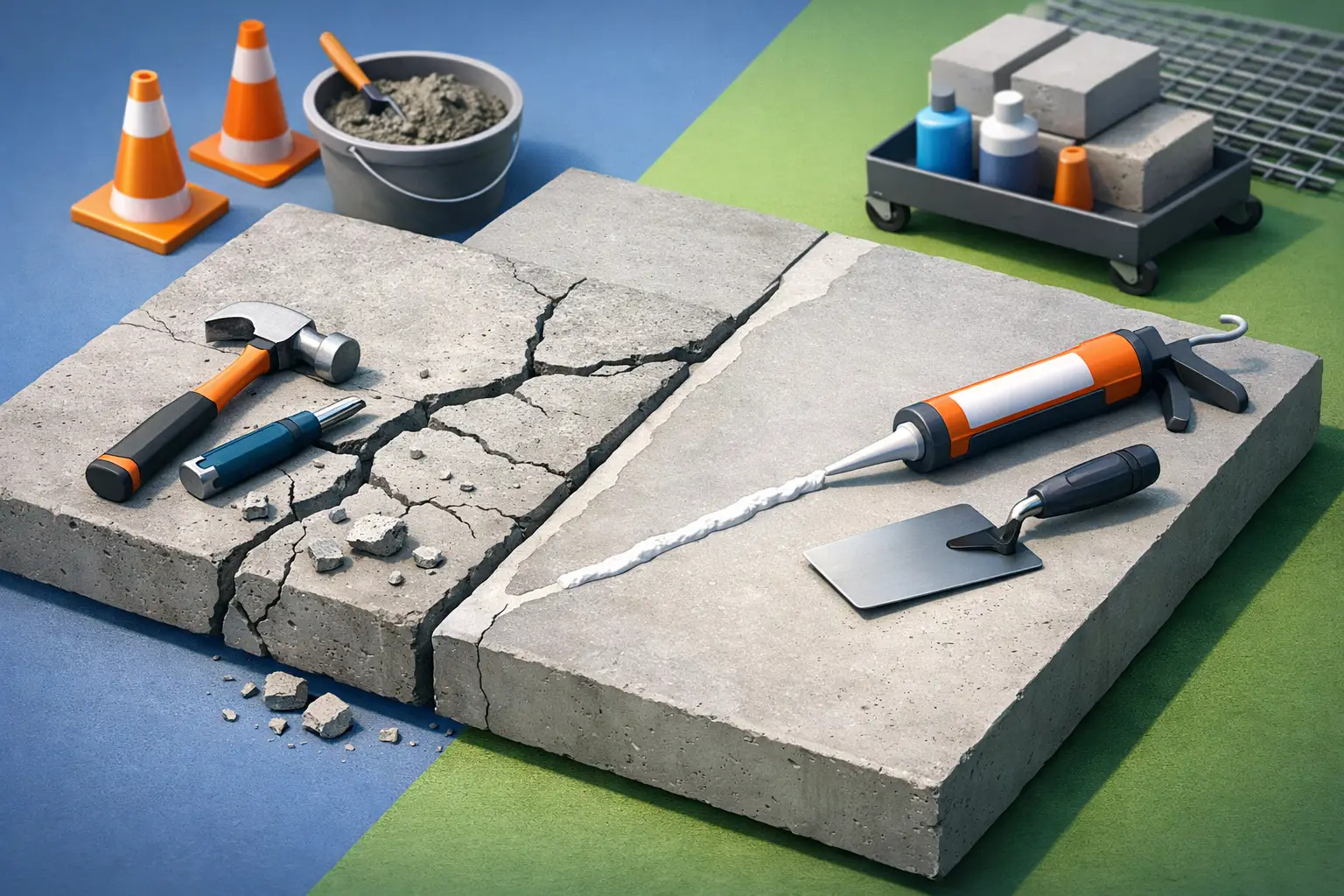
A thin crack across a patio may be a manageable repair. A widening crack that drops one side of a driveway can be a warning that the slab below it is moving. So, can cracked concrete be repaired? Yes, in many cases. But a repair only lasts when it addresses the reason the concrete cracked in the first place.
For property owners in Corpus Christi and across the Coastal Bend, that reason is often more than surface wear. Expansive soil, poor drainage, heavy vehicle traffic, tree roots, coastal moisture, and inadequate base preparation can all cause concrete to move or lose support. Filling the visible crack without correcting those conditions may make the slab look better for a short time, but it will not make it dependable.
Can Cracked Concrete Be Repaired Without Replacement?
Concrete repair is usually a good option when the slab is still structurally sound, stable, and mostly level. A contractor can clean and prepare the crack, install the right repair material, and restore the surface so water and debris cannot continue working into the opening.
Hairline cracks, minor shrinkage cracks, and small cracks that have not created a height difference are common repair candidates. These issues often develop as concrete cures or changes temperature. They can be sealed to protect the slab and improve its appearance, especially on patios, sidewalks, pool decks, and other light-duty surfaces.
The answer changes when a crack is active or the concrete has settled. If one side of the crack sits higher than the other, the slab is heaving, sinking, or moving independently. If the crack keeps reopening after prior repairs, the underlying support problem is still there. In those situations, a cosmetic patch is rarely the right long-term answer.
Replacement may be safer when concrete is badly broken, heavily spalled, deteriorated from repeated water exposure, or carrying loads it can no longer support. A driveway with deep cracking and widespread settlement may cost more to patch repeatedly than to remove, regrade, reinforce, and replace correctly.
What Caused the Crack Matters More Than Its Appearance
Concrete is strong in compression, but it does not flex well. When the ground beneath it shifts or a concentrated load exceeds what the slab was built to carry, it cracks. The crack pattern can help point to the cause, but a proper site evaluation is still necessary.
A straight, narrow crack may be normal shrinkage. A crack that runs from corner to corner can indicate stress at a weak point or poor joint placement. A web-like pattern can be surface crazing or a sign that the top layer of concrete has weakened. Wide cracks, broken edges, and separated sections often point to settlement, erosion, or base failure.
On South Texas properties, drainage deserves close attention. Water that collects along a driveway edge, near a foundation, or under a patio can soften soil and wash away fine material beneath the slab. After the ground dries, voids and uneven support can remain. The concrete then carries loads unevenly and begins to crack or settle.
Tree roots can also lift walkways and patios, while heavy trucks, trailers, dumpsters, and frequent commercial traffic can overwhelm a residential-grade slab. The repair method has to match the cause and the use of the surface. A repair suitable for a footpath may not be suitable for a parking area or loading zone.
Common Concrete Repair Methods
There is no single repair material or technique that fits every crack. A dependable contractor starts by determining whether the slab is stable, whether the crack is moving, and whether the concrete has adequate support below.
For narrow, non-moving cracks, routing and sealing is often effective. The crack is prepared to create a clean, consistent channel, then filled with a flexible sealant or repair product suited to the application. This keeps water out and gives the material room to handle minor movement.
For shallow surface damage, a cementitious patch or resurfacing material may restore a worn appearance. This approach works best when the slab itself is sound. Proper surface preparation is critical. Dust, loose concrete, oil, moisture, and weak material must be removed, or the patch can separate from the old concrete.
Cracks in structural slabs, foundations, retaining walls, or areas exposed to significant load may require a more technical repair. Epoxy injection can bond certain structural cracks when the concrete is stable and dry enough for the product to perform. This is not a universal fix, and it will not stop future movement caused by drainage problems or unstable soil.
When a slab has settled but remains largely intact, lifting or stabilization may be considered in the right conditions. However, the contractor must identify why the slab settled before lifting it. Raising concrete over an unresolved drainage issue can lead to the same problem again.
When damage is extensive, demolition and replacement are usually the cleaner solution. That allows the crew to remove failed concrete, correct grading, prepare and compact the base, install reinforcement where needed, place control joints, and pour a slab designed for the actual load and site conditions.
Signs Repair Is No Longer the Best Investment
A crack does not automatically mean replacement. Still, some conditions should move replacement to the front of the conversation. These include significant vertical displacement, multiple broken or rocking slab sections, exposed or corroded reinforcement, recurring cracks after repair, widespread surface failure, and drainage that has undermined the base.
Safety is another deciding factor. Uneven sidewalks, entry pads, pool decks, and parking areas create trip hazards. On commercial properties, a temporary patch may reduce the immediate risk, but the owner still needs a permanent plan that protects visitors, employees, and vehicles.
Foundation cracks need particular care. Some are minor and non-structural, while others can indicate settlement, water intrusion, or movement affecting the building. Do not assume a foundation crack should be filled like a driveway crack. A qualified professional should evaluate its location, width, direction, and whether doors, windows, floors, or walls are showing related movement.
Why Proper Preparation Determines How Long Repairs Last
The visible crack is only one part of the job. Long-lasting concrete work depends on the condition below the surface. Before repairing or replacing a slab, the contractor should evaluate slope, runoff paths, base material, soil condition, traffic loads, and nearby structures or roots.
For replacement projects, that means establishing proper grade so water moves away from the slab and building. It means removing soft or unsuitable material, compacting the base, and using the proper concrete thickness and reinforcement for the application. Control joints should be placed intentionally to encourage concrete to crack in planned locations rather than randomly across the surface.
For repairs, preparation means removing loose material and cleaning the crack thoroughly. Repair products need the right bond conditions, cure time, and moisture environment. Rushing these steps may save time on the front end, but it often leads to failed patches and repeat work.
This is why the lowest repair quote is not always the lowest cost. A quick surface fill may be appropriate for a minor, stable crack. It is not a substitute for correcting erosion, settlement, or an undersized slab. Clear diagnosis and straightforward recommendations protect the property and the budget.
What Property Owners Can Do Before Calling a Contractor
Take clear photos of the crack and note whether it has changed over time. Measure its width if possible, and look for uneven edges, pooling water, or gaps beneath the slab. Avoid pressure washing directly into open cracks or allowing irrigation to keep the area saturated.
Do not use a basic hardware-store patch on a crack that is widening, offset, or connected to sinking concrete. It can hide the problem temporarily while water continues to reach the base. If the crack affects a driveway, parking lot, foundation, retaining wall, or high-traffic walkway, a professional assessment is the safer move.
Haylo Construction evaluates concrete repair and replacement work with the full site in mind, including drainage, grading, reinforcement, and the demands placed on the slab. The goal is not to sell a repair that looks good for a season. It is to recommend work that makes practical sense for the condition of the concrete and the property.
A cracked slab is worth addressing early, before water, movement, and traffic turn a small repair into a larger replacement project. Get the cause evaluated, choose the repair level that fits the site, and make sure the work is built to hold up.