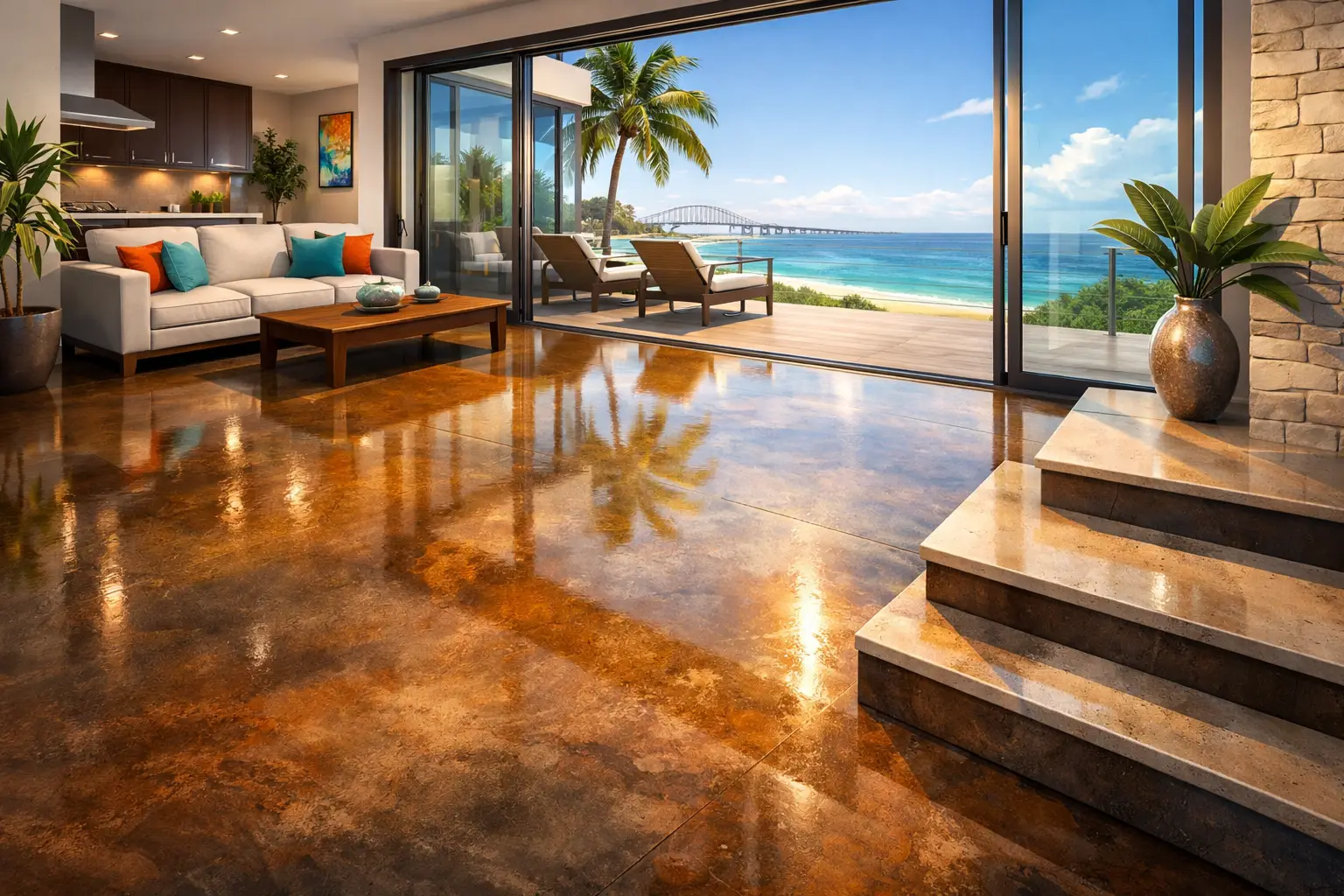
A stained floor can make a room look finished without pretending to be something it is not. That matters in South Texas, where hard-use surfaces need to handle sand, moisture, traffic, and heat. For stained concrete floors Corpus Christi property owners are usually looking for two things at once – a cleaner, sharper look and a surface that holds up.
That combination is possible, but only when the concrete underneath is worth staining and the prep work is done right. A good stain job does not hide major flaws. It works with the slab, highlights its character, and locks in a finish that is easier to maintain than many other flooring options.
Why stained concrete floors work in Corpus Christi
In this area, flooring choices have to deal with real conditions. Humidity, tracked-in grit, wet shoes, and strong sun all affect how a surface ages. Carpet traps moisture and dirt. Some wood products struggle near exterior entries or in buildings with changing indoor humidity. Tile is durable, but grout lines add maintenance and repairs can be obvious.
Stained concrete floors offer a different path. The slab is already there in many homes, shops, offices, and commercial spaces. When the concrete is structurally sound, staining can turn that base into the finished floor instead of covering it up. The result is clean, durable, and practical.
For residential properties, that often means patios converted into better entertaining space, interior floors with a more modern look, or garages that feel less like unfinished utility areas. For commercial properties, it can mean a floor that looks professional without constant replacement costs.
What stained concrete actually does
Concrete stain is not paint. That distinction matters. Paint sits on top and can peel when adhesion fails. A true stain reacts with or penetrates the surface, creating color variation that becomes part of the concrete itself. That is why stained floors often have a more natural, variegated look instead of a flat, uniform finish.
There are usually two main directions. Acid-based stain creates earthy, mottled tones and a more organic finish. Water-based stain offers broader color options and more control. Neither choice is automatically better in every job. It depends on the slab, the desired look, and how much variation the owner wants to see.
Every concrete slab has its own personality. Existing patches, saw cuts, hairline cracks, and past repairs may still show through after staining. In some projects that character adds value. In others, especially when a client wants a consistent decorative finish, those conditions may point toward another treatment.
The slab decides the outcome
The biggest factor in stained concrete floors Corpus Christi projects is not the color chart. It is the condition of the slab.
Concrete that has been sealed, glued over, painted, heavily patched, or contaminated by oil may not take stain evenly. Moisture issues can also affect both the stain and the final sealer. If a floor has surface damage, weak spots, or poor drainage conditions nearby, those problems need to be addressed before anyone starts thinking about the final appearance.
This is where experienced concrete contractors separate themselves from surface-level installers. A dependable contractor looks at the floor as part of the whole structure and site condition. If the slab needs repair, grinding, moisture evaluation, or better prep, that gets handled first. Skipping those steps is how decorative work turns into a callback.
Surface prep is where the job is won or lost
People tend to focus on stain color, gloss level, or finish style. On the job site, prep is what makes the difference.
The floor needs to be cleaned thoroughly and mechanically prepared to open the surface. Old coatings may need to be removed. Cracks and damaged areas may need repair. In some cases, heavy grinding is necessary to create a clean, receptive surface. In others, lighter prep is enough. It depends on what is already on the slab and how the concrete was originally finished.
If the floor is being stained inside an occupied home or business, protection and workflow matter too. Dust control, jobsite cleanliness, and sequencing are part of professional execution. The goal is not just a good-looking floor. The goal is a process that is safe, efficient, and controlled from prep through sealing.
Choosing the right look for the space
Stained concrete works best when the finish matches the use of the property. A showroom floor, restaurant entry, backyard patio, and garage do not need the same color or sheen level.
For residential interiors, many owners prefer warm browns, muted grays, or soft charcoal tones that hide dust and daily traffic well. In commercial spaces, mid-tone neutrals often strike the right balance between appearance and maintenance. Outdoor spaces need extra thought, because sun exposure and slip resistance matter just as much as color.
High gloss can look sharp, but it also shows dust, footprints, and wear faster. A lower-sheen finish may be the better long-term choice for busy properties. That is one of those areas where the best answer is not always the most dramatic one.
Indoor and outdoor use are not the same job
A stained floor inside a home or office is one thing. A stained patio, walkway, or poolside area is another.
Exterior concrete in the Coastal Bend takes more abuse from UV exposure, rain, salt air, and dirt. The stain system and sealer need to match that environment. Slip resistance also has to be part of the conversation, especially around entries, outdoor living areas, and commercial walkways.
That is why local experience matters. A contractor who understands coastal conditions can recommend a finish system that looks good without sacrificing traction or durability. In this region, appearance only matters if the surface still performs after the weather gets to it.
Maintenance is simple, but not zero
One reason property owners like stained concrete is that upkeep is straightforward. There is no grout to scrub and no carpet to replace. Daily care is usually just sweeping and damp mopping with the right cleaner.
That said, stained concrete is not maintenance-free. Sealers wear over time, especially in high-traffic commercial areas and outdoor spaces. Furniture drag, sand, and abrasive dirt can dull the finish. Some floors need periodic resealing to keep their protection and appearance.
The good news is that resealing is usually far more manageable than tearing out and replacing other flooring materials. If the original prep and installation were done correctly, long-term maintenance stays predictable.
When stained concrete is the right choice
Stained concrete is a strong option when the slab is in good condition, the owner wants a durable decorative finish, and realistic expectations are set from the start. It works especially well for homes with open floor plans, commercial interiors that need low-maintenance durability, and exterior spaces where a plain gray slab feels too unfinished.
It may not be the best fit when a slab has major cosmetic inconsistency that the owner will not accept, when moisture issues are unresolved, or when a completely uniform floor is the priority. In those cases, another concrete finish or surfacing system may make more sense.
A trustworthy contractor should say that plainly. Not every slab is a stain candidate, and not every property benefits from the same decorative approach.
What to look for in a contractor
If you are comparing bids for stained concrete floors Corpus Christi work, ask direct questions. Does the contractor handle concrete repair and prep in-house or only the decorative coating? How do they evaluate existing slab condition? What sealer system do they recommend for interior versus exterior use? What kind of finish variation should you expect?
You also want a contractor who understands more than color application. Decorative concrete still depends on core concrete knowledge – grading, moisture behavior, surface integrity, repair methods, and jobsite control. That full-service background matters because the best stain results start long before the color goes down.
For property owners who want one contractor that can assess the slab, make repairs, prepare the surface properly, and complete the finish with durability in mind, that experience saves time and avoids finger-pointing later. Haylo Construction approaches decorative concrete the same way it approaches structural and site work – with straight answers, solid prep, and a focus on getting the job done right.
If you are considering stained concrete for a home, business, patio, or commercial floor, start with the slab you have and the performance you need. A good floor should look sharp on day one, but more importantly, it should still make sense after months of traffic, weather, and regular use. That is the standard worth building to.