A slab can look simple from the street, but the hard part is everything underneath it. If you are looking for a concrete slab contractor Corpus Christi property owners can rely on, the real question is not just who can pour concrete. It is who can build a slab that holds up against coastal weather, shifting soil, drainage pressure, and daily use without cutting corners.
In South Texas, slab work is rarely a one-step job. The concrete itself matters, but so do excavation, grading, compaction, reinforcement, formwork, drainage planning, and curing. Miss any one of those, and even a clean-looking pour can turn into cracking, settling, ponding water, or edge failure sooner than it should.
What a concrete slab contractor in Corpus Christi should handle
A dependable slab contractor should do more than schedule a pour and send a crew. The job starts with the site. That means checking grade, looking at runoff patterns, understanding soil behavior, and knowing how the slab will be used once it is finished.
For a residential project, that might mean a patio slab, shed pad, driveway extension, or foundation slab. For commercial work, it could be equipment pads, dumpster pads, approach slabs, warehouse floors, or structural flatwork tied into a larger site plan. Each one has different load demands, thickness requirements, reinforcement needs, and finish expectations.
That is where experience matters. A slab for foot traffic is not built the same way as a slab that will carry delivery trucks or heavy equipment. A contractor who treats every slab the same usually creates problems that show up later.
Coastal conditions change how slab work should be built
Corpus Christi and the surrounding Coastal Bend bring a few challenges that out-of-area contractors do not always plan for properly. Moisture swings, salt exposure, intense sun, heavy rain events, and variable soils all affect concrete performance.
The biggest mistake property owners make is assuming concrete is concrete. It is not. The site conditions dictate a lot of the decisions. In some areas, drainage control is the main issue. In others, subgrade stability or reinforcement detail is what keeps the slab from premature failure. Along the coast, the details matter because weather and soil expose weak work fast.
A slab that is not graded correctly can hold water where it should not. A slab that is not reinforced properly can crack beyond what is considered normal shrinkage. A slab poured over poorly prepared ground may settle unevenly, which creates trip hazards, drainage problems, and stress on anything built above it.
That is why local knowledge has value. It helps the contractor make practical choices before the truck ever arrives.
Good slab work starts before concrete shows up
Most slab problems start below the surface. Homeowners and property managers often focus on thickness and finish, but preparation is where the job is won or lost.
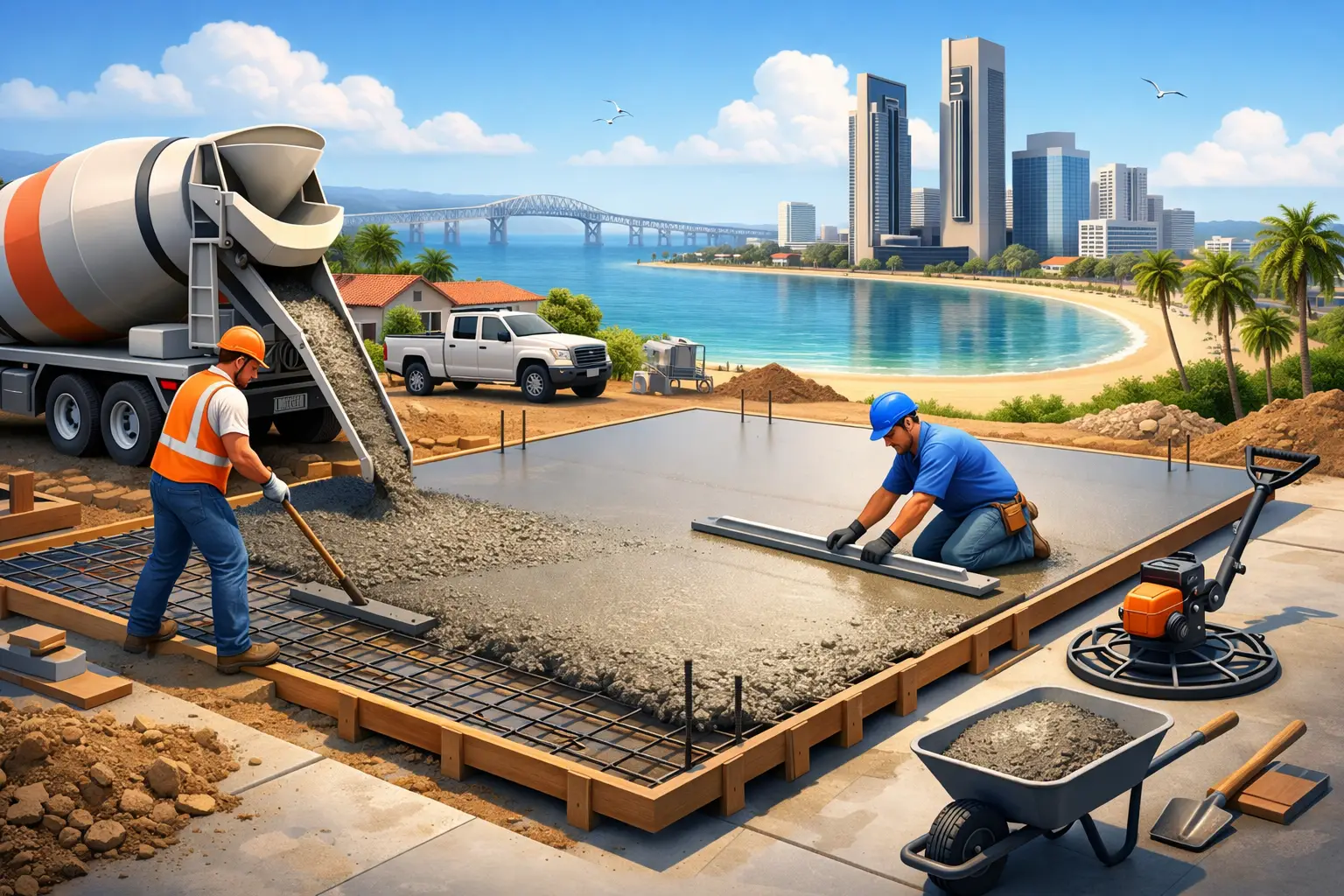
The site has to be cleared correctly. If there is old concrete, debris, unstable fill, roots, or soft ground left in place, the slab is already at a disadvantage. After that comes grading and compaction. The subgrade needs to be shaped for drainage and compacted for support. Depending on the application, base material may also need to be installed and compacted to create a more stable platform.
Then comes formwork and reinforcement. The forms need to hold the line and elevation. Reinforcement needs to be placed where it actually performs, not dropped haphazardly during the pour. That sounds basic, but rushed crews get these details wrong every day.
Concrete placement and finishing also need to match the conditions. Hot weather, wind, and direct sun can change working time fast in South Texas. A contractor needs to manage timing, crew coordination, and curing practices so the slab gains strength the way it should.
Choosing the right slab for the job
Not every project needs the same slab design, and that is where an honest contractor earns trust. Some jobs call for a simple pad. Others need thicker sections, stronger reinforcement, saw-cut control joints, or integration with footings and foundation elements.
For example, a backyard patio may prioritize drainage, surface finish, and long-term crack control. A metal building slab may need tighter elevation control, stronger load support, and coordination with other trades. A commercial dumpster pad or loading area may require heavier-duty concrete construction because repeated point loads wear down light residential-style slab work quickly.
There is always a balance between budget and performance. Spending more is not automatically better, but underbuilding a slab usually costs more once repairs, removal, and replacement enter the picture. A solid contractor explains the difference clearly and recommends what fits the actual use of the slab.
Signs a slab contractor is worth hiring
If you are comparing bids, price should not be your only filter. The lowest number can become the most expensive option if the work fails early or creates drainage and structural problems.
A qualified concrete slab contractor in Corpus Christi should be able to explain site prep, reinforcement, thickness, drainage, finish options, timeline, and what is included in the scope. Clear communication matters because vague proposals leave room for shortcuts.
You should also expect professionalism on the jobsite. That means showing up on schedule, protecting adjacent areas, handling demolition or removal safely if needed, and keeping the work area organized. On commercial sites especially, safety and coordination are not extras. They are part of doing the work right.
It also helps when one contractor can manage related work instead of splitting responsibility across multiple crews. If a slab project requires demolition, grading, site prep, concrete placement, and cleanup, having one accountable team reduces delays and finger-pointing.
Why repairs are not always enough
Some slab issues can be repaired. Others need replacement. The right answer depends on the extent of damage, the cause of the problem, and how the slab is used.
Surface scaling, minor cracking, or isolated edge damage may be repairable in some cases. But if the slab is settling, breaking apart, draining poorly, or failing under load, patchwork usually buys time rather than solving the actual issue. That is especially true when the original base preparation was weak.
A good contractor will not push replacement on every project. But they should be honest when repairs are likely to fail because the underlying support conditions are wrong. It is better to hear that upfront than spend money twice.
Residential and commercial owners need different answers
A homeowner usually wants a slab that looks clean, drains properly, and lasts. A commercial owner or property manager often has a wider checklist that includes access, traffic loads, business disruption, safety, code considerations, and scheduling around operations.
That difference matters when choosing a contractor. Residential slab work still requires serious planning, but commercial work often demands tighter logistics and stronger coordination. If trucks, dumpsters, equipment, tenant access, or customer parking are involved, the contractor needs to think past the pour itself.
That is one reason full-service crews tend to bring more value. If they understand demolition, grading, paving, and structural flatwork as connected services, they can spot issues early and keep the project moving without creating avoidable delays.
What to ask before you hire a concrete slab contractor Corpus Christi team
Before you move forward, ask how the contractor plans to prepare the site, what reinforcement they recommend, how drainage will be handled, what finish is appropriate, and how long curing and access restrictions will last. Ask what could change the price and what conditions might require a different approach once the site is opened up.
Those answers tell you a lot. Contractors who know their work will talk plainly and specifically. Contractors who are guessing usually stay vague.
If you are hiring for a larger site or business property, ask about scheduling, safety practices, equipment access, and how the crew will minimize disruption. A slab project should not create unnecessary headaches around the rest of the property.
For property owners across the Coastal Bend, this is where a contractor like Haylo Construction stands out. The value is not just in placing concrete. It is in handling the ground work, drainage, reinforcement, and execution with the kind of discipline that keeps the finished slab performing long after the forms are gone.
A slab is not the place to gamble on shortcuts. Whether you are building a patio, equipment pad, driveway extension, or commercial concrete surface, the right contractor should give you a straight scope, solid preparation, and work built for local conditions. If the job is worth doing, it is worth pouring on a foundation you can trust.
One comment
[…] well-built concrete lot is not just a slab poured over dirt. It depends on excavation, stable subgrade preparation, base compaction, reinforcement, joint […]