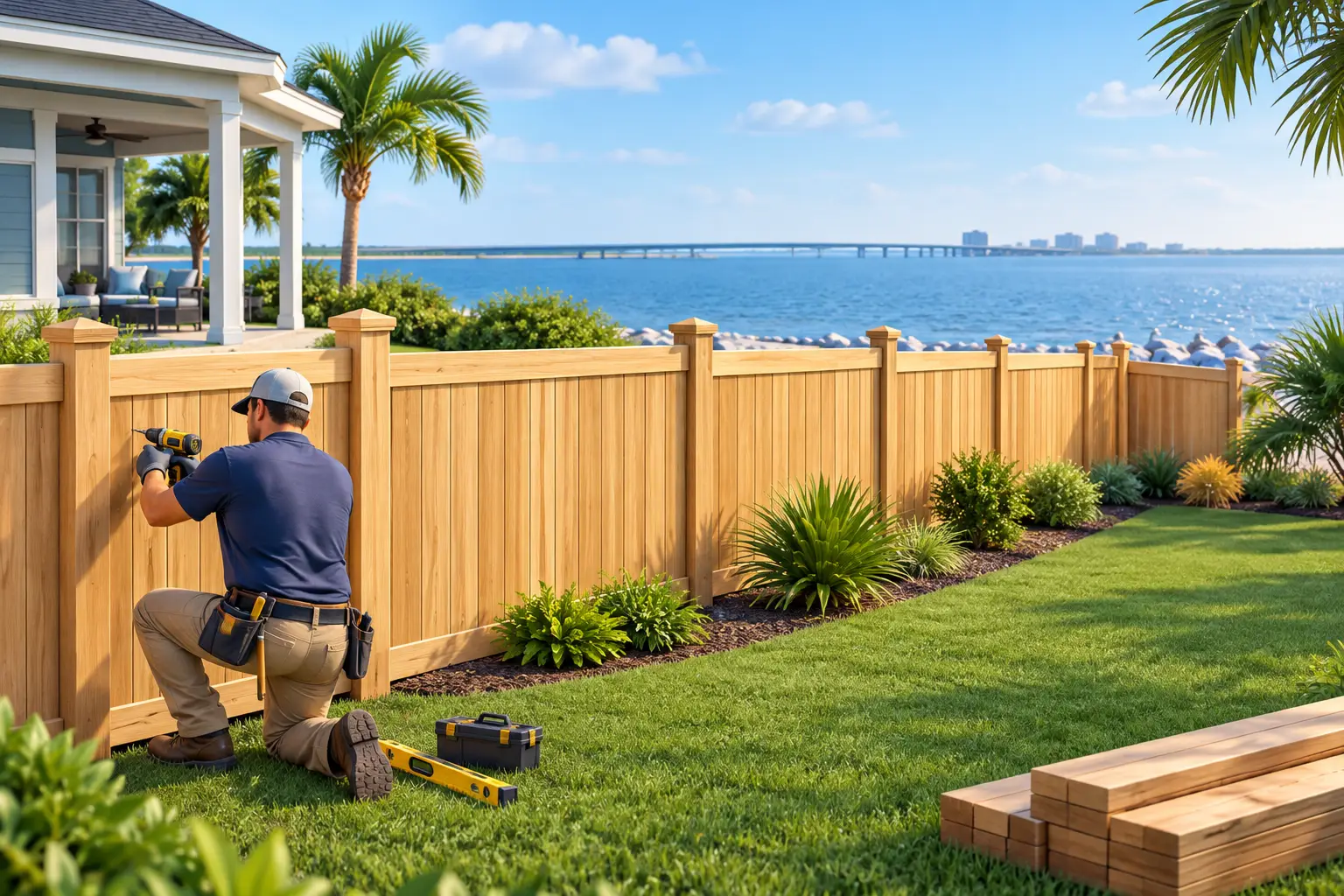
A fence in South Texas has to handle more than marking a property line. Coastal Bend fence installation means planning for high winds, salt-heavy air, shifting soil, hard rain, heat, and the daily wear that comes with pets, kids, tenants, customers, and vehicles. A fence that looks straight on installation day can start leaning, warping, or failing early when those conditions are ignored.
For homeowners and commercial property owners, the goal is not simply to put up panels. The goal is a secure, clean-looking boundary built with the right material, post depth, layout, drainage awareness, and gate hardware for the site.
Start With the Conditions on Your Property
The Coastal Bend is tough on exterior construction. Wind loads can put constant pressure on long runs of privacy fencing. Humidity and rain expose weak fasteners, untreated wood, and poorly protected steel. Soil conditions vary from one property to the next, so a post setting method that works in one yard may not be the right answer a few blocks away.
Before installation begins, the site needs a practical review. That includes locating property lines, checking slopes, identifying drainage paths, noting utility locations, and reviewing existing concrete, trees, irrigation, and structures. These details affect the layout and determine whether standard posts are sufficient or whether the project needs deeper settings, reinforced posts, custom transitions, or a different fence design.
A fence should work with the grade, not fight it. Water that repeatedly ponds against posts can shorten their service life. A fence line installed without accounting for a slope can leave large gaps below the panels or create an uneven, unfinished appearance. Proper planning prevents expensive corrections after the materials are already installed.
Choose a Fence Material for the Job
There is no single best fence for every Coastal Bend property. The right choice depends on privacy needs, security expectations, maintenance tolerance, budget, local exposure, and the purpose of the space.
Wood Fencing
Wood remains a practical choice for residential privacy and a traditional finished look. It can be built in several heights and styles, and it works well when a homeowner wants full visual separation from neighboring properties. The trade-off is maintenance. Coastal humidity, direct sun, and wind can cause boards to swell, dry out, crack, or twist over time.
Good wood fence work starts with quality lumber, sound framing, properly set posts, and fasteners that resist corrosion. Sealing or staining on an appropriate schedule helps protect the fence and maintain its appearance. Wood is often the right fit when privacy matters most, but it should be installed with realistic expectations about upkeep.
Vinyl Fencing
Vinyl offers a clean, consistent appearance and does not require painting or staining. It can be a strong option for homeowners who want lower routine maintenance. However, not all vinyl products perform the same way under heat and wind pressure. Quality materials and solid post support matter, especially along open lots with little wind protection.
Vinyl can cost more upfront than some wood options, and repairs may require matching specific panel profiles or colors. For the right property, though, it provides a polished privacy or decorative boundary with less ongoing maintenance.
Metal and Chain Link Fencing
Metal fencing is often the practical choice for security, visibility, commercial sites, side yards, pet areas, and larger properties. Chain link is durable, economical, and effective when privacy is not the primary concern. Privacy slats or windscreen can be added in some applications, but those additions increase wind resistance and should be planned carefully.
Ornamental metal fencing provides a more finished appearance while maintaining sightlines. It works well around pools, commercial entries, front yards, and areas where security and curb appeal both matter. Coastal air can be hard on exposed metal, so galvanized or properly coated materials are worth the investment.
Posts and Footings Carry the Load
Fence panels get the attention, but posts do most of the structural work. When posts are too shallow, spaced incorrectly, or set without adequate support, the fence is more likely to rack, sag, or lean as weather conditions change.
Post depth depends on fence height, material, soil, and expected wind exposure. Taller privacy fences and gates place more force on the structure than a short decorative run. Corner posts, end posts, and gate posts deserve additional attention because they carry concentrated loads. A gate that drags or will not latch is often a post and framing problem, not just a hardware problem.
Concrete-set posts can provide dependable support when installed correctly, but the installation still needs to account for drainage and soil conditions. Poorly placed concrete can hold water around a wood post or create problems when the surrounding soil moves. The right approach depends on the fence system and site. This is where experienced installation matters more than a one-size-fits-all method.
Gates Need More Than Basic Hardware
A fence is only as useful as its access points. Whether it is a walk gate for a backyard, a double gate for equipment access, or a commercial entry gate, it needs room to operate, reliable hinges, a secure latch, and posts built to carry its weight.
Plan gate locations around how the property is actually used. A narrow gate may be enough for trash bins and foot traffic, while a homeowner with a boat, trailer, or lawn equipment may need a wider opening. Commercial properties may need vehicle access, controlled entry, or a layout that keeps pedestrians separate from deliveries.
Installing a gate after the fence is complete can create avoidable layout problems. It is better to make gate access part of the original plan, including clearance from driveways, concrete pads, landscaping, and drainage features.
Know When Permits, HOA Rules, and Property Lines Apply
Some fence projects require permits, inspections, or approval from a homeowners association. Requirements can vary by city, neighborhood, fence height, location on the lot, and whether the project is near a corner, easement, pool, or commercial access point.
Do not assume an old fence marks the true property line. Existing fences are sometimes installed inside or outside of a boundary, and replacing one in the same location may not eliminate the issue. If there is uncertainty, verify the boundary before building. A survey can be a worthwhile safeguard when the fence is a major investment or the property line is disputed.
Utility locating is another step that should never be skipped. Fence post holes can interfere with buried lines, irrigation, and other site features. Safe work begins before the first hole is dug.
A Clean Installation Protects the Rest of the Property
Fence work can affect landscaping, sidewalks, driveways, and nearby structures if the crew does not plan the job carefully. Access routes, material staging, demolition of an old fence, and debris removal all need to be handled with the same discipline as the installation itself.
For replacement projects, old posts and footings may need removal before the new layout can be established. In some cases, damaged concrete, poor drainage, or an outdated gate location should be addressed at the same time. Combining related site work can prevent a new fence from being built around an existing problem.
Haylo Construction approaches fence and gate projects with the same focus used on concrete and site-related work: clear scope, dependable execution, and durable results built for local conditions.
Get the Scope Right Before Work Starts
A useful fence estimate should identify the material type, approximate height and length, gate locations, removal needs, post and framing approach, and any site conditions that may affect the work. The lowest number is not always the best value if it leaves out demolition, hauling, gate reinforcement, site preparation, or needed repairs.
Be clear about what the fence needs to accomplish. Privacy, pet containment, pool safety, security, appearance, and access are different needs, and each can change the recommended design. A contractor should ask practical questions before recommending a solution.
A well-built fence creates privacy, security, and a finished property line without becoming another maintenance headache. For Coastal Bend properties, the difference comes down to sound layout, durable materials, secure posts, and workmanship that respects the site. Request an estimate before a small fencing issue turns into a larger property problem.