A foundation rarely settles without a reason. A crack in a wall, a door that starts sticking, or a low spot along a slab can be an early sign that the ground beneath a structure is moving. So, what causes foundation settlement? Most often, it comes down to changes in soil support, water movement, drainage, or how the site was prepared before concrete was placed.
In Corpus Christi and across the Coastal Bend, property owners deal with conditions that can be hard on foundations: periods of intense rain, long dry stretches, coastal moisture, variable soils, and older drainage systems. Not every crack means a foundation is failing, but changes should be taken seriously before they become expensive structural repairs.
What Causes Foundation Settlement?
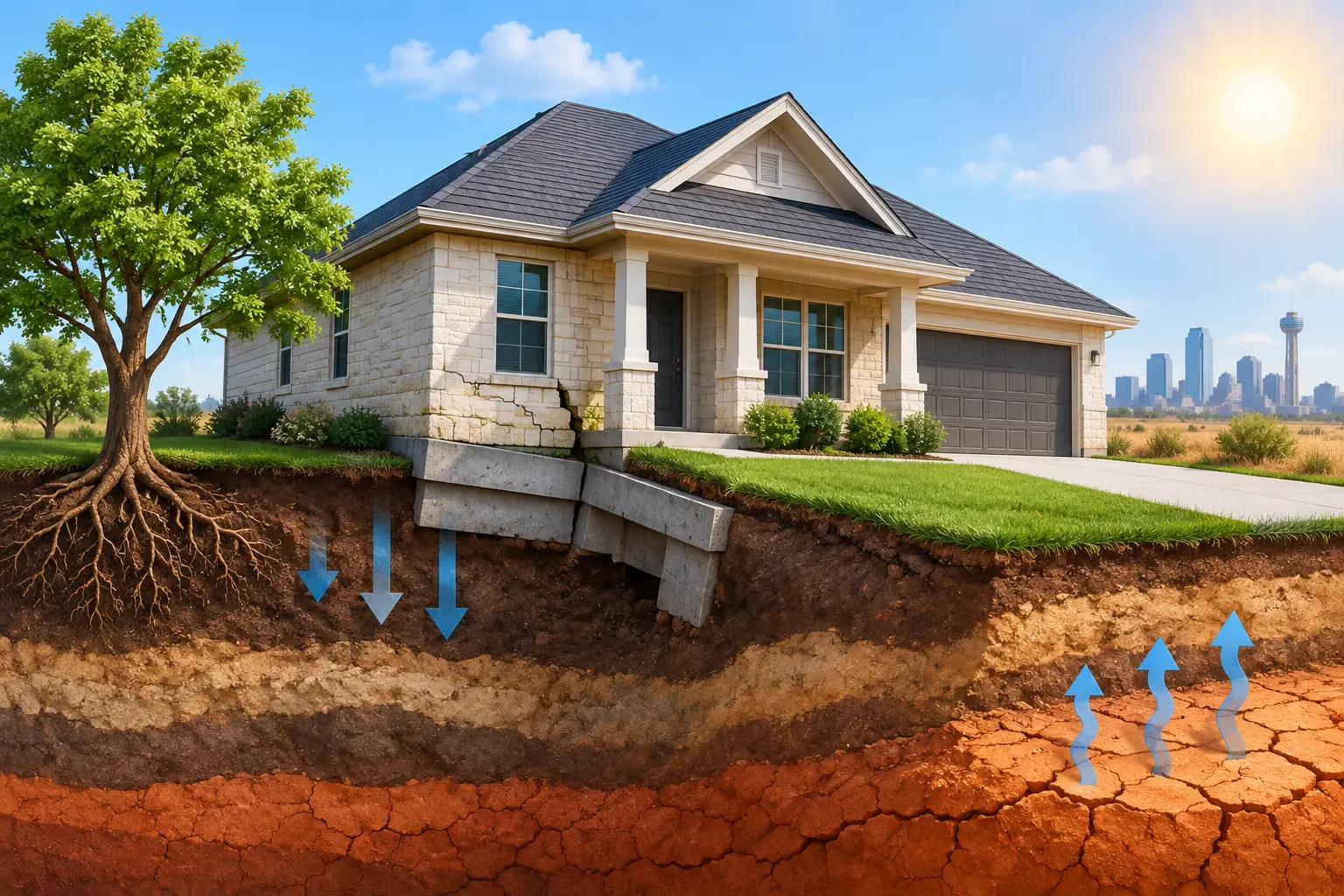
Foundation settlement occurs when the soil beneath a building, slab, driveway, or other concrete structure can no longer support it evenly. The concrete does not have to move much for problems to show up. Even a small amount of uneven movement can create cracks, slope floors, separate trim from walls, or leave gaps around doors and windows.
Uniform settlement means a structure moves down evenly. This may not create major structural stress, although it can still affect drainage, utility connections, or entry elevations. Differential settlement is the bigger concern. It happens when one portion of a foundation moves more than another, placing the slab and framing under stress.
The cause matters because the right repair depends on why movement happened. Adding concrete, filling a crack, or installing piers without addressing drainage, soil moisture, or a plumbing leak can leave the underlying problem in place.
Soil Movement and Poor Compaction
Soil is the foundation below the foundation. If it was not properly compacted during site preparation, it can compress over time under the weight of a home or commercial structure. This is especially common where loose fill was placed to level a lot, cover old excavation, or build up a low area without proper moisture conditioning and compaction.
Poorly compacted fill may look stable at first. Then rainfall, irrigation, vibration, and normal loading cause it to consolidate. The slab above it can settle in isolated areas, often near additions, utility trenches, porch slabs, or parts of a property built on disturbed ground.
South Texas soils can also react strongly to moisture changes. Clay-rich soils expand as they absorb water and shrink as they dry. That repeated cycle does not always look like traditional downward settlement, but the result can be similar: uneven support beneath a slab. A foundation may lift during a wet period, settle during drought, and crack as the soil moves in different directions.
Water Is Often the Main Driver
Too much water and too little water can both create foundation problems. Water that pools near the perimeter can soften or erode supporting soil. On the other hand, extended dry weather can cause certain soils to shrink away from the foundation, leaving gaps or reducing support.
Common sources of excess water include roof runoff, clogged gutters, downspouts that discharge next to the slab, low yard grades, damaged drainage lines, and irrigation that repeatedly soaks one side of a building. A leaking water or sewer line below the slab can be even more serious because it may saturate soil where the issue is not visible from the surface.
After a heavy coastal rain, walk the property and look for standing water against the building, washout near the slab edge, or downspouts dumping into flower beds beside the foundation. Water should move away from the structure in a controlled manner. The exact drainage solution depends on the site, but the goal stays the same: prevent concentrated water from changing the soil support under the slab.
Trees, Landscaping, and Uneven Moisture
Large trees near a structure can contribute to uneven soil moisture. The issue is usually not that roots physically lift a foundation. More often, mature roots draw significant moisture from the soil, causing dry-side shrinkage near one portion of the slab while another area remains wetter.
That does not mean every tree near a house needs to come down. Tree removal has cost, shade, and drainage trade-offs. It does mean the tree’s size, distance from the foundation, species, and the property’s soil conditions should be considered when movement appears on one side of the structure.
Landscaping can also direct water toward the building. Deep planter beds, heavy mulch buildup, raised soil against siding, and irrigation heads aimed at the slab can all keep perimeter soil too wet. A clean grade and consistent moisture management are generally more useful than trying to keep every inch of the yard perfectly dry.
Plumbing Leaks and Utility Trenches
A hidden plumbing leak can wash out soil or create a saturated pocket under a slab. Signs may include an unexplained increase in water use, warm flooring, damp areas, mold odors, or settlement concentrated near kitchens, bathrooms, laundry rooms, and utility lines. Sewer leaks can have a similar effect, particularly in older properties.
Utility trenching deserves attention as well. Soil disturbed for water, sewer, electrical, or drainage work must be properly backfilled and compacted. If it is not, the trench can settle after the work is complete, creating cracks in slabs, sidewalks, driveways, and parking areas above it.
For commercial sites, settlement around utility runs can become a safety issue. A low area in a parking lot can collect water, worsen pavement failure, and create a trip hazard. Addressing the drainage and base condition early is usually more cost-effective than repeatedly patching the surface.
Construction, Design, and Site Changes
Foundation performance starts long before the concrete truck arrives. Inadequate excavation, weak subgrade preparation, missing reinforcement, improper concrete placement, or poor curing can leave a slab more vulnerable to cracking and movement. These conditions do not guarantee settlement, but they reduce the margin for error when soils and water conditions change.
Later site changes can cause trouble too. Adding a heavy room addition, masonry feature, retaining wall, equipment pad, or loaded storage area can place new demands on soil that was never prepared for that weight. Removing soil near a footing, changing a swale, or installing hardscape that redirects runoff can also alter how water moves around the structure.
This is why a repair plan should account for the whole site, not just the visible crack. The slab, grading, drainage, utilities, and surrounding concrete all work together.
Signs That Settlement Needs Attention
Hairline concrete cracks are common and may be cosmetic, especially in exterior flatwork. The concern increases when cracks widen, continue to grow, run diagonally through interior walls, or appear alongside other changes. Watch for doors or windows that suddenly bind, floors that feel out of level, brick or siding separation, gaps at trim, and cracks that extend from a slab into walls.
Outside, look for separation between a driveway and garage slab, steps pulling away from the structure, uneven patios, or water collecting in new low areas. Document changes with dated photos and simple measurements. That record can help determine whether movement is active and where it is occurring.
When symptoms are significant, recurring, or concentrated in one area, bring in the appropriate professional. A qualified foundation specialist can assess visible conditions, while a structural engineer may be needed when there is substantial movement, major cracking, or questions about structural safety. A plumber should evaluate suspected under-slab leaks before foundation repair decisions are made.
Fix the Cause Before Repairing the Surface
Crack sealant and cosmetic patching can improve appearance, but they do not stop settlement. The practical order of work is to identify the cause, correct water or utility issues, stabilize soil support where necessary, and then repair finishes or concrete surfaces.
For one property, that may mean regrading the yard and extending downspouts. For another, it may involve plumbing repair, drainage installation, slab lifting, piering, or removal and replacement of failed concrete. There is no one-size-fits-all fix, and a contractor who promises one without looking at the site is not giving you a reliable plan.
If you are seeing movement around a home, building, driveway, or parking area, do not wait for a small drainage issue to become structural damage. A careful on-site evaluation can separate normal concrete aging from a condition that needs real corrective work. Haylo Construction can help property owners assess site drainage, concrete damage, and practical repair options built for South Texas conditions.