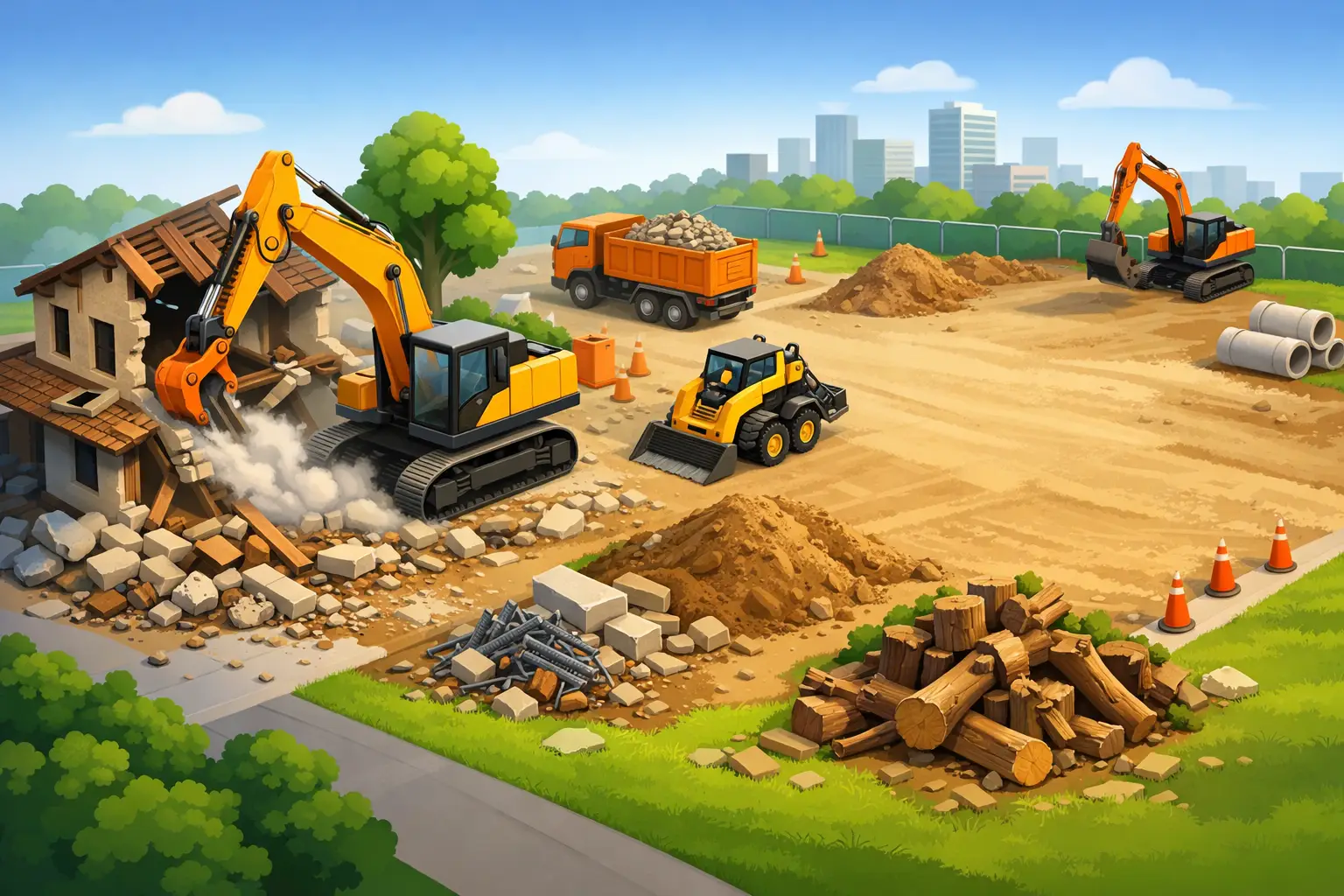
An old slab with hidden rebar, a failing structure, and years of accumulated debris can turn a straightforward construction plan into an expensive delay. Demolition and site clearing are where a project either gets put on solid ground or starts with problems buried beneath the surface. Before new concrete, foundations, parking areas, or improvements can last, the existing site has to be removed, cleaned, and prepared correctly.
For property owners across the Coastal Bend, that work also has to account for drainage, changing soil conditions, coastal weather, access restrictions, and the practical demands of the next phase. A clean-looking lot is not necessarily a build-ready lot. The difference is in the planning and execution behind it.
What Demolition and Site Clearing Should Accomplish
Demolition is more than breaking concrete or taking down a structure. It is a controlled process that removes the right materials while protecting the parts of the property that stay. Site clearing follows by removing debris, vegetation, unsuitable material, and obstacles that could interfere with construction, drainage, or access.
The goal is a site that is safe, accessible, and ready for the work ahead. Depending on the project, that may mean removing a damaged driveway before a reinforced replacement, clearing a commercial lot for paving, demolishing an outbuilding, or preparing land for a new slab or foundation.
A properly managed job addresses four things at once: safety, disposal, site conditions, and future construction. Skipping any one of them can create avoidable costs later. For example, leaving buried concrete, roots, unstable fill, or poor drainage in place may cause settlement, water problems, or delays once new work begins.
Start With the Scope, Not the Equipment
The right demolition method depends on what is being removed and what needs to remain. A detached shed on an open lot is a different job than a concrete patio tight against a home, a commercial building near active traffic, or a parking area with underground utilities.
Before equipment arrives, the contractor should review the site boundaries, access points, material types, nearby structures, utilities, drainage paths, and intended use of the finished area. This early assessment helps determine whether the job calls for selective demolition, full removal, saw cutting, excavator work, hand removal near sensitive areas, or a combination of methods.
Selective demolition is often the better choice when only part of a structure or hardscape needs to go. It allows crews to remove damaged concrete, an old addition, curbs, fencing, or pavement sections without disturbing sound work nearby. Full demolition makes sense when a structure or surface has reached the end of its useful life and the site needs a clean reset.
This is where experience matters. Fast removal is useful, but careless removal can damage utilities, adjacent concrete, trees, fencing, or structures intended to remain. The best approach is not always the biggest machine. It is the method that removes the material efficiently while keeping the rest of the property protected.
Safety and Utility Planning Come First
Demolition work creates real hazards: falling material, dust, unstable structures, heavy equipment movement, exposed sharp metal, and unknown underground conditions. A professional crew plans for those hazards before the first cut or pull.
Utilities need to be identified and addressed before excavation or structural removal begins. Water, gas, electric, sewer, irrigation, and communication lines may cross an area that appears clear from the surface. Utility coordination is not a formality. Striking a line can stop a project, create a dangerous condition, and add significant repair costs.
The work area should also be controlled. That may include separating equipment routes from pedestrians, protecting nearby structures, managing debris piles, and keeping unauthorized people out of active demolition zones. On occupied residential and commercial properties, communication is just as important as barriers. Owners and tenants need to know when access will change, where equipment will operate, and what temporary disruptions to expect.
Dust control deserves attention in South Texas, especially during dry and windy conditions. Water application, organized loading, and prompt debris removal help keep the site cleaner and reduce unnecessary impact on neighboring properties.
Clearing the Site for Lasting Construction
Once demolition is complete, site clearing prepares the ground for its next purpose. This may include removing brush, trees, stumps, roots, loose debris, abandoned materials, old fencing, unsuitable soil, or buried construction waste. It can also involve rough grading to establish access and direct water away from the planned structure.
Not every site needs the same level of clearing. A homeowner replacing a driveway may only need the old concrete removed, the base evaluated, and the area properly graded. A commercial property preparing for new paving or construction may require broader clearing, excavation, material hauling, and compaction across the entire work zone.
The key question is not simply, “Is the lot empty?” It is, “Is the site stable and properly shaped for what comes next?” A cleared site with soft spots, buried debris, poor slope, or inadequate drainage can still compromise a new slab, driveway, parking lot, or foundation.
Grading and Drainage Are Part of the Job
Water is one of the main reasons exterior construction fails early. If water collects against a foundation, crosses a driveway, pools in a parking area, or saturates the subgrade, it can weaken the base and create long-term maintenance problems.
Proper grading directs water where it needs to go without creating a new issue for adjacent property. The required slope depends on the site, local drainage conditions, existing elevations, and the type of construction being installed. On coastal properties, the plan may also need to account for heavy rain events and soil that holds moisture differently from one area to the next.
Grading should be completed with the finished project in mind. A site prepared for a concrete patio does not need the same layout as a site prepared for a building pad, retaining wall, or commercial parking lot. Planning backward from the final use helps prevent costly rework.
Base Preparation Cannot Be an Afterthought
After clearing and rough grading, the exposed ground may need further preparation. Weak or organic material may need removal. The subgrade may need shaping and compaction. Depending on the project, a properly prepared base material may be installed before concrete or paving work begins.
This step is not always visible once the project is finished, but it has a direct effect on durability. Concrete is strong, but it cannot correct an unstable base underneath it. A well-built driveway, slab, or parking surface starts with the support below it.
Debris Removal and Responsible Disposal
Demolition creates more material than many owners expect. Concrete, asphalt, lumber, metal, drywall, brush, fencing, fixtures, and general debris must be sorted, loaded, hauled, and disposed of properly. Leaving piles on site may seem like a way to save money, but it can slow the next trade, interfere with grading, and create safety concerns.
Material handling should be included in the job plan from the beginning. Some concrete and metal can be directed to appropriate recycling streams when practical. Other materials require specific disposal procedures. If suspect materials are found, such as damaged insulation, old flooring, chemicals, or unknown containers, work may need to pause until they can be evaluated and handled correctly.
Property owners should ask what removal includes. Does the scope cover hauling all debris? Will the area be broom-clean, rough graded, or fully ready for the next construction phase? Is topsoil, base material, or final grading included? Clear answers prevent the common problem of assuming a demolition quote includes site preparation when it only includes removal.
When to Combine Demolition With Concrete Work
There is a practical advantage to using one contractor for removal, site preparation, and replacement concrete. The demolition plan can match the dimensions, elevations, drainage needs, and reinforcement requirements of the new work. That reduces handoffs and helps keep accountability clear from the old surface through the finished installation.
For a driveway replacement, for example, the job may include saw cutting where needed, removing existing concrete, correcting the base, establishing drainage, installing forms and reinforcement, and placing new concrete. Each stage affects the next. Treating them as separate tasks without coordination can create mismatched elevations or inadequate preparation.
Haylo Construction approaches demolition and site work with that full-project mindset. Whether the next step is a new slab, driveway, parking area, foundation, fence line, or open build site, the work should be planned to support a durable result rather than simply clear space quickly.
Questions Worth Asking Before Work Begins
A dependable contractor should be able to explain the work in plain terms. Ask what will be removed, how utilities and nearby structures will be protected, where debris will go, and what condition the site will be left in. Also ask how grading and drainage will be handled if new concrete or construction follows.
Permitting requirements vary by location and project type. Larger structural demolition, commercial work, changes involving public access, or projects near utility infrastructure may require additional coordination. A qualified local contractor can help identify the practical requirements before the schedule is set.
Price matters, but the lowest quote is not always the lowest total cost. A quote that leaves out hauling, base correction, utility precautions, grading, or cleanup can become more expensive once the work is underway. Compare scopes closely, not just final numbers.
A cleared site should give you confidence, not a new list of unknowns. When the removal, hauling, grading, and preparation are handled with care, the next phase has a solid place to start. Before scheduling your project, request a clear on-site assessment and make sure the work plan matches the property you want to build or improve.