Concrete usually does not fail all at once. It starts with small chips, flaking, or surface pop-outs that seem minor until the damage spreads. If you are asking what causes concrete spalling, the short answer is this: moisture gets in, pressure builds, and the surface starts to break away. The real answer is more specific, because spalling is usually tied to a mix of water intrusion, poor installation, age, heavy use, and environmental stress.
For property owners, that matters because spalling is not just a cosmetic issue. In some cases, it is a surface-level repair. In others, it points to deeper structural wear, rusting reinforcement, drainage problems, or a slab that was never built for the conditions it faces.
What causes concrete spalling in the first place?
Concrete spalling happens when the surface layer separates, cracks, or flakes off. You may see peeling, scaling, broken edges, shallow pits, or chunks missing from a driveway, walkway, patio, parking lot, foundation wall, or slab. The damage can stay localized, or it can keep spreading if the root cause is still active.
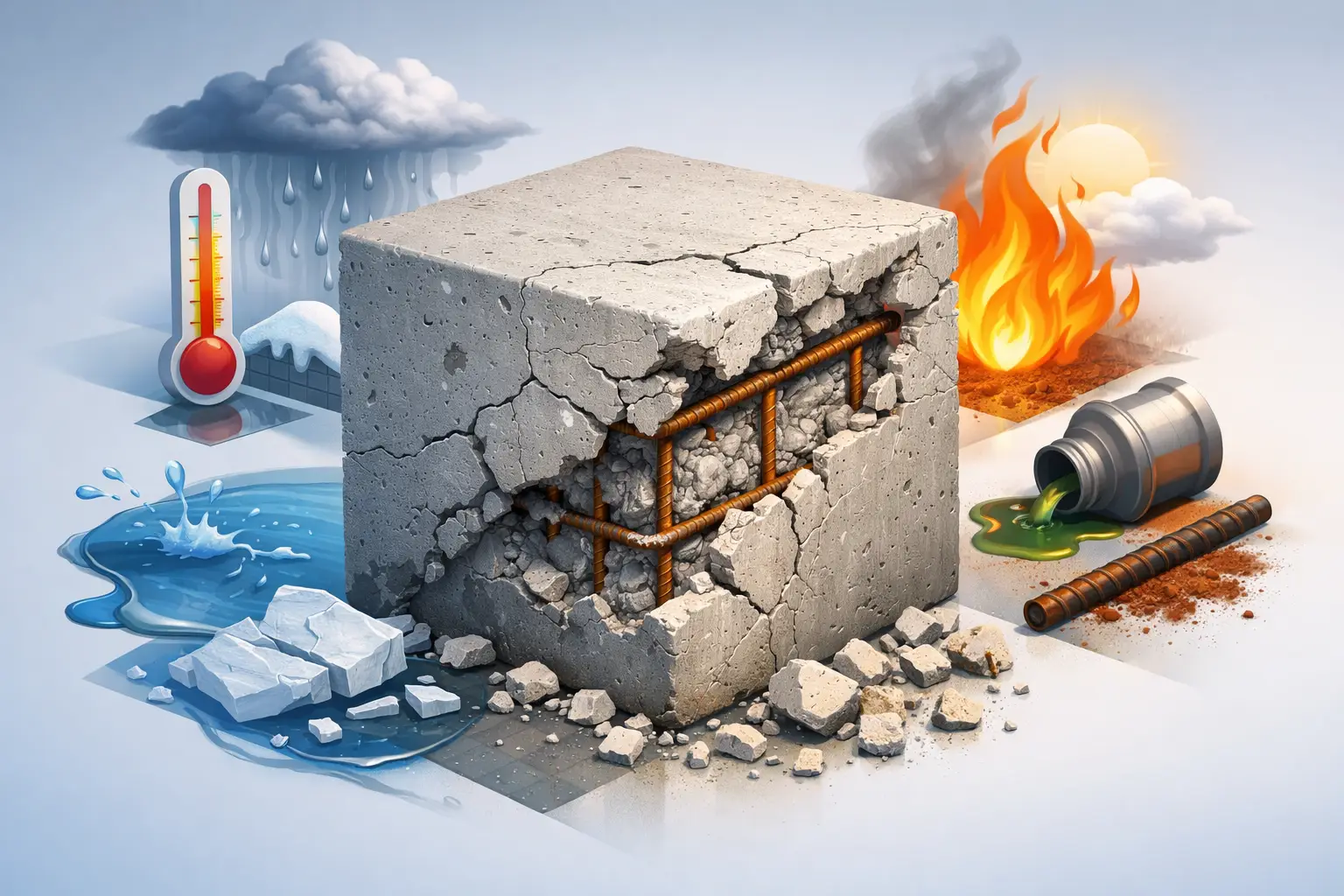
One of the most common causes is water. Concrete is strong, but it is still porous. When water enters through tiny cracks, weak surface areas, or unsealed sections, it creates problems over time. If steel reinforcement is present, that moisture can start corrosion. As steel rusts, it expands. That expansion pushes outward on the surrounding concrete until the surface cracks and breaks loose.
Even where there is no exposed reinforcement, repeated moisture exposure can weaken the top layer. In coastal areas and humid South Texas conditions, concrete often deals with a hard combination of moisture, salt in the air, heat, and changing ground conditions. That does not mean every slab will spall, but it does mean good installation and drainage matter a lot more than many property owners realize.
Poor mix design and weak finishing work
Not all spalling starts years later. Sometimes the problem is built into the slab from day one.
If the concrete mix has too much water, the finished surface may look acceptable at first but cure weaker than it should. Overwatering reduces strength and can leave the top layer more likely to scale, dust, or break apart under traffic and weather exposure. The same goes for poor finishing practices. If a contractor seals in bleed water by finishing too early, the surface can end up soft and prone to delamination.
Improper curing is another common issue. Concrete needs time and controlled moisture conditions to gain strength. When curing is rushed, skipped, or handled poorly in hot weather, the surface can dry too fast and lose durability. That may not show up immediately, but it often shows up later as flaking, shallow cracking, and early surface failure.
This is one reason concrete work should never be treated as just a pour-and-go job. Good prep, reinforcement, grading, joint placement, mix selection, and curing all affect whether the slab holds up.
Water intrusion and drainage problems
If there is one issue that shows up again and again behind spalling, it is water getting where it should not.
Poor drainage keeps moisture sitting on the slab or collecting around its edges. That can happen when a driveway or patio is pitched incorrectly, when downspouts discharge too close to the concrete, or when surrounding grades funnel water toward the structure instead of away from it. On commercial properties, clogged drains and low spots in paving can create the same problem.
Standing water slowly works into surface defects. Once inside, it weakens the concrete matrix, exposes fine cracks to more wear, and can accelerate corrosion around reinforcing steel. In some cases, the visible spalling is really just the symptom. The actual problem is the drainage pattern around the slab.
That is why a proper repair should not focus only on patching the damaged spot. If the drainage issue stays in place, the repair may fail right along with the original surface.
Corrosion of reinforcing steel
When spalling appears on structural concrete, rusting steel is a major concern. Reinforcing bars are placed inside concrete to increase strength, but they need enough concrete cover and protection from moisture. If water and oxygen reach the steel, corrosion can begin.
Rust takes up more space than the original steel. That expanding pressure creates internal stress, and the concrete starts to crack, lift, and break off. You may first notice narrow cracks running in a line, then loose pieces, then exposed rebar.
This kind of spalling is more serious than simple surface wear. It can affect load-bearing performance if it is ignored too long. Foundations, retaining walls, elevated slabs, and structural flatwork should be evaluated carefully when spalling exposes steel or shows repeated cracking in the same area.
Heavy loads, impact, and daily wear
Some concrete spalls because it is simply taking more abuse than it was designed to handle.
A residential driveway may have been poured too thin for heavy trucks, boats, RVs, or commercial vehicles. A parking lot may see constant turning pressure in the same lanes. Industrial or commercial slabs can take impact from equipment, dropped materials, or repeated hard-wheel traffic. Over time, that stress breaks down weak spots at the surface and around joints or edges.
This is where thickness, reinforcement, base prep, and intended use all come into play. Concrete that performs well for passenger vehicles is not automatically built for delivery trucks or equipment traffic. If the slab is undersized for the job, spalling can be one of the first visible warning signs.
Freeze-thaw damage is real, but not the whole story
A lot of articles point straight to freeze-thaw cycles when explaining what causes concrete spalling. That is true in colder climates, where trapped water freezes, expands, and breaks apart the surface. But for many Texas property owners, that is only part of the picture.
In this region, spalling is more often tied to moisture, salt exposure, poor drainage, improper installation, and long-term wear. Occasional cold snaps can still add stress, especially if the slab already has cracks and saturated areas, but they are usually not the only cause.
That distinction matters because the right repair depends on the actual source of failure. If the issue is corrosion or bad drainage, treating it like simple weather wear will not solve much.
Signs the problem is getting worse
Small spalls do not always mean full replacement is necessary, but they should not be ignored. Watch for damage that expands in size, depth, or frequency. Cracks that continue to widen, rust staining, hollow-sounding areas, exposed aggregate, and surface sections that keep breaking loose are all signs that the issue may be more than cosmetic.
On foundations or structural elements, movement, water intrusion, and exposed steel raise the stakes. On driveways, parking lots, and walkways, spreading spalling can become a safety issue as well as a durability problem.
The earlier the cause is identified, the better the repair options usually are.
Repair or replacement – it depends on the cause
There is no honest one-size-fits-all answer here. Some spalling can be repaired with surface preparation, patching materials, resurfacing, and sealing. That works best when the damage is shallow and the slab underneath is still sound.
If the concrete has ongoing moisture intrusion, corroded reinforcement, poor subgrade support, widespread delamination, or major installation defects, replacement may be the better long-term call. Patching over a failing slab can look better for a while, but it often turns into repeat repair costs.
A good contractor will look at depth of damage, source of moisture, reinforcement condition, drainage, and the intended use of the slab before recommending a fix. That is especially important for commercial sites and high-traffic residential areas where durability matters more than a temporary cosmetic patch.
How to reduce the risk of spalling
The best prevention starts before the concrete is poured. Proper site prep, the right base, correct mix design, reinforcement where needed, solid joint planning, and careful finishing all make a difference. After installation, drainage control and routine maintenance matter just as much.
Keeping water away from the slab, sealing when appropriate, addressing cracks early, and avoiding loads the concrete was not built to carry can add years to its service life. For coastal and high-humidity conditions, local experience matters. A slab that works in one region may not hold up the same way in another.
If you are seeing flaking, chipping, or broken concrete on your property, the main question is not just what causes concrete spalling. It is what is causing it on your site, under your drainage conditions, and with your level of use. Once that is clear, the right repair becomes a lot easier to get right the first time.