A concrete slab can look perfect on day one and still fail early if the ground underneath was handled the wrong way. That is why site preparation for concrete is not a side task. It is the work that decides whether a driveway, foundation, patio, or parking area stays level, drains correctly, and holds up under real use.
For property owners in South Texas, that matters even more. Coastal weather, shifting soils, heavy rain, and drainage issues can turn a basic concrete project into an expensive repair if the site is not prepared with care. Good concrete starts before the first truck shows up.
What site preparation for concrete actually includes
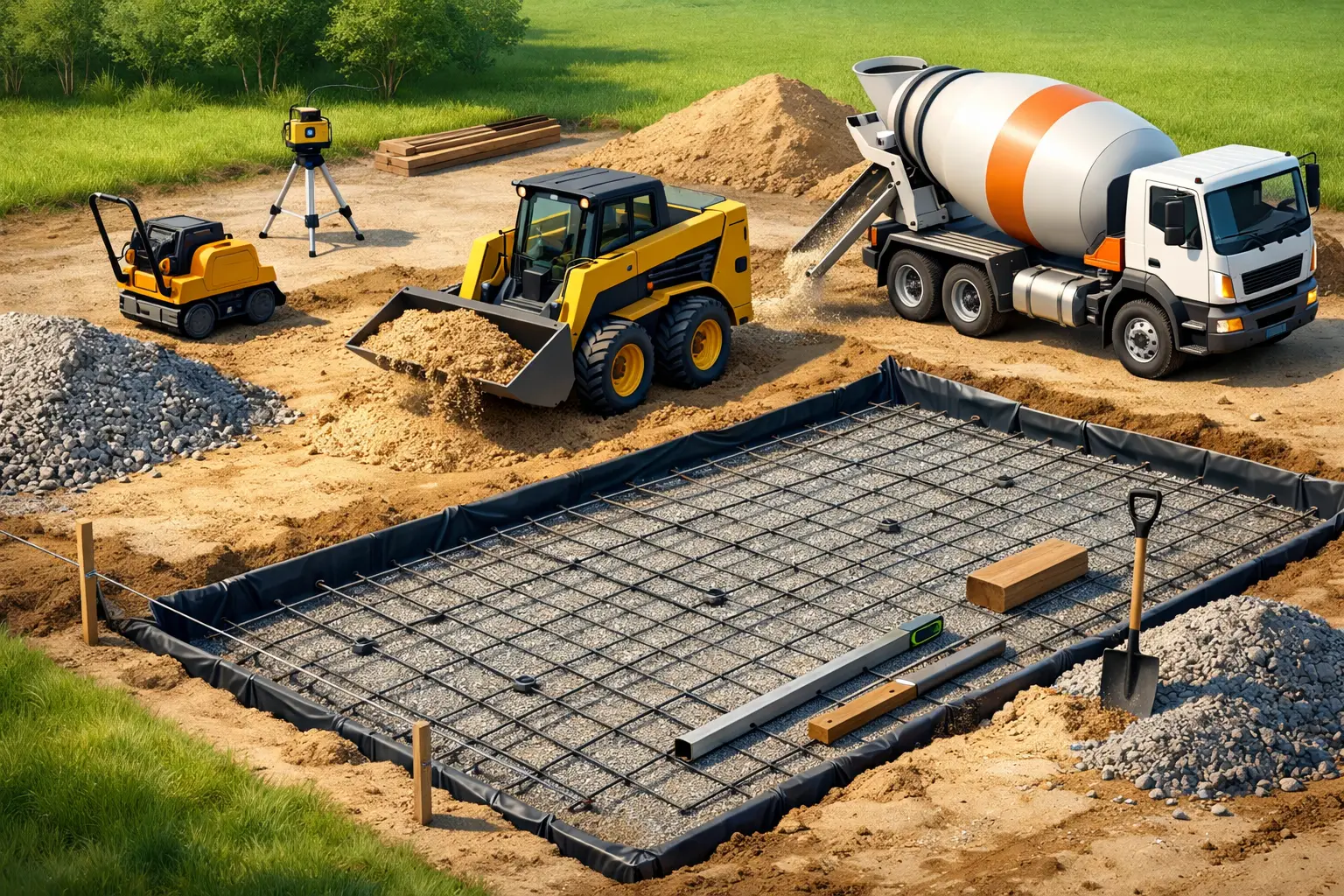
A lot of people think concrete work starts with forms and a pour. In reality, the first phase is evaluating the site and building a stable base. That means clearing the area, checking grade, managing drainage, removing weak or organic material, compacting the subgrade, and installing the right base material for the application.
The exact process depends on the project. A residential patio does not need the same prep as a commercial parking lot. A slab for a shed is different from a house foundation. But the principle is the same in every case – concrete performs better when the ground below it is consistent, compacted, and properly shaped.
Skipping prep is where trouble starts. You may see cracking, settlement, standing water, edge failure, or erosion around the slab. Some cracking is normal in concrete. Widespread movement from poor support is not.
Why the ground under concrete matters so much
Concrete is strong in compression, but it is only as reliable as the support underneath it. If the soil shifts, washes out, or compresses unevenly, the slab moves with it. Reinforcement helps control cracking, but it does not fix a bad base.
This is where local experience matters. In Corpus Christi and surrounding areas, contractors have to account for moisture swings, salt air exposure, and drainage patterns that can change fast during storms. A site that looks dry and firm one week may soften after a heavy rain. That is why preparation should be based on actual site conditions, not assumptions.
There is also a cost trade-off worth being honest about. Better prep can increase the front-end price of a project. But it usually lowers the risk of early repairs, drainage correction, or slab replacement later. In most cases, that is the better investment.
Clearing and demolition come first
Before grading or base work begins, the site has to be cleared. That can include grass, roots, old concrete, asphalt, fencing, debris, or unstable fill. If there is an existing slab in place, demolition needs to be clean and controlled so the new work is not built on leftover weak spots.
This step is often underestimated. Buried organic material, loose rubble, or old roots can break down over time and create voids. Even small hidden pockets can lead to settlement. A professional crew will remove unsuitable material instead of burying problems under fresh concrete.
On some properties, site access also affects preparation. Tight residential lots, commercial traffic flow, underground utilities, and nearby structures all change how equipment can be used and how the work should be staged.
Grading is not just about making it look level
One of the most common misunderstandings in concrete work is the idea that flat and level mean the same thing. They do not. Many concrete surfaces need a controlled slope so water drains away from structures and does not pond on the slab.
Proper grading shapes the site before the pour so the finished concrete works with the property instead of against it. For a driveway, that may mean directing water away from the garage. For a patio, it may mean keeping runoff from collecting near the house. For commercial paving, it may involve more complex drainage planning to handle larger surface areas and traffic loads.
If grading is rushed, water usually tells the story later. Ponding water can stain surfaces, create slip hazards, soften surrounding soils, and shorten the life of the installation. In coastal areas, drainage mistakes tend to show up fast.
Subgrade preparation and compaction
Once the site is cleared and graded, the native soil or imported fill beneath the slab has to be compacted. This is one of the most important steps in the entire process. Loose soil settles. Settled soil leads to unsupported concrete.
Compaction is not guesswork. It should be done in lifts when needed, with the right equipment for the soil type and project size. Sandy soils, clay-heavy soils, and mixed fill all behave differently. Wet material may need time to dry. Dry material may need moisture conditioning to compact correctly. That is why there is no one-size-fits-all formula.
In some cases, the existing soil is good enough once it is shaped and compacted. In others, undercutting and replacing unsuitable material is the smarter move. That can add labor and haul-off costs, but building over unstable ground is usually the more expensive mistake.
Base material and why it matters
Many concrete projects need a base layer between the subgrade and the slab. This is often crushed stone or another approved aggregate compacted to the required thickness. The base helps distribute loads, improve drainage, and create a more consistent support layer.
The right base depends on the project. A sidewalk, driveway, equipment pad, and foundation all carry different loads and face different conditions. Thicker is not always better if the material is wrong or poorly compacted. What matters is using the right product and installing it properly.
For heavy-use areas, such as commercial entrances or parking lots, base preparation becomes even more critical. Vehicle traffic puts repeated stress on the slab and underlying layers. If the base fails, the surface above it will not stay in good shape for long.
Forms, reinforcement, and moisture control
After the site is stable, forms and reinforcement can be installed. This is the stage most people recognize, but it still ties directly back to prep. If the base is uneven, forms may not hold the intended elevation. If reinforcement is not placed correctly, the slab may not perform as designed.
Moisture control can also matter depending on the application. Interior slabs or foundation-related work may require a vapor barrier. Exterior flatwork may need different considerations based on drainage and soil contact. This is another area where the right answer depends on use, code requirements, and site conditions.
There is no benefit in treating every project the same. A backyard slab for light foot traffic does not need the same assembly as a structural foundation. Good contractors adjust the prep to the purpose of the pour.
Site preparation for concrete is different for every project
A driveway has to support repeated vehicle weight and resist edge breakdown. A foundation needs tighter tolerances and stronger support because it carries the structure above it. A parking lot has drainage demands, traffic concerns, and larger-scale grading issues. Decorative concrete still needs solid prep even if the finish is the main selling point.
That is why low bids can be misleading. Two contractors may be pricing the same square footage but not the same level of preparation. One may include excavation, proper base, compaction, and drainage work. Another may be planning to pour over whatever is there. The price gap usually reflects more than labor.
If you are comparing proposals, ask what is included below the concrete. That is where a lot of long-term value lives.
What property owners should look for before work starts
A dependable contractor should be able to explain how the site will be prepared, what material will be removed, how drainage will be handled, and whether imported base is needed. The answers should be clear and practical, not vague.
You should also expect attention to safety, especially if demolition or heavy equipment is involved. Residential clients want a clean jobsite and good communication. Commercial owners and property managers often need staging, access control, and minimal disruption. The prep plan should match the site, not just the concrete scope.
Haylo Construction approaches site and concrete work the same way it should be handled across the board – with clear planning, proper equipment, and a focus on long-term performance instead of shortcuts. That matters whether the project is a home driveway or a larger commercial slab.
The cheapest place to cut corners is usually the most expensive later
Most concrete problems do not begin at the surface. They begin underneath, where poor drainage, loose soil, bad grading, or inadequate base work was left behind because nobody sees it after the pour. That is exactly why site preparation deserves real attention.
If you are planning a concrete project, ask harder questions before the forms go in and the trucks are scheduled. The finished surface gets the compliments, but the prep work is what earns the lifespan.