A flaking driveway, chipped slab edge, or broken parking lot surface is not just an eyesore. In Corpus Christi, spalling concrete usually means the surface has already started losing strength, and coastal conditions can make that damage spread faster than most property owners expect. If you are looking into concrete spalling repair Corpus Christi property owners can rely on, the key is fixing the real cause, not just patching the visible damage.
What concrete spalling actually means
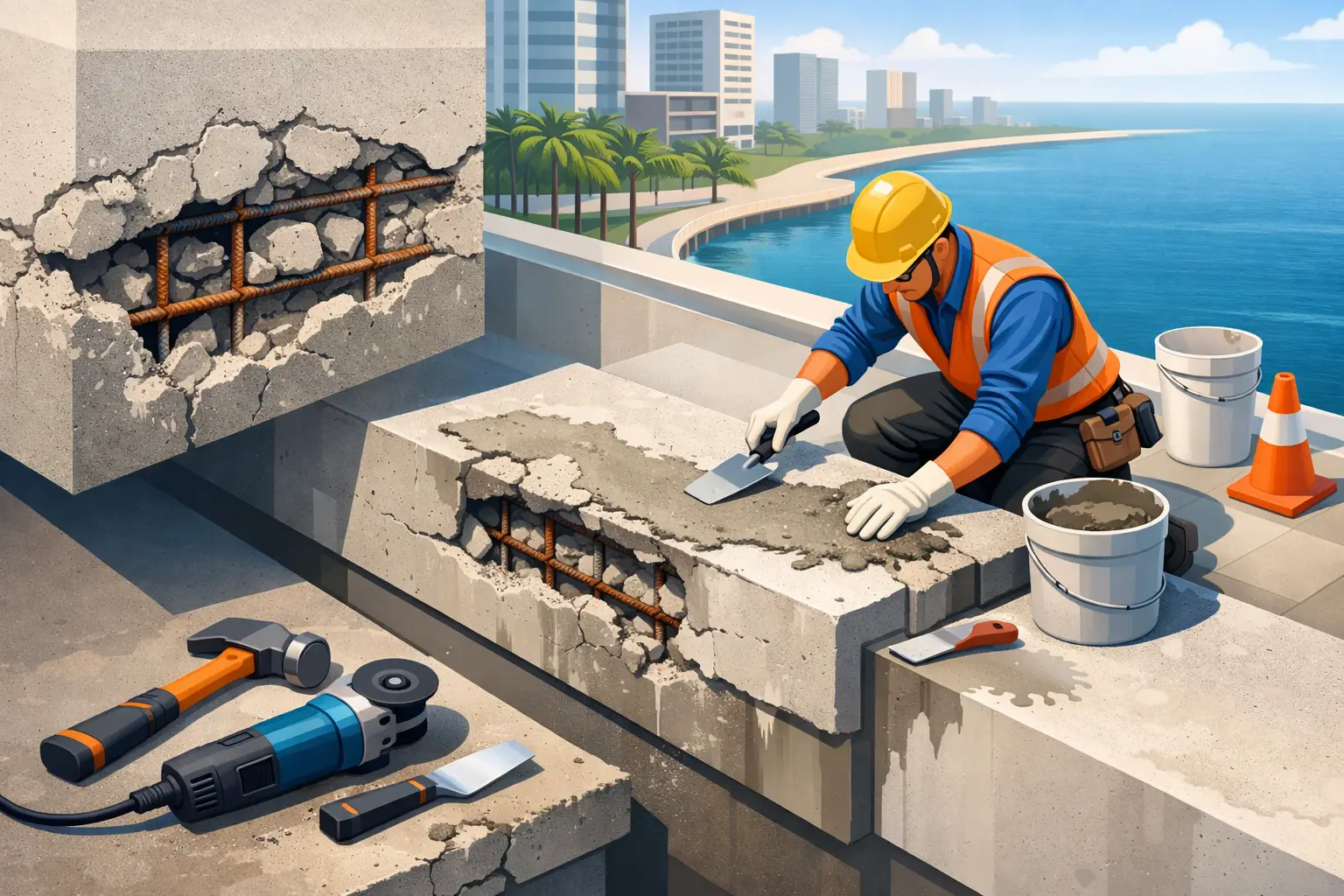
Concrete spalling happens when the top layer of concrete starts to break away. Sometimes it looks minor at first – small chips, scaling, or rough spots. Other times it shows up as deeper pop-outs, exposed aggregate, crumbling edges, or sections where reinforcing steel is close to the surface or already visible.
That surface failure usually points to a bigger issue underneath. Water intrusion, poor finishing, weak concrete mix, corrosion in reinforcement, drainage problems, and repeated exposure to salts can all play a part. In a coastal market like South Texas, salt air and moisture put extra stress on concrete surfaces, especially on older slabs or work that was not installed with the right depth, slope, or reinforcement.
Why spalling concrete is common in Corpus Christi
Concrete does not fail for one reason alone. In this region, it is often a combination of weather, soil movement, and construction quality.
Moisture is a major factor. When water gets into the surface through cracks, poor sealing, or weak finishing, it starts breaking down the top layer. If reinforcement is too shallow or moisture reaches steel, corrosion can begin. As steel rusts, it expands and pushes the surrounding concrete apart.
Drainage is another issue. Flatwork that does not shed water properly can stay saturated longer than it should. That creates more wear at the surface and more opportunity for cracks and scaling. On commercial sites, traffic loads make the problem worse. Delivery trucks, turning vehicles, and concentrated point loads can speed up surface failure in parking lots, loading areas, and drive lanes.
There is also the workmanship factor. Concrete that was overwatered, finished too early, or placed without the right subgrade prep is more likely to spall. A repair that only covers the damaged area without correcting the underlying cause usually does not last.
When a repair is enough and when replacement makes more sense
Not every spalled slab needs to be torn out. If the damage is limited to the surface and the concrete underneath is still structurally sound, repair can be the smart move. That is often the case with localized flaking, shallow surface scaling, or isolated edge damage.
But there are cases where repair is not the right long-term answer. If the slab has widespread cracking, major settlement, failed drainage, or extensive corrosion in reinforcing steel, patching can turn into a short-term fix with a long-term price tag. The same goes for surfaces that are already at the end of their service life.
This is where experience matters. A good contractor should be able to tell you whether the slab is repairable, partially replaceable, or better off being removed and poured again. The right answer depends on the extent of damage, how the slab is used, and what is causing the spalling in the first place.
Concrete spalling repair in Corpus Christi: what the process should include
Good concrete spalling repair in Corpus Christi starts with evaluation, not guesswork. The damaged concrete has to be inspected closely to determine how deep the failure goes and whether the surrounding area is still sound.
The first step is removing loose and deteriorated material. That may involve chipping, grinding, or saw cutting to reach solid concrete. If the repair crew skips this part and patches over weak material, the new surface can fail early.
Once the unsound concrete is removed, the substrate needs to be cleaned properly. If reinforcing steel is exposed, it has to be inspected and treated as needed. In some cases, corrosion protection or additional repair work around the steel is necessary before the patch can go in.
After prep, the repair material has to match the use of the slab. A residential patio, warehouse approach, and retail parking lot do not all need the same repair system. Material selection matters. So does bond strength, curing method, and finish quality.
Then comes the part many property owners overlook – correcting the reason the concrete failed. If drainage still sends water across the slab, if expansion joints are failing, or if the area continues taking loads it was never built for, the new repair is working against the same problem that damaged the original surface.
Residential vs. commercial spalling repairs
For homeowners, spalling often shows up on driveways, sidewalks, patios, pool decks, and slab edges. In these settings, appearance matters, but so does safety. Loose surface concrete creates trip hazards, sharp edges, and places where water can keep getting in. A proper repair should restore a clean, durable surface and help protect the surrounding area from further breakdown.
Commercial properties usually deal with a different scale of wear. Parking lots, dumpster pads, service drives, ramps, and entrance areas take more abuse and need repairs that hold up under traffic. In some cases, staging and scheduling matter as much as the repair itself because business access cannot be disrupted for long.
That is why repair planning should fit the property. A homeowner may need a clean repair that blends with the existing concrete and improves curb appeal. A property manager may need phased work, traffic control, and durable materials that minimize downtime. Same problem, different priorities.
Signs the damage is getting worse
A few chips do not always look urgent, but spalling rarely stays contained on its own. If you see the surface continuing to peel, edges breaking off, rust staining, exposed steel, low spots holding water, or cracks spreading out from the damaged area, the condition is moving beyond cosmetic wear.
You may also notice repairs that were done before and are already failing. That usually points to poor prep, the wrong material, or an unresolved moisture or structural issue. When that happens, another quick patch is not likely to solve it.
For business owners and property managers, damaged concrete can also become a liability issue. Uneven walking surfaces and broken pavement near entrances, parking stalls, and pedestrian areas are worth addressing before someone gets hurt.
What to look for in a contractor
Spalling repair is not a handyman patch job. You want a contractor who understands concrete behavior, local site conditions, drainage, reinforcement, and load demands. That matters even more near the coast, where moisture and salt exposure can shorten the life of poorly executed work.
Ask direct questions. Is the slab structurally sound enough for repair? What is causing the spalling? How deep is the damage? Will the repair include correcting drainage or joint issues if needed? Is partial replacement a better investment? A dependable contractor should give you straight answers, not a one-size-fits-all sales pitch.
It also helps to work with a company that can handle related site issues without pushing responsibility to someone else. If the repair involves demolition, regrading, replacement sections, or adjacent concrete work, having one team manage the job usually leads to cleaner execution and fewer delays.
How to help prevent future spalling
No concrete lasts forever, but good installation and maintenance can extend its life. The biggest preventive measures are sound subgrade prep, proper concrete mix and reinforcement, correct finishing, good drainage, and timely repair of cracks and failing joints.
For existing concrete, small problems should be addressed early. Water intrusion is rarely harmless. If a slab is cracking, ponding water, or showing edge failure, catching it early can keep you from paying for a much larger repair later.
Property owners should also be realistic about use. A slab built for light residential traffic will not perform the same way under repeated heavy vehicle loads. When usage changes, the concrete requirements change too.
If you are dealing with flaking, chipping, or surface failure, the main question is not whether it looks bad today. It is whether the slab underneath is still worth saving. The right repair can restore strength, safety, and appearance, but only when the work is built around the cause of the damage and not just the symptoms. If you are unsure how far the problem has gone, getting a professional assessment now is usually the cheaper move than waiting for the next section to break loose.
2 Comments
[…] every driveway needs to be torn out. If the problem is limited to a few small surface cracks or minor scaling, repair may still be worthwhile. But if you have repeated cracking across multiple […]
[…] the only one. You may also see dark moisture stains, algae growth, erosion along the driveway edge, spalling at the surface, or cracks that keep widening after storms. If water is backing up near the garage, that moves the […]