How to Plan a Commercial Parking Lot Installation in Corpus Christi
Look, I’m going to be straight with you. If you own a business or manage property here in Corpus Christi, your parking lot is doing a job long before anyone walks through your front door.
It’s the first thing people see. It’s what they remember. A rough, cracked lot with puddles everywhere? That tells customers you don’t pay attention to details. A clean, smooth concrete parking lot? That says you run a serious operation.
We’ve been doing this work here for years at Haylo Construction. We’re local concrete parking lot contractors who’ve seen every kind of project you can imagine. So let me walk you through what actually goes into planning a commercial parking area construction, no theory, just what works on the Texas coast.
Step 1: Get Clear on What Your Parking Lot Actually Needs to Handle
Before we talk about parking lot pavement or budgets, we need to get real about one thing: what’s happening in your lot every single day?
This isn’t a trick question. But you’d be surprised how many people skip it.
Think about yours:
- How many employees park there during the week?
- What about weekends do you get slammed with customers?
- Do delivery trucks roll through? Semi trucks or just small vans?
- Is anyone using the lot after dark?
These answers change everything. A retail shop’s needs are totally different from those of a warehouse or an office building. An industrial site with forklifts running around needs way different parking lot surface options than a dentist’s office. So start here. It saves money later.
The construction of parking lot projects always goes more smoothly when you’ve answered these basic questions first.
Step 2: The Budget Conversation Nobody Wants to Have
Okay, let’s talk money. Because this stuff isn’t cheap, and pretending otherwise doesn’t help anyone.
But here’s the thing: your parking lot installation isn’t an expense. It’s an investment in your property value and your customers’ safety. That’s the right way to think about it.
Here’s what your budget actually covers when you’re paving parking lots:
- Clearing the site and getting the ground ready
- Base materials usually crushed stone or limerock, about 6 inches compacted
- The concrete for parking lots, labor, and materials
- Permits and engineering, if needed
- Drainage so water goes somewhere useful
- Lighting if people park after dark
- Striping and signage at the end
Here’s a number that might surprise you. The parking lot construction cost in areas with dense development can eat up 30% of total construction costs. So, planning smart upfront? That’s how you protect your wallet.
Step 3: Concrete vs. Asphalt: Let’s Settle This for Good
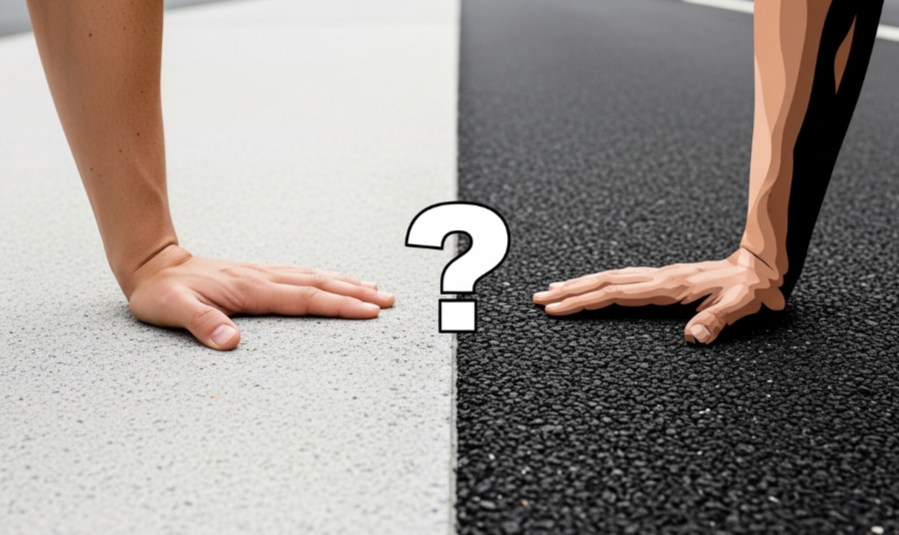
People ask us about parking lot surface options all the time. And look, we do concrete, so you know where we land. But let me give you the real reasons, not the sales pitch.
We’re over here in Corpus Christi, dealing with coastal humidity, brutal heat, and hurricanes that like to drop in uninvited. Asphalt doesn’t love that. It softens in heat, cracks over time, and needs sealcoating every few years like clockwork.
Concrete parking lots? They handle it. They handle the weather, they handle the traffic, and they handle the humidity without breaking down.
Here’s the honest breakdown based on what we see in the field when we’re paving a parking lot:
| Factors | Asphalt | Concrete |
| What it costs upfront | $3–$7 per square foot | $4–$15 per square foot |
| How long it lasts | 15–25 years if you’re lucky | 30–40+ years easy |
| Maintenance | Sealcoating every 3–5 years | Pretty much nothing |
| Heat | Gets soft | Stays solid |
| Heavy loads | Meh | Built for it |
Yeah, concrete costs more at the start. Say you’ve got a 10,000-square-foot lot and you’re looking at concrete parking lot paving versus asphalt. Asphalt might save you twenty grand initially. But you’re going to replace that asphalt at least once while the concrete parking lot construction is still sitting there doing its job. Do the math over 40 years. It’s not close.
For anyone looking for the best concrete parking lot paving contractors in Texas, this is the kind of straight talk you want to hear.
Step 4: Permits, Codes, and the Stuff Nobody Reads Until There’s a Problem
I know. Permits are boring. Until you get fined or sued, and then they’re really interesting.
Here’s what’s actually required in Texas and around here for commercial parking lot paving standards.
State law says any parking area with more than five spaces has to control dust. That means parking lot pavement or some surface treatment. That’s not optional; it’s in the Texas Administrative Code.
Concrete specs around here? Most commercial bids we see call for 6 inches of Portland cement concrete pavement at 4,000 PSI. Some want fiber-reinforced concrete for extra durability. That’s what holds up when you’re building concrete parking structures.
Space sizes matter. Standard parking spots need to be 9 feet wide by 18 feet long. You can make up to 30% of your lot compact car spaces at 8×16, but the rest have to be full-size. Skip this, and you’ll have angry customers and delivery drivers.
ADA rules aren’t suggestions. Handicap spaces have specific width requirements, access aisles, and proper slopes. You have to get this right during your construction parking lot phase.
Water has to go somewhere. Your lot needs to be graded so water runs off, not pools up. Standing water is a problem for your parking lot’s concrete surfaces and a problem for the law.
Lighting matters. If you’re open after sunset, you need lights. Industry standard is at least 2 foot-candles on the parking surface while you’re open. That’s enough for people to see where they’re walking.
And that 6-inch thickness I mentioned? That’s non-negotiable for commercial. Residential can get away with 4 inches. Your lot has cars, trucks, and delivery vans. You need the full 6 for proper parking lot concrete solutions.
Step 5: Making It Work Design, Flow, and That First Impression
A good lot doesn’t just hold cars. It moves traffic where it needs to go. It keeps people safe. It makes your whole property look professional.
Think about how cars enter and exit. Can delivery trucks turn around without blocking customers? Are pedestrians walking through traffic, or do they have a clear path? This is the stuff of good commercial parking area construction.
And here’s something people forget until it’s too late: parking lot striping isn’t just paint. Good striping maximizes your space, keeps people from parking like maniacs, and makes sure you’re ADA compliant. Once your concrete parking lot installation cures, that striping is what makes everything legal and looks finished.
If you ever need concrete parking lot resurfacing down the road, you’ll thank yourself for doing the drainage and base work right the first time.
Ready to Talk About Your Parking Lot Project?
Look, planning a commercial parking lot installation is a lot. But breaking it down step by step makes it manageable. You now know the numbers: the 6‑inch thickness, the 9×18 dimensions, and the 2 foot-candles for lighting. You know why concrete parking lot paving beats asphalt when you’re dealing with Texas coastal weather.
At Haylo Construction, we’re right here in Corpus Christi. We know the coast, we know the codes, and we know how to build a parking lot you can be proud of. Whether you need a full construction of a parking lot or want to talk about parking lot surface options, we’re here.
Let’s talk about your project. Get a quote from us, and we’ll walk your site, listen to your needs, and provide a straightforward estimate with no surprises. That’s how we do things.
One comment
[…] example, if a property is being prepared for a new slab or parking lot, the clearing work should support the grade and compaction plan. If demolition is involved, removal […]