A driveway in Corpus Christi usually does not fail all at once. It starts with widening cracks, low spots that hold water after a storm, broken edges, or sections that shift enough to feel it every time you pull in. When those problems keep spreading, patchwork stops being the smart fix. Concrete driveway replacement Corpus Christi property owners need is about more than new surface appearance. It is about correcting the base, improving drainage, and pouring a driveway built for South Texas conditions.
Replacing a driveway is a practical investment. For homeowners, it improves curb appeal and daily use. For rental properties, offices, and commercial sites, it protects access, reduces trip hazards, and presents a cleaner, more professional property. The key is making sure the replacement is done right from the ground up.
When concrete driveway replacement in Corpus Christi makes more sense than repair
Repairs have their place. A small isolated crack, minor surface wear, or a single damaged section can often be addressed without tearing everything out. But there is a point where repairs become repetitive and expensive without solving the real problem.
If your driveway has multiple cracks running in different directions, uneven slabs, crumbling edges, or drainage issues that push water toward the garage or foundation, replacement is usually the better long-term move. The same is true when tree roots, poor soil support, or years of heavy vehicle traffic have compromised the slab below the surface.
In coastal Texas, moisture movement matters. Soil expansion and contraction, standing water, and salt air exposure can shorten the life of concrete that was not properly reinforced or graded from the start. A new driveway gives you the chance to fix those underlying issues instead of covering them up.
Why driveways fail in this region
Corpus Christi is hard on exterior concrete. Heat, water, shifting soils, and runoff all work against a flatwork surface that sees daily traffic. If the original driveway was poured too thin, lacked reinforcement, or went in over a weak base, damage tends to show up sooner.
Drainage is one of the biggest factors. Water that pools on the slab or along the edges can wash out support below and lead to settling. Once voids develop, the concrete starts cracking under weight. Poor grading also creates problems for nearby walkways, garages, and foundations.
Usage matters too. A driveway built for light passenger vehicles may not hold up well if it regularly carries trailers, work trucks, delivery vehicles, or heavier equipment. That does not always mean the concrete itself was bad. Sometimes the slab simply was not designed for how the property is actually used.
What a proper replacement should include
A driveway replacement is not just a demolition and repour job. The quality of the finished driveway depends heavily on what happens before concrete is placed.
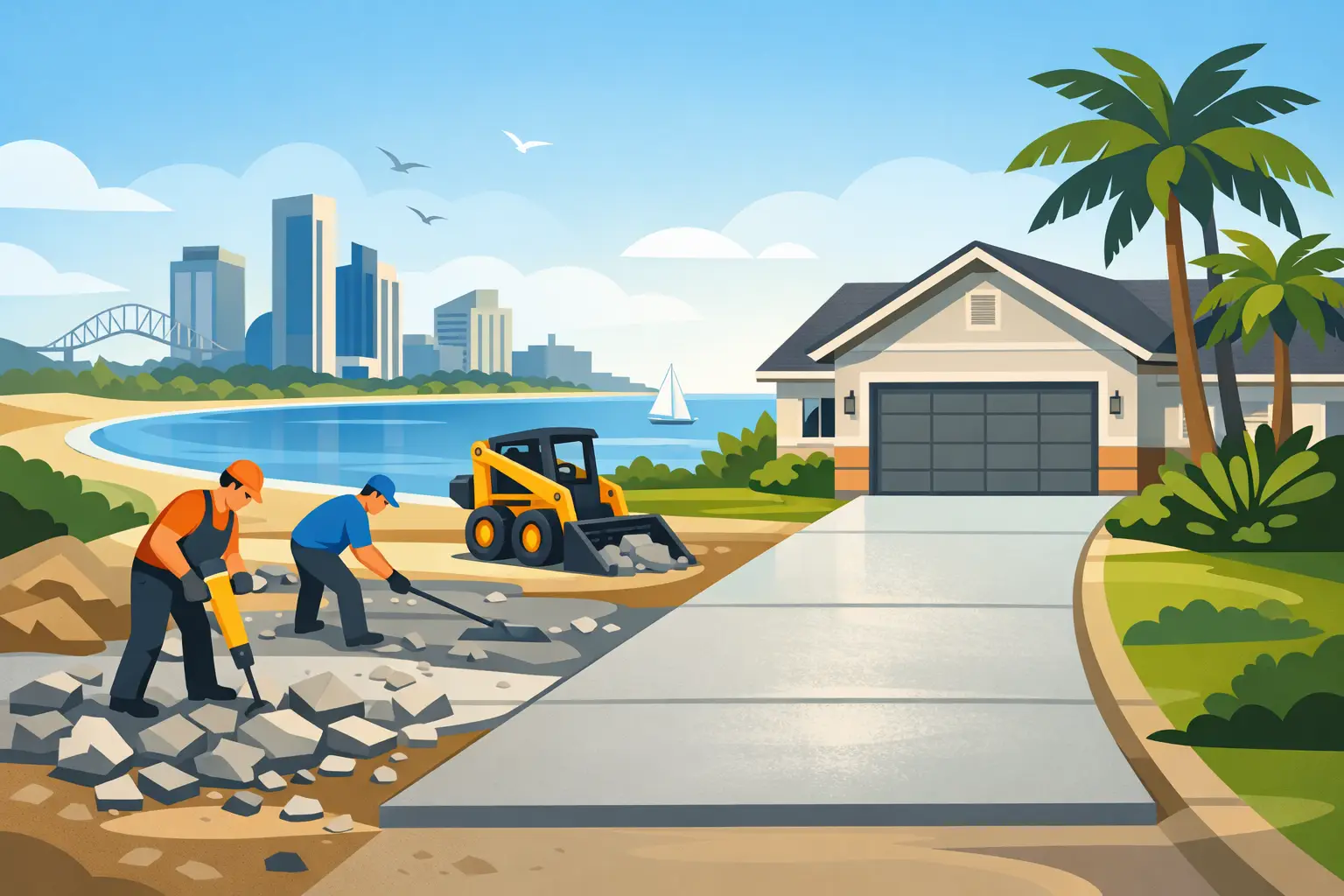
The old driveway needs to be removed cleanly and safely. After demolition, the subgrade should be evaluated and corrected as needed. Soft spots, unstable soil, and drainage problems should be addressed before a new base is installed. If this step gets rushed, the new slab can start failing long before it should.
From there, base preparation, grading, formwork, reinforcement, and concrete placement all need to be handled with care. Joint placement also matters because concrete is going to move. The goal is to control where that movement happens and reduce random cracking.
For many properties, thickness and reinforcement should be matched to actual use, not just minimum expectations. A family sedan, a work van, and a commercial pickup do not place the same demands on a driveway. That is where experience matters.
Concrete driveway replacement Corpus Christi owners should expect from a contractor
If you are comparing bids, look past the square footage price first. A lower number does not always mean better value if it skips critical prep or uses lighter construction than your property needs.
You should expect a contractor to evaluate slope, drainage patterns, vehicle use, site access, and any visible signs of soil movement. If the driveway ties into sidewalks, curbs, garages, gates, or adjacent paving, those transitions should be considered up front. A good replacement plan accounts for the entire area, not just the slab itself.
Communication matters just as much as craftsmanship. Property owners should know what is being removed, how the base will be prepared, whether reinforcement is included, what the curing timeline looks like, and when the driveway can handle vehicle traffic again. Straight answers save headaches.
For commercial and multi-property work, coordination is also part of the job. Access routes, tenant disruption, safety controls, and staging need to be managed so the site stays organized while work is in progress.
What affects cost
There is no honest flat price that fits every driveway. Cost depends on the size of the slab, thickness requirements, amount of demolition, condition of the subgrade, reinforcement needs, and site accessibility. A straightforward residential replacement on stable ground is different from a job that requires extra excavation, drainage correction, or tie-ins to nearby concrete.
Decorative finishes can raise the total, but most cost differences come from structural requirements and site conditions, not appearance. If a driveway has severe settling, poor drainage, or heavy-use demands, the right approach may cost more upfront and save money over time.
That is why estimates should be based on the actual property. A serious contractor will look at the site, identify the real problems, and explain what is needed to produce a durable result.
Residential and commercial needs are not the same
Homeowners often focus on function and curb appeal. They want a driveway that looks clean, drains properly, and holds up without constant repair. That usually means correcting broken sections, improving slope, and installing reinforced concrete that can handle everyday use for years.
Commercial property owners, managers, and developers usually have a different set of concerns. They may need wider access, better load performance, cleaner entry points, or replacement work completed with minimal disruption to operations. In those cases, scheduling, site logistics, and durability under heavier use become even more important.
A contractor working in both residential and commercial environments should understand that difference. The installation process may look similar on paper, but project planning is not the same.
The value of local experience
Driveway work in South Texas is not generic. The right replacement approach depends on local weather patterns, soil behavior, drainage demands, and how coastal exposure affects exterior materials over time. Contractors who work in Corpus Christi and nearby communities understand those factors because they see them on active job sites every week.
That local knowledge helps with practical decisions, from base preparation and grading to reinforcement and layout. It also matters when surrounding site work is involved. If your project includes demolition, sidewalks, approach work, or related concrete improvements, it helps to work with a contractor that can manage those scopes under one roof.
That is one reason many property owners turn to Haylo Construction for concrete and site-related work. The value is not hype. It is having a local crew that understands the conditions, communicates clearly, and builds for durability.
How to prepare for a replacement project
Before work starts, think through how the driveway is used day to day. If multiple vehicles, trailers, deliveries, or commercial traffic use the area, mention that early. The same goes for standing water, gate clearance, drainage concerns, and any recurring cracks you have noticed over time.
If the driveway is part of a larger improvement plan, such as fencing, a slab extension, a new pad, or demolition of adjacent concrete, it is usually smarter to coordinate the scope at the estimate stage. That can save time, reduce mobilization costs, and produce a cleaner final layout.
It also helps to plan for access during curing. New concrete needs time before it can handle vehicle loads. A reliable contractor should set expectations clearly so you know what the timeline looks like and how to keep the new surface protected.
A driveway should do its job without demanding constant attention. It should carry traffic, shed water, hold its edges, and look clean from the street. If your current slab is cracked, settled, or nearing the point where repairs no longer make sense, replacement is often the more responsible decision.
The right concrete driveway replacement Corpus Christi property owners choose is not just about removing what failed. It is about rebuilding the area with proper preparation, sound grading, and workmanship that holds up in real conditions. If the slab is done right, you should feel the difference every time you pull in.